
Cook with limited worktop space
You want to blend beetroot soup straight in the pan and avoid having an extra jug on the worktop. The Dutch Consumers’ Association describes blending in the pan as a practical use for a stick blender.


If you mainly want to blend cooked beetroot soup in a small kitchen, a stick blender is usually the most space-saving option: you can blend it straight in the pan. A jug blender may suit you if you want to make several portions and achieve an even texture, provided its jug and instructions are suitable for hot soup. A soup maker is designed to combine heating and blending. For every appliance, check the instructions and the product requirements that apply to the specific model.
You want to blend beetroot soup straight in the pan and avoid having an extra jug on the worktop. The Dutch Consumers’ Association describes blending in the pan as a practical use for a stick blender.
You make several portions and value an even texture more than minimal washing-up or the smallest appliance. The Dutch Consumers’ Association highlights quantity and blending results as useful points to compare.
You want to leave both blending and heating the soup to one appliance. Its capacity, dimensions and cleaning requirements should suit your cooking routine; Philips, for example, provides model-specific information about these features for the HR2203/80.
When making beetroot soup in a small kitchen, your choice mainly comes down to worktop space, the texture and portion size you want, how the appliance handles heat, and whether you want to combine preparation and cleaning.
A good fit if: you want to blend cooked beetroot soup in the same pan and have limited worktop space.
Bear in mind: keep the blending foot below the surface of the soup while using it, and follow the instructions for hot ingredients.
A good fit if: you want to make several portions and have space for the jug and motor base. The Dutch Consumers’ Association recommends checking that the jug is heat-resistant when making soup.
Bear in mind: you’ll need to transfer the soup, and a heat-resistant jug doesn’t automatically mean it can be used with boiling-hot soup.
A good fit if: you want to combine heating and blending in one appliance and its capacity suits the portions you make.
Bear in mind: the space it takes up and how it needs to be cleaned. For example, Philips lists a 1.2-litre jug for the HR2203/80 and says its parts are not dishwasher-safe.
| What to consider | What should you check before buying? | Who is this important for? |
|---|---|---|
| Worktop and storage space | Measure the space available, including room to fill, lift and clean a jug; compare it with the dimensions of the exact model. | If I want to blend soup in a small kitchen without leaving an extra jug on the worktop, space matters. Around 36% of consumers with this priority put worktop and storage space first. |
| Texture and quantity | Compare the usable capacity with your pan and the number of portions you make; look for relevant information about blending results rather than considering wattage alone. | If I’m making several portions, I want to achieve the texture I’m after without unnecessarily working in batches. Around 29% of consumers put texture and quantity first. |
| Handling hot soup | Check the instructions for the exact model for the permitted temperature, fill level and use of the lid or filling opening; let ingredients cool first if required. | If I want to process soup while it’s hot, I want to know in advance what the model allows. Around 21% of consumers make handling hot soup their top priority. |
| Preparation and cleaning | Check whether the appliance heats food itself, how much soup it holds, and which parts the manufacturer says can be cleaned or put in the dishwasher. | I want to combine heating and blending, but also know how much cleaning that involves. Around 14% of consumers give combined preparation and cleaning top priority. |
The permitted temperature and method vary by model. A general description doesn’t automatically mean you can pour boiling-hot soup into the jug.
Before use, read the instructions for the exact blender jug. Let the soup cool if the manufacturer says to.
Wattage alone doesn’t tell you how well an appliance will blend vegetables. The texture you want, how you prepare the soup and the space available all matter too.
Compare information about blending results with vegetables and the appliance’s dimensions, as well as its stated power.
A heating and blending function doesn’t mean the parts are dishwasher-safe. Philips says the parts of the SoupMaker HR2203/80 are not dishwasher-safe.
Check which parts can be removed on each model and how the manufacturer says they should be cleaned.
According to the Government of the Netherlands, there is no fixed statutory warranty period in the Netherlands. A manufacturer’s warranty is separate from your legal rights with the retailer.
Keep your proof of purchase and contact the retailer if something goes wrong; check the manufacturer’s warranty terms for additional information.
These product ranges show different ways to blend or prepare soup. The features listed apply to the specific models and should not be taken as a recommendation of the brand as a whole.
The ErgoMixx MSM66110 is a stick blender option for anyone who wants to blend soup straight in the pan.
The MultiQuick 5 MQ50236M suits anyone who wants to use a chopper and whisk as well as blend.
The Perfectmix+ BL811D38 is a jug blender option. Tefal describes its glass jug as heat-resistant.
The Viva Collection SoupMaker HR2203/80 heats ingredients, making it an option for anyone who wants to combine soup preparation and blending.
These Joybuy picks are stick blenders for anyone who wants to blend cooked beetroot soup straight in the pan, without using a separate blender jug.
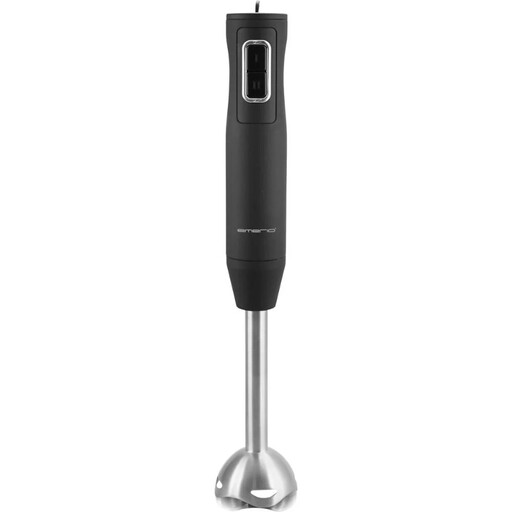 No image available
A stick blender for blending cooked beetroot soup straight in the pan.
 No image available
A stick blender for blending soup in the pan; its stated operating time means you’ll need to work in short bursts.
Up to 1200 W and 15,000 rpm; supplied with a 700 ml beaker, 500 ml chopper and whisk.
The stated maximum continuous operating time is 1 minute, followed by 1 minute of rest.
 No image available
A hand blender for blending soup in the pan.
The product name specifies a stainless-steel design and variable speed.
 No image available
An immersion blender for soup and purée, designed for use straight in the pan.
The product name lists two speeds, a whisk, a chopper, a 500 ml chopper bowl and an 800 ml measuring beaker.
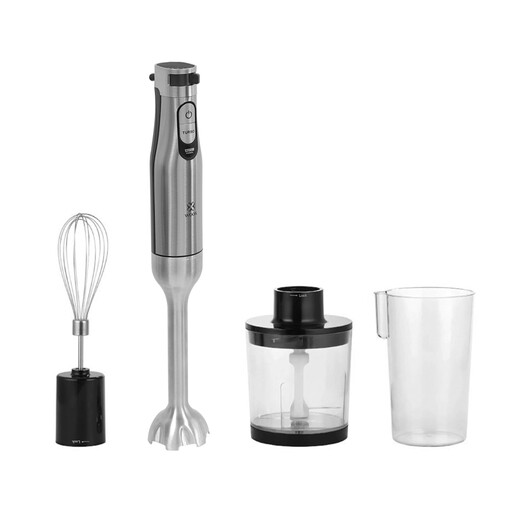 No image available
An immersion blender for blending in the pan and making soup.
The product name lists variable speed and a set with a chopper, whisk and milk frother.
For beetroot soup, cooking the beetroot until tender is the practical choice: according to the Dutch Consumers’ Association, cooked hard vegetables are much easier to blend. If the mixture is very thick, add a little liquid if needed.
No, don’t assume that you can. Check the instructions for the exact model: the Dutch Consumers’ Association recommends a heat-resistant jug for soup, while Philips says that models HR3756/00, HR3752/00 and HR3868/00 are only for cold or room-temperature ingredients. This Philips instruction does not automatically apply to other models.
It varies by model. A detachable stick blender foot can make cleaning easier; Philips says the parts of the SoupMaker HR2203/80 are not dishwasher-safe. Follow the instructions for the model you choose when cleaning the blending foot, blades and jug.
No. According to the Government of the Netherlands, there is no fixed statutory warranty period in the Netherlands; you’re entitled to a product that meets what you can reasonably expect. If something is wrong, the retailer must provide a solution. The manufacturer’s warranty is separate from these legal rights.
The Netherlands Food and Consumer Product Safety Authority (NVWA) classifies kitchen appliances as electrical appliances and states that CE marking is compulsory for electrical products. Separate safety requirements apply to materials that come into contact with food. Check the product information for the specific appliance; a product listing alone does not prove that all applicable requirements have been met.