
Blending in the pan after cooking
You cook the beetroot in a soup pan and want to blend it there, without pouring the hot soup into a blender jug. The Dutch Consumers’ Association says that blending soup directly in the pan is convenient.


For cooked beetroot soup that you want to blend straight in the pan, a hand blender is the most straightforward choice. A jug blender is better if you’re making several portions and want a smooth texture, but check the temperature limit for the exact model. Choose a heated soup maker if you also want to cook the soup in the same appliance and its capacity suits the number of portions you make.
You cook the beetroot in a soup pan and want to blend it there, without pouring the hot soup into a blender jug. The Dutch Consumers’ Association says that blending soup directly in the pan is convenient.
You’re making several portions and want to achieve a particular texture. The usable capacity and the instructions for hot ingredients on the specific model can help you decide whether a jug blender is suitable for your recipe.
You want to cook and blend the ingredients in the same appliance. Check that your chosen model has a heating function and that its capacity and programmes suit the amount of soup you’re making.
The Dutch Consumers’ Association describes a hand blender as convenient for blending directly in the pan. With jug blenders, it’s important to check the usable capacity and instructions for hot ingredients.
| What to consider | What should you check? | Who will value this? |
|---|---|---|
| Blending in the pan | Check the controls, detachable blending foot and cleaning instructions. | If I’ve already cooked the beetroot in the soup pan, I don’t want to pour hot soup into another container. Around 46% of consumers say that blending directly in the pan is their top priority. |
| Several portions | Check the usable jug capacity and the temperature instructions for the exact model. | If I want to make several portions at once, I look at how much fits in the jug at a time and the texture I’m aiming for. Around 27% of consumers say that getting a smooth result for several portions is their top priority. |
| Cooking and blending | Check whether the model heats food, which soup programmes it has and what the fill markings indicate. | If I want the appliance to handle the cooking as well, I check that its programme and capacity suit my recipe. Around 27% of consumers say that cooking and blending in one appliance is their top priority. |
The permitted temperature varies by model, even within the range of a single brand.
Before use, check the temperature and filling instructions for the full model number. If the soup needs to cool first, you may have to wait longer or pour it into another appliance.
A jug that’s suitable for hot ingredients isn’t the same as an appliance with a heating programme. Without a cooking function, you’ll still need a pan for the cooking stage.
Choose a heated soup maker or cooking blender only if you want to cook the ingredients in the appliance too; check the functions of the exact model.
Otherwise, you’ll still need a pan and a separate cooking step.
Tefal lists the Tefal PerfectMix+ BL871D31 as having a 2-litre jug with a usable capacity of 1.5 litres.
Compare the usable capacity and the minimum and maximum markings with the amount of soup you usually make.
If one batch isn’t enough, you may need to blend the soup in several batches.
The ErgoMixx MSM66110 is a hand blender designed for blending directly in the pan.
The MultiQuick MQ50236M is a hand blender with accessories for extra kitchen tasks.
The BL871D31 is a jug blender for hot and cold preparations, while the BL83SD30 has dedicated heated soup programmes.
The Viva SoupMaker HR2203/80 heats ingredients and makes soup, with programmes for both thin and thick soups.
This selection includes hand blenders for blending in the pan, a blender with a heating function and a jug blender for making several portions.
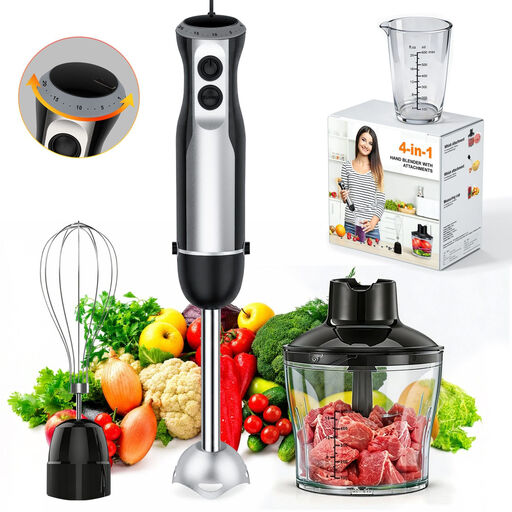 Image unavailable
The product title lists soup as a use, and a hand blender is suitable for soup that’s already cooked in the pan.
The product information lists 20 speed settings and a turbo function.
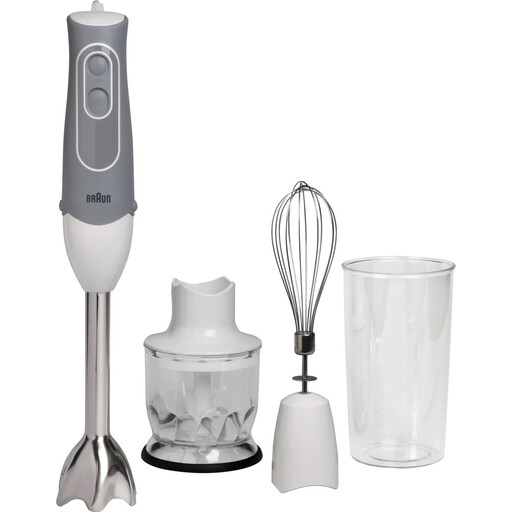 Image unavailable
The product description mentions blending soup in the pan and accessories for other kitchen tasks.
Specifications listed: 600 W, 220 V, two speed settings, a whisk and a chopper.
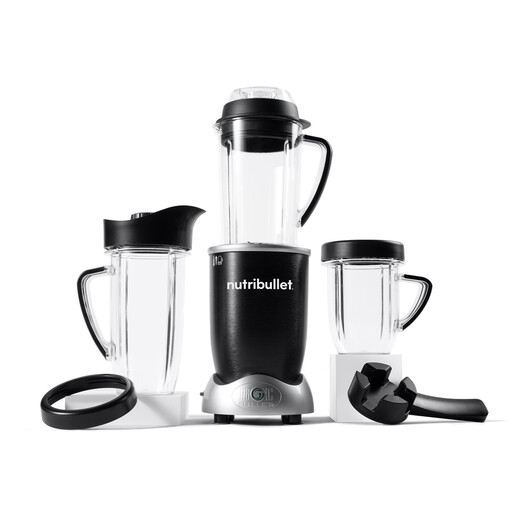 Image unavailable
The product description mentions a soup setting that heats and blends ingredients, for anyone who wants to do both steps in one appliance.
The product title lists a 1700 W motor and a 10-piece set. The description mentions a jug with a vented lid for hot ingredients.
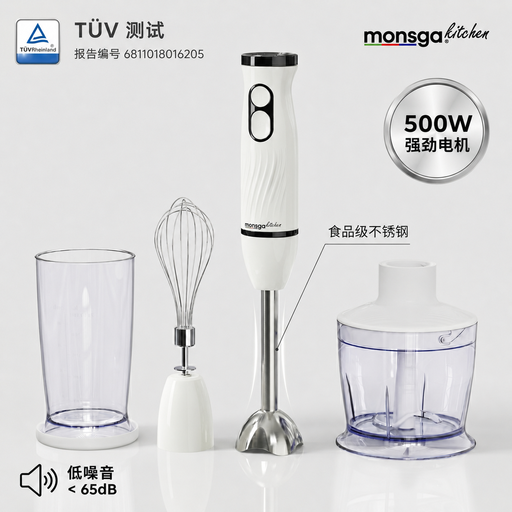 Image unavailable
The product description mentions blending in deep pans, so you don’t have to pour the soup into a jug first.
Listed features include a reach of 36.5 cm, normal and turbo settings, a 500 ml chopper and a 500 ml measuring beaker, plus a 1.5 m cable.
 Image unavailable
The stated 1.5-litre capacity is useful if you want to blend several portions at a time.
The product information lists a 1000 W motor, three speed settings and a pulse setting. Don’t blend ingredients hotter than 80 °C; let hot liquids cool first.
Yes. For this soup recipe, cook the beetroot first. The Dutch Consumers’ Association notes that cooked vegetables are easier to blend. Add liquid if needed.
No. Follow the instructions for the exact model. Philips says to let the HR2510/90, HR2511/90 and HR2512/90 cool to below 60 °C. For the HR3756/00, HR3752/00 and HR3868/00, Philips specifies cold or room-temperature ingredients only.
Cool leftovers quickly and store them in a sealed container in the fridge or freezer. The Netherlands Nutrition Centre advises keeping thickened soup with meat and vegetables in the fridge for no more than two days, and not leaving leftovers out of the fridge for longer than two hours. For other ingredients, check the relevant food storage guidance.
According to the Netherlands Food and Consumer Product Safety Authority, CE marking is mandatory for electrical products covered by the applicable rules. The Low Voltage Directive applies, among other things, to equipment with a rated AC voltage of 50 to 1000 V; other appliances may be covered by different safety rules. A CE mark doesn’t indicate how smoothly a blender will blend soup.