
For cooks who blend straight in the pan
Your soup is already cooked and you want to blend it just before your guests arrive, without transferring it to another container first.


If your beetroot soup is already cooked and you want to blend it just before serving, a stick blender that the instructions say is safe to use in the pan is the obvious choice. A blender jug may suit you better if a smooth texture or larger batches matter more, but first check the maximum temperature and fill level for the exact model. A soup maker is mainly worth considering if you also want to automate cooking and heating.
When serving cooked beetroot soup to guests, your choice mainly comes down to blending it in the pan, achieving a smooth texture or getting extra help with preparation.
Your soup is already cooked and you want to blend it just before your guests arrive, without transferring it to another container first.
A consistent texture and enough soup for your guests matter enough to you to consider using a blender jug and doing some extra washing-up.
As well as blending, you want a soup or heating programme, and you’d like the capacity to suit the number of guests.
Choose this option: if the soup is already cooked and you want to blend it straight in the pan.
Bear in mind: there’s no need to transfer the soup, but the texture may not be as smooth as it would be from a blender jug. Check that the blender foot and pan are suitable according to the instructions.
Choose this option: if a smooth result or larger batches matter more, and the instructions allow it to be used with soup at that temperature.
Bear in mind: you’ll need to transfer the soup, and the jug takes up space and creates extra washing-up.
Choose this option: if you also want to cook or heat soup and the capacity suits your guests.
Bear in mind: if your soup is already made, a cooking programme may not add much; capacity varies by model.
| What to consider | What to look for when buying | Who should pay particular attention? |
|---|---|---|
| Blending hot soup | Check the maximum temperature, fill level and lid instructions for the full model number. Philips gives different instructions for different blender ranges. | If my beetroot soup is still hot, I want to know whether the appliance is designed for that before I blend it. Around 36% of consumers prioritise blending hot soup. |
| Texture and portions | Compare the usable jug capacity with your recipe, and look at reviews of the blending results rather than just the wattage. | If I’m making soup for several guests, both the smoothness I want and the amount that fits in one go matter. Around 29% of consumers prioritise texture and portions. |
| Quick clean-up | Check whether the blender foot is detachable and which parts the instructions say are safe to clean. | When friends are nearly ready to sit down, I want to finish the soup without an extra transfer step or unnecessary washing-up. Around 21% of consumers prioritise less preparation time and washing-up. |
| Cooking soup too | Check whether the exact model has a soup or heating programme and whether its capacity suits your recipe. | If I also want to automate cooking, a heating programme is more useful than a purée setting alone. Around 14% of consumers prioritise a cooking programme. |
Temperature instructions can vary between models. For some of the models listed, Philips says to let ingredients cool to below 60 °C first; for other blender ranges mentioned, it specifies cold or room-temperature ingredients.
Look up the instructions using the full model number and follow them before adding hot soup to the jug.
A jug that isn’t suitable for hot soup could be damaged; you may also need to wait for the soup to cool sufficiently.
Wattage alone doesn’t tell you how finely or evenly a model blends. The Consumentenbond also assesses the results and the time taken to complete a task when testing stick blenders.
Compare how well the exact model blends and how easy it is to clean with what you need for this soup.
Capacity depends on the model. Philips lists a 1.2-litre jug for four portions for the refurbished SoupMaker HR2204/80R1; that capacity doesn’t automatically apply to other soup makers.
Compare the stated capacity with the quantity in your recipe before letting a heating function sway your decision.
For a larger quantity, you may need to prepare the soup in several batches.
MultiQuick stick blenders are an option if you want to blend soup straight in the pan; the version you choose determines which accessories are included.
The ErgoMixx MSM64110 is a stick blender option for blending in the pan.
Philips offers blenders and soup makers, among other appliances, for anyone considering a jug or a cooking programme.
Tefal’s stick blender range is another option to compare for blending soup in a compact appliance.
This selection includes stick blenders and jug blenders for blending soup; check the instructions for each model before using it with hot ingredients.
 No image available
A hand blender for blending soup; the product description recommends processing hot liquids in small batches in a heat-resistant bowl.
The set includes a detachable stainless steel blending foot, a 700 ml measuring jug and a 500 ml chopper.
 No image available
The product description lists soup as one of its uses and gives the mixing jug capacity as 1500 ml; check the model instructions before using it with hot soup.
According to the product description, add at least 300 ml of liquid. The set also includes a 600 ml travel bottle and a 300 ml chopper cup.
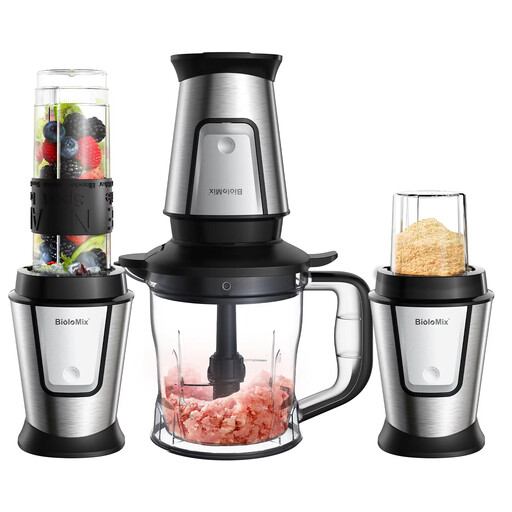 No image available
The product description lists soup as one of its uses, as well as grinding and food processing.
The description lists a 700 W motor, stainless steel blades and a safety lock.
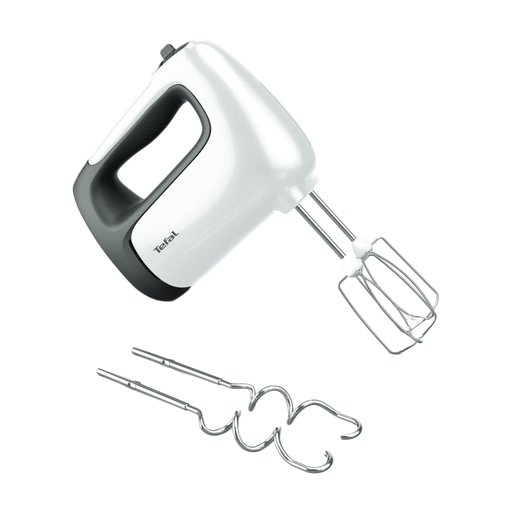 No image available
The product description lists the stainless steel blending foot for preparing soup; check the model instructions to make sure it’s suitable for your needs.
The title lists 450 W and five speeds. The description also says the set includes beaters and dough hooks.
 No image available
The product description lists soup and hot preparations among its uses, and mentions a heat-resistant glass jug.
The stated usable capacity is 1.5 litres and the power is 1200 W. The description also mentions three automatic programmes and an auto-clean programme.
No, it depends on the model. For the models listed—HR2512/90, HR2511/90 and HR2510/90—Philips says to let ingredients cool to below 60 °C first; for the vacuum blenders mentioned, Philips recommends using cold or room-temperature ingredients. Follow the instructions for your exact model.
For this soup, cooked beetroot is the practical choice: the Consumentenbond recommends cooking hard vegetables first, as they’re easier to blend afterwards. Also follow your recipe and the appliance instructions.
According to the Consumentenbond, a detachable foot is easier to clean. Check the instructions for your chosen model to see which parts are detachable and dishwasher-safe; don’t assume this applies to the motor unit.
For many online distance purchases from a business, you have a 14-day cooling-off period, according to the Dutch government. Products must also be fit for purpose; if there’s a fault, you can ask the seller to put it right. The Dutch government states that there is no fixed statutory guarantee period.