
Cooking with a large soup pan
You want to blend beetroot soup for several people straight in the pan, without repeatedly transferring hot soup. The Consumentenbond notes that blending in the pan is a practical use for a stick blender.


If you have a large pan of beetroot soup already on the hob, a stick blender is a practical choice: you can blend the soup straight in the pan without transferring it. A jug blender is a better fit if a very smooth finish is your priority, but check whether the specific model can handle hot ingredients and how much soup it can hold. A soup maker or cooking blender takes care of some of the preparation for you; in that case, check that its hot-fill capacity per cycle is large enough for your group.
You want to blend beetroot soup for several people straight in the pan, without repeatedly transferring hot soup. The Consumentenbond notes that blending in the pan is a practical use for a stick blender.
You prefer a smooth, even texture and want to check the permitted temperature and filling capacity of a jug blender. The Consumentenbond describes a jug blender as one possible choice for a smooth finish.
You want to cook and blend in one appliance, as long as the amount of soup it can make per cycle is enough for your group.
Choose this option: if you’re already making the soup in a pan and want to blend it there.
The trade-off: you’ll need to transfer less soup, but the texture may not be as smooth as with a jug blender.
Choose this option: if a very smooth finish is important and your soup is within the model’s temperature and filling limits.
The trade-off: you’ll need to transfer the soup; check the specific model’s instructions for hot liquids.
Choose this option: if you want the appliance to cook and blend the ingredients for you.
The trade-off: the maximum capacity for hot recipes may mean you need to run several cycles. For example, Tefal lists a 1.2 l capacity for hot recipes on the BL5768F0.
Start by comparing the method and the amount of soup you want to make. The Consumentenbond points out that a stick blender can blend soup straight in the pan; with a jug blender, whether hot soup is suitable depends on the instructions for the specific model.
| What to consider | What should you check? | Who is this important for? |
|---|---|---|
| Blending in the pan | Check that the blender’s foot fits your pan, how long the cord is and what guidance applies to hot soup. | If I want to blend a full pan for several guests without transferring portions, blending in the pan is my priority. Around 36% of consumers give the amount that can be blended in the pan top priority. |
| A smooth finish | Compare the permitted temperature, usable filling capacity and instructions for hot ingredients for the specific model. | If I mainly want smooth soup, I check that the jug can handle the temperature and amount I’m making. Around 29% of consumers prioritise a smooth texture. |
| Automatic cooking | Check the maximum capacity for hot recipes, the fill markings and the programmes available on the specific model. | If I want to cook and blend in one appliance, I allow for an extra cycle if the hot-fill capacity isn’t enough. Around 21% of consumers give automatic cooking top priority. |
| Less washing up | Check which parts can be removed and which are dishwasher-safe according to the manual. | If I want to clean as few separate parts as possible after cooking, I look at the design and cleaning instructions. Around 14% of consumers prioritise easy cleaning. |
The Tefal Blendforce Cook BL5768F0 has a stated capacity of 1.5 l for cold recipes and 1.2 l for hot recipes. So the total capacity doesn’t tell you how much hot soup you can blend per cycle.
Use the hot-fill limit for the specific model and compare it with the amount of soup you want to make.
The permitted temperature varies by model. Philips specifies cold or room-temperature liquids only for models HR3756/00, HR3752/00 and HR3868/00; this guidance doesn’t automatically apply to other models.
Before use, read the temperature and filling instructions for the specific appliance. Let the ingredients cool if the manual says to.
Wattage alone won’t tell you whether a stick blender, jug blender or soup maker suits the way you cook. The differences also include how the soup is blended, the usable capacity and the instructions for hot ingredients.
First decide how you want to make the soup, then check the model’s blender foot or jug, capacity and cleaning instructions.
The ErgoMaster Serie 4 MSM4B610 is a stick blender designed for blending straight in the pan.
The MultiQuick MQ7035X is a specific model to compare for its controls and included accessories.
The Blendforce Cook BL5768F0 is a cooking blender for anyone who wants to make soup in the appliance and prepare cold recipes too.
The SoupMaker is designed for anyone who wants to cook and blend soup automatically; check the full model number carefully.
This product selection includes stick blenders, jug blenders and a blender with a soup programme. Check the hot-ingredient guidance and usable capacity for each model.
 No image available
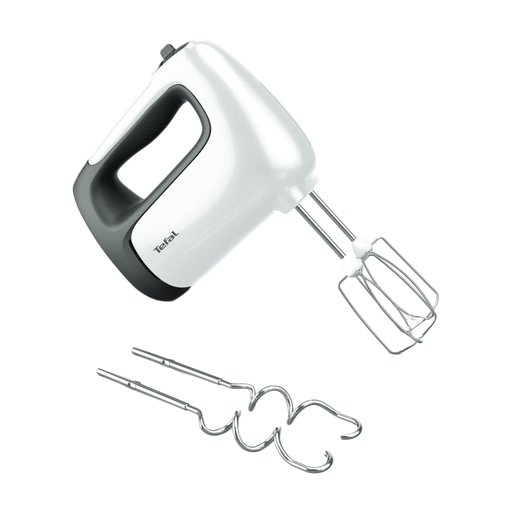
The product description lists the blending attachment for soup, making this model a useful option if you want to blend soup with a hand mixer.
450 W; five speeds; stainless steel blending attachment.
 No image available
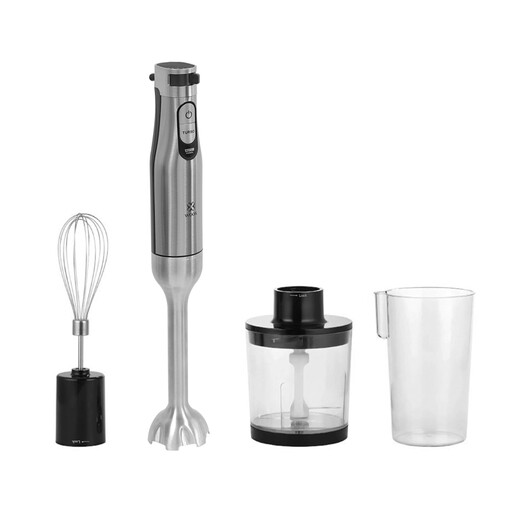
The product description lists soup as one of its uses; the set is also described as suitable for chopping and whisking.
1200 W; variable speed control; the listed set includes a chopper bowl and whisk.
 No image available
The product description lists soup as one of its uses. For hot liquids, the product information recommends using small batches and a heat-resistant bowl.
The set is listed as including a chopper and whisk.
 No image available
The product information lists soup as one of its uses. Do not exceed the maximum ingredient temperature of 80 °C.
Usable capacity of 1.5 l; three speeds and a pulse setting; removable blades. The product description says the removable parts are dishwasher-safe.
 No image available
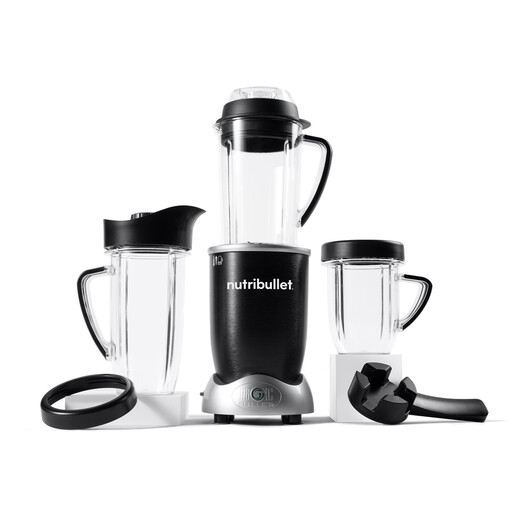
The product description lists a soup programme for hot dishes; check that the jug’s capacity for hot ingredients suits the amount of soup you want to make.
The jug for hot ingredients has a capacity of 1 l and is described as ventilated.
For soup, it’s best to cook firm vegetables first; according to the Consumentenbond, cooked vegetables are easier to blend. Follow your recipe and the instructions for your appliance too.
No. Check the instructions for the specific model before adding hot soup to the jug. Philips specifies cold or room-temperature liquids only for models HR3756/00, HR3752/00 and HR3868/00; this warning doesn’t automatically apply to other models.
The Consumentenbond advises placing the blender foot in the pan before switching the blender on. Only remove attachments after unplugging the appliance, and check the manual to see which parts can go in the dishwasher.
The Voedingscentrum advises cooling cooked leftovers within two hours, storing them covered in the fridge at 4 °C and eating them within two days, or freezing them. When reheating, heat leftovers all the way through until steaming hot.