
Cooking a large pan of soup
You’re making beetroot soup for several guests and want to blend it straight in the pan, without repeatedly transferring it. The Consumentenbond cites blending in the pan as a reason to consider a stick blender.


For a large pan of beetroot soup that’s already cooked, a stick blender is a practical choice if you want to avoid transferring it. A jug blender may be a better fit if a smooth texture is your priority, but only use it for hot soup if the instructions for that exact model say it’s suitable. If you’d also like to automate the cooking, compare the permitted hot-fill capacity of a soup maker or heated blender with the number of portions you need.
You’re making beetroot soup for several guests and want to blend it straight in the pan, without repeatedly transferring it. The Consumentenbond cites blending in the pan as a reason to consider a stick blender.
You value an even texture and don’t mind transferring the soup or blending it in several batches. The Consumentenbond notes that a jug blender often gives a smoother result; whether it’s suitable for hot soup depends on the exact model.
You want to use a soup or heating programme, so you compare the permitted hot-fill capacity with the number of portions you need. Manufacturers list the programmes and capacities for each model.
A good fit if: you’ve already cooked the beetroot in a pan and want to blend the soup in it.
Consider: you won’t need to transfer the soup to a blender jug, but the texture may be less even than with a jug blender, according to the Consumentenbond.
A good fit if: you mainly want a smooth texture and the amount you’re blending fits in the jug.
Consider: you’ll need to transfer the soup and check the instructions for the exact model before using hot liquids. KitchenAid specifies a vented lid for hot liquids on the Pure Power 5KSB2073.
A good fit if: you want to heat the soup as well as blend it, or use an automatic soup programme.
Consider: the hot capacity may be lower than the cold capacity. Philips lists a 1.2-litre capacity for four portions for the SoupMaker HR2204/80R1; Tefal specifies a maximum of 1.2 litres for hot recipes for the Blendforce Cook BL5768F0.
When you’re cooking for several guests, the size of your pan, temperature instructions and the number of portions you can make per batch will help you choose the most practical option.
| What to consider | What to look for | Which consumers |
|---|---|---|
| Blending a large amount | Compare blending in the pan with the usable capacity per batch of a jug blender or soup maker. Only count portions that fit within the permitted fill limit. | When I’m cooking for several guests, I want to blend the soup in the same pan rather than transfer it in batches. Consumers who put this approach first are estimated to make up around 36%. |
| Processing hot soup safely | Check the instructions for the exact model for the permitted temperature, fill limit and lid guidance. Also check that the specific appliance has the applicable CE marking. | I only want to put hot soup in an appliance if the instructions allow it. Consumers who prioritise model-specific guidance for hot liquids are estimated to make up around 29%. |
| A smooth texture | The Consumentenbond says a jug blender is often better suited to producing a smooth result. Weigh this against transferring the soup, worktop space and extra washing up. Cook beetroot and other hard vegetables until soft first. | If an even texture matters more to me than blending directly in the pan, I’ll consider a jug blender. Consumers who put texture first are estimated to make up around 21%. |
| Automating the cooking | Check which steps the programme carries out and how much hot soup the exact model can handle per batch. Allow for extra batches if you need to make a larger amount. | I want the appliance to take care of heating or the soup programme too, so I’ll check that its capacity suits my meal. Consumers who prioritise automatic cooking are estimated to make up around 14%. |
For the Tefal Blendforce Cook BL5768F0, the manufacturer lists a capacity of 1.5 litres for cold recipes and 1.2 litres for hot recipes. If you’re making a larger meal, you may need to work in several batches.
Compare the amount of soup you need with the hot-fill limit for the exact model, not just its largest stated capacity.
Instructions vary by model. For the vacuum blender models HR3756/00, HR3752/00 and HR3868/00, Philips specifies that you should only use cold or room-temperature liquids.
Check the instructions for the exact model before putting hot soup in a jug. Don’t assume a feature of one model applies to an entire product range.
According to the Government of the Netherlands, the retailer is your point of contact if a product is faulty. There is no fixed statutory warranty period in the Netherlands; what you can expect from a product depends, among other things, on the product and the information provided.
Read the terms of an extended warranty and check whether it actually adds anything to your existing rights.
The ErgoMixx MSM66120 is a stick blender for blending in the pan and comes with a chopper.
The Pure Power 5KSB2073 is a jug blender worth comparing if you want to blend soup in a jug.
Philips offers SoupMakers, among other products. The HR2204/80R1 is a model to compare if you’re looking for an automatic soup programme.
The Blendforce Cook BL5768F0 is a heated blender with programmes for smooth and chunky soup.
MultiQuick stick blenders are another option for blending in the pan. Compare the exact version and the accessories included.
These product picks focus on stick blenders for soup that’s already in the pan. Check the instructions for the exact model for usage and temperature limits.
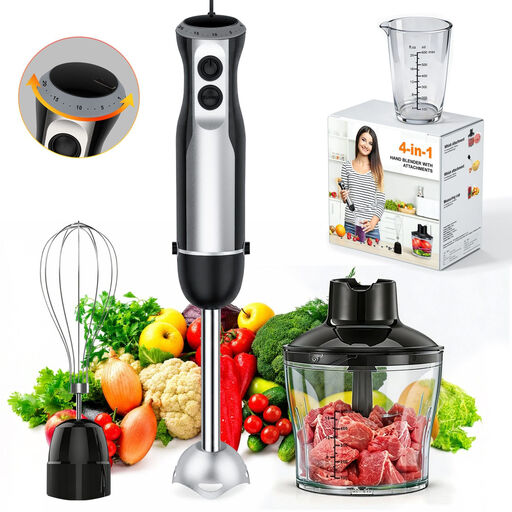 No image available
A stick blender is a good choice for blending soup in the pan without transferring it.
The product name lists 1000 W, a 4-in-1 design, 20 speeds and a turbo function.
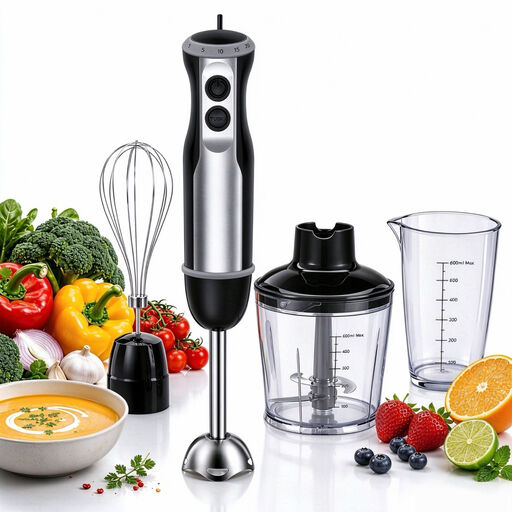 No image available
This stick blender is a good fit for soup you want to blend straight in the pan.
The product name lists six speeds and a turbo function.
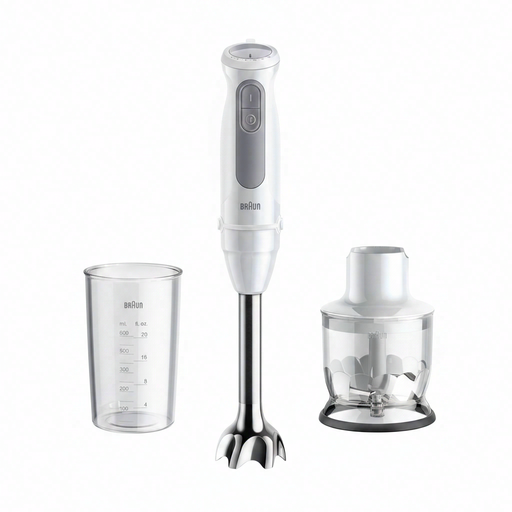 No image available
A Braun stick blender is an option to compare if you want to blend soup in the pan.
The product name identifies this model as the MQ50201M in grey.
 No image available
This stick blender is designed for blending in the pan, so you won’t need to transfer the soup to a blender jug.
The product name lists 600 W, two speeds, a whisk, a 500 ml chopper bowl and an 800 ml measuring beaker.
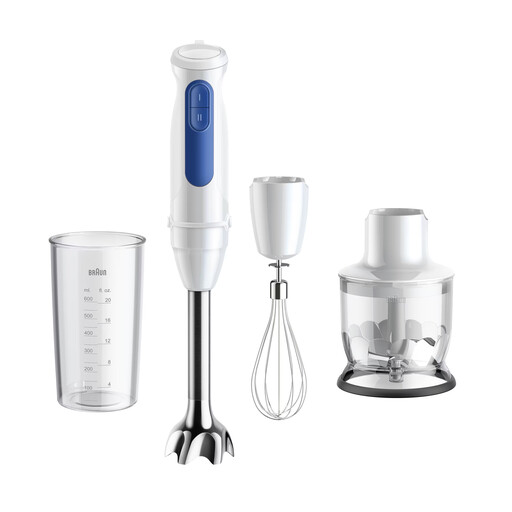 No image available
This model is a good fit if you’re looking for a Braun stick blender to blend soup straight in the pan.
The product name identifies this version as the white MultiQuick 5 MQ30202.
No. Suitability for hot liquids varies by model. KitchenAid specifies a vented lid for hot liquids on the Pure Power 5KSB2073; Philips says that the HR3756/00, HR3752/00 and HR3868/00 models should only be used with cold or room-temperature liquids. Follow the instructions and fill limit for the exact model.
Cook the beetroot and other hard vegetables until soft first, and make sure there’s enough liquid. According to the Consumentenbond, a jug blender often gives a smoother result, while a stick blender lets you blend in the pan without transferring the soup.
Check the instructions to see which parts can be removed and how to clean them, and keep the motor unit out of the washing-up water. The Netherlands Nutrition Centre advises cooling leftovers within two hours of cooking and storing them covered in the fridge.
CE marking is compulsory for electrical equipment covered by the Dutch Electrical Equipment Decree. The NVWA states that the low-voltage rules mentioned apply to nominal AC voltages from 50 V to 1000 V. Check whether the rules apply and whether the specific appliance has the marking; CE marking alone doesn’t mean the jug can handle hot soup.
In the Netherlands, the retailer is your point of contact for a solution, according to the Government of the Netherlands. There is no fixed statutory warranty period; what you can expect from a product depends, among other things, on the product and the information provided. If you’re considering an extended warranty, check whether its terms add anything to your existing rights.