
Making beetroot juice for guests
You want to juice raw beetroot and make several glasses without constantly emptying the jug. Albert Heijn’s beetroot recipe uses raw beetroot cut into pieces; Bosch lists a 1,500 ml juice container for the MES4000.


For raw beetroot and several glasses, a centrifugal juicer is the obvious choice if speed matters. Choose a slow juicer if you also regularly want to juice leafy greens and are happy to work more slowly. Compare the jug capacity, how much chopping is needed and how easy the juicer is to clean; neither type automatically produces more juice. Before buying a particular model, also check the applicable product safety requirements and the specifications of the version you’ll receive.
You want to juice raw beetroot and make several glasses without constantly emptying the jug. Albert Heijn’s beetroot recipe uses raw beetroot cut into pieces; Bosch lists a 1,500 ml juice container for the MES4000.
You value quick juicing and minimal chopping more than being able to process a wide range of ingredients. According to the Consumentenbond, a centrifugal juicer is usually faster, although the process varies from one appliance to another.
You want to juice beetroot alongside other ingredients, such as leafy greens, and are happy for juicing and cleaning to take longer. The Consumentenbond and Hurom describe slow juicers as suitable for a range of ingredients, including leafy greens.
First decide whether you mainly want to juice beetroot quickly for guests or also regularly use other ingredients. Then consider chopping, jug capacity and cleaning.
| Buying concern | What should you check? | Who is this important to? |
|---|---|---|
| Juicing raw beetroot | Check whether the instructions allow hard vegetables, what size the pieces should be and how to feed in the beetroot. | If I’m juicing raw beetroot for guests, I want to know whether the appliance is suitable and how much chopping is needed. Around 36% of consumers list beetroot as their main buying concern. |
| Making several glasses | Compare the jug capacity and how the appliance works; motor power alone doesn’t tell you how much juice a portion of beetroot will produce. | When I want to pour several glasses in a row, I don’t want to keep emptying the jug or wait ages for the juicing to finish. Around 29% of consumers prioritise speed and making multiple portions. |
| Cleaning after juicing | Check which parts can be removed and whether the instructions say they are dishwasher-safe. | After serving, I want to know how many parts I’ll need to wash and whether I can put them in the dishwasher. Around 21% of consumers say easy cleaning is their main concern. |
| Using other ingredients | Consider whether you also want to juice leafy greens or would rather serve a smoothie that retains the fibre from the whole ingredient. | If I regularly want to juice leafy greens as well as beetroot, versatility matters more to me than speed. Around 14% of consumers prioritise being able to use a variety of ingredients. |
A slow juicer doesn’t automatically produce more juice than a centrifugal juicer; according to the Consumentenbond, the yield depends on the appliance. The preparation method and suitable ingredients matter more than a general promise.
Compare appliances using the beetroot and any other ingredients you want to juice, and consider preparation and cleaning too.
Slower juicing and extra chopping or cleaning can make serving guests less efficient.
A wide opening doesn’t prove that an appliance can process every beetroot whole. Albert Heijn’s Dutch beetroot recipe cuts the beetroot into equal-sized pieces and adds them in batches.
Follow the feeding instructions for the exact model and, if necessary, cut hard beetroot into pieces.
A title may not tell you enough about the appliance you’re actually ordering; conflicting product information could lead you to make the wrong choice.
Before buying, check that the model number, appliance type and specifications match.
Centrifugal juicers such as the MES4000 and MES4010 are worth considering if you want to make juice quickly.
The HR1889/70 is a slow juicer for anyone who wants to process other vegetables and leafy greens as well as beetroot.
The H310A is a compact slow juicer worth considering if worktop space and a variety of ingredients are important to you.
The IdentityCollection J 500 BK is a centrifugal juicer worth comparing if you want to make juice quickly.
This selection includes centrifugal and slow juicers for fruit and vegetable juice. A slow juicer may suit you if you also want to process other ingredients and are happy to juice more slowly. The NVWA explains that CE marking is required for electrical equipment covered by the applicable rules: equipment with a rated AC voltage of 50–1,000 V or a DC voltage of 75–1,500 V. Check the markings on the specific version you’re buying; the model name alone doesn’t confirm this.
 No image available
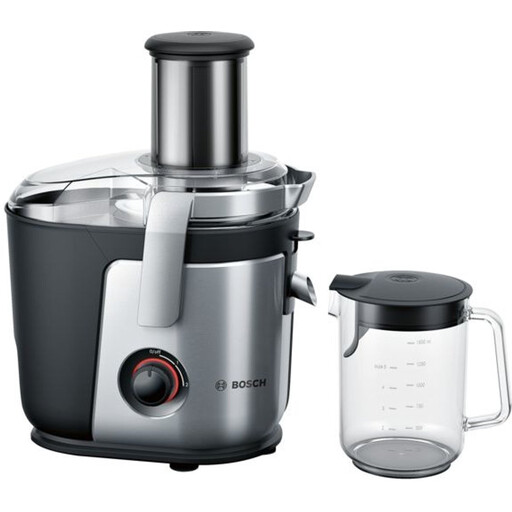
A centrifugal juicer worth considering if you want to juice beetroot and other hard vegetables and make several glasses in a row.
The product description lists an 84 mm feed chute, two speed settings, a 1.5 l juice jug and removable dishwasher-safe parts. Follow the feeding instructions for beetroot; a wide chute doesn’t automatically mean you can feed it in whole.
 No image available
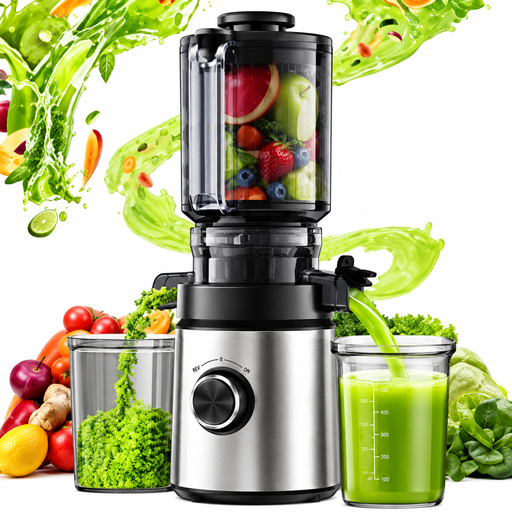
A slow juicer worth considering if you want to process other fruit and vegetables as well as beetroot, and are happy to juice more slowly.
The product title lists a 130 mm XL feed chute. Check the feeding instructions for hard vegetables and bear in mind that slow juicers generally work more slowly than centrifugal juicers.
 No image available
This slow juicer is an option if you want to make fruit and vegetable juice and don’t necessarily need the quickest method.
The product title lists a 600 ml juice cup and an 836 ml pulp container. The Consumentenbond points out that a slow juicer generally works more slowly than a centrifugal juicer.
Yes. Wash raw vegetables thoroughly under running water. Albert Heijn’s beetroot recipe scrubs the beetroot clean, cuts it into equal-sized pieces and adds it in batches. For a different appliance, follow its own feeding instructions.
Don’t assume that homemade beetroot juice will keep for a week. Albert Heijn gives that timeframe for a recipe, but it isn’t general storage advice for every homemade blend. If you’re serving it to guests, it’s best to make it shortly beforehand; keep any juice made earlier refrigerated.
No. A slow juicer doesn’t automatically produce more juice than a centrifugal juicer. According to the Consumentenbond, yield varies from one appliance to another, so compare specific models for the ingredients you plan to use.
For a consumer purchase in the Netherlands, the retailer must offer a solution if the product is faulty, according to the Dutch government. There is no fixed statutory warranty period in the Netherlands; a manufacturer’s warranty or an extended warranty you buy separately is in addition to this.
CE marking is compulsory for electrical equipment covered by the rules described by the NVWA. These rules include equipment with a rated AC voltage of 50–1,000 V or a DC voltage of 75–1,500 V. Check the markings on the specific version you’re buying.