For small batches of thick beetroot hummus, a hand blender with a suitable mixing beaker is a sensible place to start. Use soft, cooked beetroot and cooked chickpeas, adding a little water if needed. If you often make larger batches or also want to chop and grate ingredients, compare food processors. A jug blender is best suited to you if you also regularly make liquid mixtures. The Consumers' Association notes that blenders are less suitable for thick ingredients and small batches, and product specifications alone can’t predict how smooth your hummus will be.
Which option is right for you?
Small batches and limited storage space
If you usually make a small bowl of hummus and don’t have much space, a hand blender can be practical. The Consumers' Association lists small batches as an advantage of hand blenders, although the result may not be as smooth.
Batch cooking and preparing a range of dishes
A food processor could suit you if you regularly make larger batches and also want to chop or grate ingredients. The Netherlands Nutrition Centre lists a food processor as one way to blend hummus.
Hummus and liquid mixtures
A jug blender is worth considering if you also make smoothies or other liquid mixtures and have room for the jug. According to the Consumers' Association, blenders are best suited to liquid mixtures.
What should you look for when choosing?
Hand blender
Best for: small batches and limited storage space. The Netherlands Nutrition Centre lists a hand blender as a method for making hummus.
Bear in mind: a thick mixture may not blend evenly. Choose a mixing beaker that lets the blender head reach the ingredients easily.
Food processor
Best for: larger batches and anyone who also wants to chop or grate ingredients. The Netherlands Nutrition Centre recommends a food processor for hummus.
Bear in mind: the bowl and accessories take up space and need cleaning. The stated bowl capacity doesn’t tell you what quantity of hummus will blend well.
Jug blender
Best for: anyone who regularly makes liquid mixtures as well as hummus and has room for a jug.
Bear in mind: according to the Consumers' Association, blenders are less suitable for thick ingredients and small batches. A jug also usually means more washing up.
When making beetroot hummus, first consider how thick the mixture is and how much you’re making. Then think about the mixing vessel, the space you have and what else you’ll use the appliance for.
| What to consider |
What to look for |
Who it matters to |
| Blending thick hummus |
Check that the mixing vessel and blades are suitable for your batch size. Use soft, cooked beetroot and cooked chickpeas; the Netherlands Nutrition Centre suggests adding water for smoother hummus. |
If I mainly want to blend a thick spread, I check whether the blades can reach the ingredients. Around 36% of consumers prioritise blending thick hummus. |
| Small batches and storage space |
Compare the dimensions and removable parts. The Consumers' Association says hand blenders are suitable for small batches; a large stated capacity doesn’t prove that small amounts will blend well. |
If I have limited cupboard space and usually make a small batch, I don’t want an unnecessarily large appliance. Around 29% of consumers prioritise small batches and storage space. |
| Making more than hummus |
Choose based on the other dishes you make and check which blades and accessories are included. A blender is best suited to liquid mixtures, while a food processor can also chop and grate. |
If I’m looking for one appliance for hummus and other dishes I make regularly, I compare its functions with how I’ll use it. Around 21% of consumers prioritise versatility. |
| Cleaning and aftercare |
Check the manual for each part and compare how many parts you’ll need to clean after use. The Consumers' Association notes that blenders often mean more washing up than hand blenders. |
If I cook in a shared kitchen, I want to wash up as few parts as possible and know what to do if something goes wrong. Around 14% of consumers prioritise cleaning and aftercare. |
Common mistakes when choosing
-
Looking only at the wattage
Wattage is a product specification and doesn’t, by itself, predict how smooth thick beetroot hummus will be. The Consumers' Association distinguishes between appliance types when choosing and points out that thick ingredients can be difficult to blend.
First choose an appliance type that suits your batch size and how you’ll use it. Then assess the mixing vessel and controls; don’t draw conclusions about the result from the power rating alone.
-
Assuming the capacity is the right working batch size
The maximum or stated capacity doesn’t tell you the smallest quantity of ingredients that will blend well. Philips lists a maximum jug capacity of 1,9 litres and an effective capacity of 1 litre for the HR2041/00; neither figure tells you the minimum quantity of thick hummus it can blend.
Check the manual and see whether the blades can reach the amount you usually make.
-
Assuming the legal guarantee always ends after two years
An extended warranty you pay for and your statutory rights aren’t the same thing. ACM ConsuWijzer explains that the retailer must put things right if a product is faulty and you could reasonably expect it to work properly under normal use.
Read what extra cover gives you and what rights you already have with the retailer.
Brands to consider
Braun
The MultiQuick hand blenders reviewed are designed for blending in a beaker or bowl. According to Braun, the MQ7025X comes with a 350 ml chopper, a whisk and a measuring beaker.
- Braun lists 850 W and variable speed for the MQ7025X.
- Check whether the chopper is large enough for your batch and which parts the manual says are dishwasher-safe. The specifications aren’t an independent hummus test.
Bosch
The MultiTalent food processor MCM3100W reviewed is designed for anyone who wants to chop or grate as well as blend.
- Bosch lists a 2,3-litre bowl, a universal blade, two speeds and a pulse function for the MCM3100W.
- The bowl and accessories need storage space. The stated capacity doesn’t prove what quantity of beetroot hummus will blend well.
Philips
The HR2041/00 reviewed is a jug blender for anyone who also regularly makes drinks or other liquid mixtures.
- Philips lists a 450 W motor, one speed setting with a pulse function, a maximum jug capacity of 1,9 litres and an effective capacity of 1 litre.
- The brand’s claim about smooth blending isn’t based on an independent test with thick beetroot hummus. The Consumers' Association says blenders are less suitable for thick ingredients and small batches.
KitchenAid
In its own recipe, KitchenAid explains how it uses the K400 blender to make beetroot hummus with cooked beetroot and rinsed chickpeas.
- The recipe is an example of a preparation using a blender jug and liquid ingredients.
- A brand recipe isn’t a comparative test and doesn’t prove that the blender is right for every batch.
Joybuy products for blending and chopping
The selection mainly features hand blenders for blending in a beaker, alongside a compact chopper for recipes such as hummus. Check which accessories are included with each version and which batch size suits the way you’ll use it.
 No image available
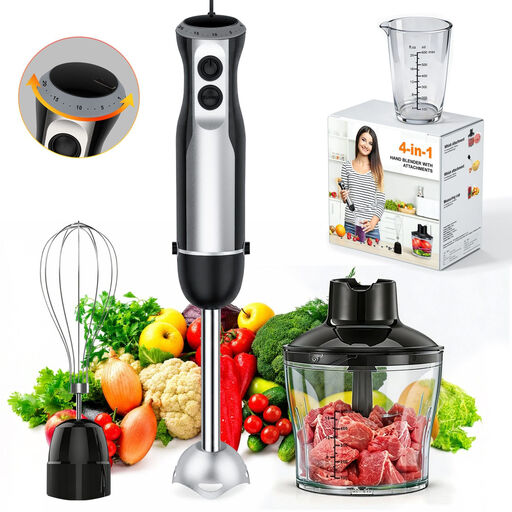
4-in-1 hand blender, 1000 W
This hand blender is designed for blending; according to the product description, the set also includes a chopper.
The title lists 20 speeds and a turbo function. The description mentions a 500 ml chopper and a 600 ml measuring beaker.
View at Joybuy
 No image available
Braun MultiQuick 5 MQ50001
This hand blender could suit small batches; the product description lists dips as one of its uses.
The description lists 21 speeds and a mixing beaker for small batches.
View at Joybuy
 No image available
ROUNY 4-in-1 hand blender
The set is designed for blending and chopping; according to the product description, it also includes a whisk.
The title lists up to 1200 W, 15.000 rpm, a 700 ml measuring beaker and a 500 ml chopper. The instructions say the appliance should run for no more than 1 minute at a time, followed by 1 minute of rest.
View at Joybuy
 No image available
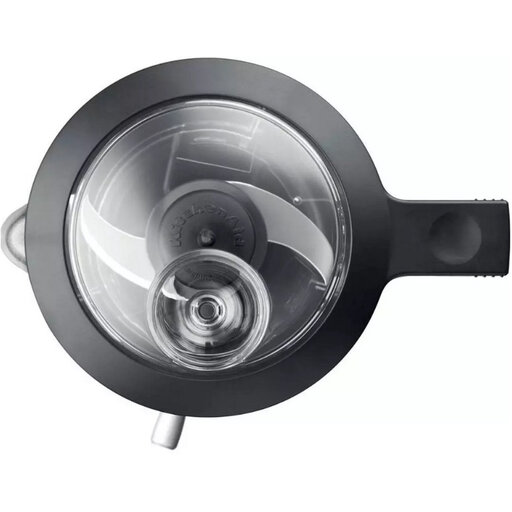
KitchenAid Mini Chopper 5KFC3516ECU
The product description lists hummus and cooked beans as possible uses for this compact chopper.
According to the product specification, the bowl has a capacity of 830 ml; the appliance has two speeds and a pulse option. The specification says the appliance is not dishwasher-safe.
View at Joybuy
 No image available
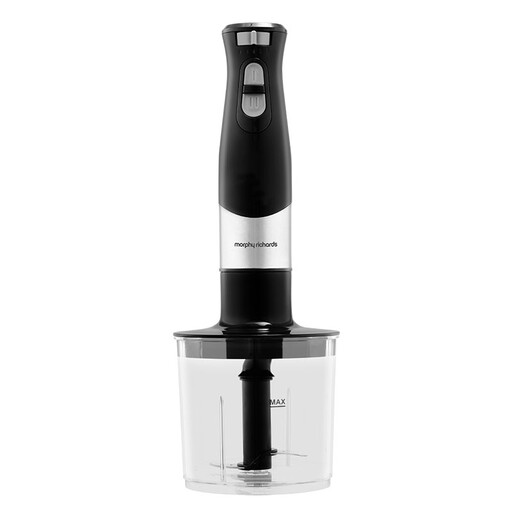
Morphy Richards Total Control MUC-HB64V
This set could suit you if you want to use a whisk and chopping bowl as well as blend.
The product title lists 600 W, a 700 ml measuring beaker, a whisk and a detachable blending foot. The description mentions five speeds and a chopping bowl.
View at Joybuy
Frequently asked questions
Should the beetroot be cooked before I blend beetroot hummus?
For this method, use soft, cooked beetroot. KitchenAid cooks the beetroot in its own recipe before adding it to the blender; the Consumers' Association recommends cooking hard vegetables first, as this makes them easier to blend.
What should I do if the hummus is too thick to blend properly?
Gradually add a little water if it suits your recipe; the Netherlands Nutrition Centre suggests adding water for smoother hummus. Stop the appliance and follow the instructions if the blades become blocked. The wattage alone won’t tell you whether an appliance can handle a dry, thick mixture.
How should I store homemade beetroot hummus?
Keep the hummus chilled in a clean, airtight container. The Netherlands Nutrition Centre says plain homemade hummus keeps for 1–3 days in the fridge; that isn’t a guaranteed shelf life for every recipe containing beetroot. The Netherlands Nutrition Centre recommends setting your fridge to 4 °C and refrigerating prepared leftovers within 2 hours.
In the Netherlands, do I only get a two-year guarantee on a blender or hand blender?
No. According to ACM ConsuWijzer, alongside any manufacturer’s or retailer’s guarantee, you have statutory rights for as long as you could reasonably expect the product to work properly under normal use. If a product is faulty, the retailer is your point of contact; there is no fixed general two-year limit on the statutory guarantee.
Is there a statutory cooling-off period for online purchases?
For a standard online purchase of an appliance, ACM ConsuWijzer says you generally have a statutory cooling-off period of up to 14 days after delivery. Check the guidance on exceptions and trying out the appliance before you use it or send it back.


