
Fan of thick hummus
You want to blend chickpeas and cooked beetroot without thinning the dip, so look for an appliance that’s suitable for thick mixtures.


For a small, thick batch of beetroot hummus, a stick blender or food processor is usually the more practical choice. A jug blender is better suited to larger batches or wetter mixtures. Check the usable capacity and the instructions for thick mixtures: wattage alone won’t tell you whether an appliance can achieve the hummus texture you want.
You want to blend chickpeas and cooked beetroot without thinning the dip, so look for an appliance that’s suitable for thick mixtures.
You’d rather make one larger batch, so you’ll want to consider the usable capacity and whether you can stir the mixture as you go.
You occasionally make a small batch and want to factor in storage space and how many parts you’ll need to clean afterwards.
A good fit if: you want to blend a smaller batch directly in a suitable bowl and have limited storage space.
Bear in mind: the result may be less smooth. Also check which beaker or chopper comes with the exact model.
A good fit if: thick spreads are what you’ll mainly use it for; the Netherlands Nutrition Centre lists a food processor as an alternative to a stick blender for beetroot hummus.
Bear in mind: check the minimum working quantity, bowl size and removable parts for cleaning and storage for each model.
A good fit if: you want to blend larger batches or wetter mixtures as well as hummus.
Bear in mind: it may be less practical for a small, thick batch; you might need to add some liquid and stir the mixture as you go.
| What to consider | What should you check? | Who is this most relevant to? |
|---|---|---|
| Thick, smooth dip | Check whether thick mixtures are suitable, whether you can stir the mixture safely and what working quantity the appliance needs. | If I want a thick dip without adding unnecessary liquid, I’ll focus on how the appliance handles thick mixtures. Around 36% of consumers cite texture as their main reason for buying. |
| Quantity for lunch | Compare the usable capacity with the batch you’ll actually make, not just the jug’s total capacity. | If I’m making lunch for several people, I want to know whether the whole batch will fit at once. Around 29% of consumers cite batch size as their main reason for buying. |
| Cleaning and storage | See how many parts you’ll need to clean and which can be removed or are dishwasher-safe, according to the manual. | If I only use the appliance occasionally and have limited cupboard space, I don’t want to store or wash more parts than necessary. Around 21% of consumers cite tidying away and storage as their main reason for buying. |
| Making other dishes too | Check which preparations the manufacturer allows for the exact model; extra power or features alone don’t guarantee better hummus. | If I want to use the appliance for other dishes too, I’ll look beyond this lunchtime dip. Around 14% of consumers cite versatility as their main reason for buying. |
A standard blender is generally less practical for thick or small batches than for wetter mixtures. Higher wattage doesn’t prove that an appliance can achieve the texture you want.
First choose the type of appliance that suits your batch and recipe. Then check the manual for guidance on thick mixtures and the minimum working quantity.
With a thick mixture, you may need to add extra liquid, or it may take more work to get the mixture to the blades.
Tefal lists a 2-litre jug for the Tefal PerfectMix Essential BL771B, with a usable capacity of 1.5 litres. So the total capacity doesn’t tell you how much mixture you can process according to the specifications.
Compare the usable capacity with your recipe, and also check whether the model is suitable for the smaller batches you make.
Recipes from KitchenAid and Magimix show how those brands use their jug blenders for particular recipes; they don’t compare hummus results across different appliances.
Use recipes like these as a guide to ingredients, liquid and stirring, not as proof that one brand is the best choice for everyone.
Tefal lists hummus as one of the uses for the PerfectMix Essential BL771B range.
The ErgoMaster MSM8M930 is a stick blender for those who want to blend directly in a suitable bowl.
The MultiQuick 5 Pro is a stick blender range worth considering if controls and accessories matter to you.
KitchenAid’s own recipe explains how to make beetroot hummus with the K400 jug blender.
Magimix describes a jug blender recipe using cooked beetroot and water, with stirring part-way through.
These Joybuy products are stick blenders or stick blender sets for anyone who wants to blend beetroot hummus directly in a bowl or measuring jug.
 No image available
A stick blender set to consider if you want to combine blending with chopping.
The set description lists a 500 ml chopper and a 700 ml measuring jug.
 No image available
A stick blender option if you want to do some chopping as well as blending.
Braun lists a 1000 W motor and 25 speeds for this model. The product description mentions a chopper with three texture settings; check the contents of the exact pack.
 No image available
A set to consider if you want to combine blending and chopping with accessories.
The title lists up to 1200 W, a 700 ml measuring jug and a 500 ml chopper. The description recommends running it for one minute, followed by a one-minute rest.
 No image available
A stick blender to consider if you want to adjust the speed while blending.
The product name lists 800 W; the product description mentions 20 speeds and a turbo setting.
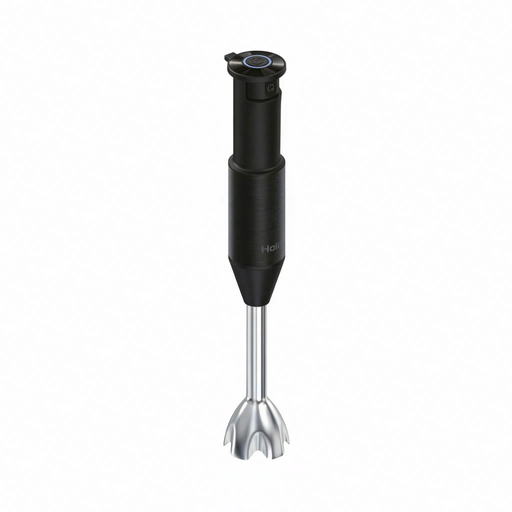 No image available
A stick blender option with a measuring jug for anyone who prefers to use a separate container when blending.
The product description lists a 0.9-litre measuring jug and removable parts.
The Netherlands Nutrition Centre’s beetroot hummus recipe uses cooked beetroot. The Consumers’ Association recommends cooking hard vegetables first, as they’re then easier to blend.
If needed, add a splash of water or a few ice cubes, as suggested in the Netherlands Nutrition Centre’s recipe. A Magimix recipe recommends stirring with a spatula, then using the pulse setting. Follow the instructions for your appliance and keep the spatula away from moving blades.
The Netherlands Nutrition Centre recommends keeping homemade plain hummus in the fridge for 1–3 days and advises a fridge temperature of 4 °C. Ingredients and hygiene can affect how long a homemade dip stays fresh.
A food processor or stick blender may be more practical for a thick or small batch; a jug blender is better suited to larger or wetter mixtures. Check the minimum quantity and instructions for thick mixtures for the model you choose.
No. Wattage alone doesn’t prove that an appliance can achieve the hummus texture you want. Also consider the type of appliance, permitted uses, batch size and whether you can safely stir the mixture in accordance with the manual.