Who is this choice for?

Park walker travelling light

You want to take close-ups of stationary beetle wing cases without changing lenses, and prefer a camera that’s easy to carry. The Consumentenbond (Dutch Consumers’ Association) highlights factors such as intended use and size when choosing a camera.

Detail-focused macro photographer

You want to capture fine textures at greater magnification, and are happy to bring a suitable mirrorless camera and macro lens. Cameranu explains that a 1:1 reproduction ratio means the subject is projected onto the sensor at the same size as it is in real life.

Photographer of live beetles

You want to capture details without moving the beetle, so you also consider the working distance in front of the lens. Sony Netherlands specifies a working distance of around 13 cm for one particular macro lens.

What should you look for when buying?

Compact camera with close-up mode

Best for: photographing stationary wing cases with a standalone camera that’s easy to take with you on a walk.

Consider: according to its manual, the OM SYSTEM Tough TG-7 can focus as close as 1 cm from the subject in microscope mode. Getting this close isn’t always practical with a live beetle, and that distance alone doesn’t tell you the magnification.

Mirrorless camera with macro lens

Best for: anyone who prioritises high magnification or a greater working distance, and wants to use a camera body with a compatible interchangeable macro lens.

Consider: you’ll need to choose and carry the camera body and lens as a combination. The minimum focusing distance is measured from the sensor, so it isn’t the same as the clear space in front of the lens.

Try your current camera first

Best for: anyone who already owns a camera and wants to check whether their current lens captures enough detail.

Consider: check the focusing distance and magnification of the exact lens. An extension tube can reduce the focusing distance, but check compatibility and bear in mind that it may reduce the amount of light reaching the sensor.

What to consider What to look for Who it suits
Magnification and detail Compare the maximum magnification of the exact camera or lens with the size of the detail you want to capture. Canon specifies a maximum of 1,4× for the RF 100mm F2.8L Macro IS USM; Nikon specifies a 1:1 reproduction ratio for the NIKKOR Z MC 105mm f/2.8 VR S. If I want to capture the fine texture of a small wing case clearly, I look at the magnification of the exact combination. This is the main concern for around 30% of consumers considering this choice.
Portability and ease of use Check whether the camera has built-in close-up modes or whether you’ll need a separate macro lens. To compare portability, consider the complete setup, not just the camera body. If I want to photograph something I’ve spotted on a walk without changing lenses, ease of carrying matters a lot. Portability is the top priority for around 30% of consumers considering this choice.
Distance from the subject Check the working distance in front of the lens at the magnification you want. The minimum focusing distance measured from the sensor doesn’t directly tell you how much clear space you’ll have. When photographing a live beetle, I want to keep enough distance so I don’t have to approach or move it. Distance from a live subject is the main priority for around 20% of consumers.
Focusing and light Check how to focus and expose for close-ups. For a still subject, you could take several shots at different focus points; this is less suitable when the subject is moving. When photographing shiny details on a wing case, I want to position the focus precisely and take the light into account. Focus and lighting are the main concern for around 20% of consumers considering this choice.

Common buying mistakes

  • Assuming ‘macro’ means a fixed magnification

    A short focusing distance doesn’t tell you how large the wing-case texture will appear on the sensor.

    Look up the maximum magnification of the exact camera model or lens, then compare it with the detail you want to capture.

  • Comparing camera bodies alone

    A compact camera and a mirrorless camera with a separate macro lens aren’t equivalent setups.

    Compare complete, compatible combinations and check exactly which parts are included.

    A mirrorless camera may require a separate macro lens and other components to complete the setup. You’ll need to carry those too.

  • Confusing minimum focusing distance with working distance

    Minimum focusing distance is measured from the sensor. The clear space between the front of the lens and the subject is different, and affects how close you need to get to a live beetle.

    Check the working distance at the magnification you want to use. Sony gives a working distance of around 13 cm for the FE 90mm F2.8 Macro G OSS.

Brands to consider

OM SYSTEM

The Tough TG-7 is a compact camera with built-in macro modes. OM SYSTEM also offers interchangeable macro lenses for its mirrorless cameras.

  • According to the OM Digital Solutions manual, the TG-7 can focus as close as 1 cm from the subject in microscope mode.
  • That short distance isn’t necessarily practical with a live, shy beetle. The M.ZUIKO 90mm is a separate Micro Four Thirds lens, not an accessory for the TG-7.

Canon

The EOS R50 is an APS-C mirrorless camera with an RF mount; the RF 100mm F2.8L Macro IS USM is a separate lens that Canon lists as compatible.

  • Canon specifies a maximum magnification of 1,4× for the RF 100mm F2.8L Macro IS USM.
  • The camera body and macro lens are separate components. According to the camera specifications, the EOS R50 doesn’t have in-body image stabilisation; don’t assume that stabilisation details for other combinations also apply to this body and lens.

Nikon

The Z50II is a DX mirrorless camera with a Z mount; the NIKKOR Z MC 105mm f/2.8 VR S is a separate Z-mount macro lens.

  • Nikon specifies a 1:1 reproduction ratio for the NIKKOR Z MC 105mm f/2.8 VR S.
  • You’ll need both a compatible camera body and the macro lens. Don’t assume a standard kit lens offers the same macro magnification without checking.

Sony

The FE 90mm F2.8 Macro G OSS is an E-mount lens for a compatible Sony mirrorless camera.

  • Sony specifies a maximum magnification of 1,0× and a minimum focusing distance of 0,28 m for this lens; it gives a working distance of around 13 cm.
  • These figures apply to this specific lens. The camera body needs to be chosen separately, and the stated focusing distance isn’t the same as the working distance.

Cameras at Joybuy

This selection features digital cameras for photography. Check each model’s macro magnification and focusing distance to make sure they’re suitable for photographing small beetle wing cases.
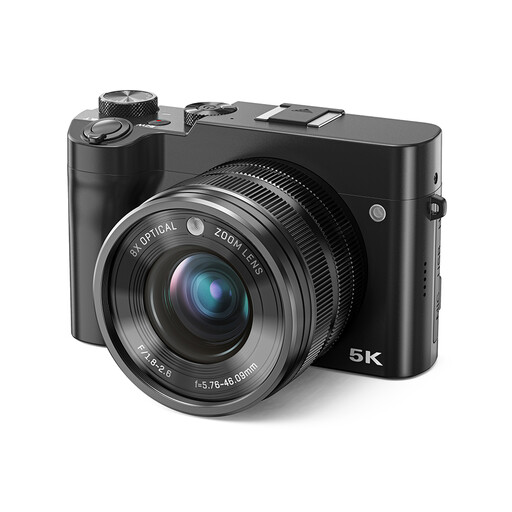
Songdian digital camera with 8X Optical Zoom Lens, 5K, 64MP and Dual Lens, Black

Songdian Digital Camera, 8X Optical Zoom Lens, 5K, 64MP, Dual Lens, Black

The product name describes a digital camera. For close-ups of wing-case details, check the maximum magnification and minimum focusing distance of this exact model.

The product name lists 8X Optical Zoom Lens, 5K, 64MP and Dual Lens.

Joybuy
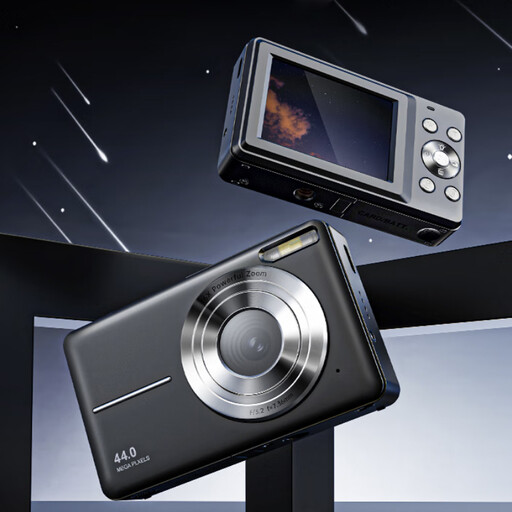
Songdian pocket camera, 4K, 44MP, 16X Zoom, Black

Songdian Pocket Camera, 4K, 44MP, 16X Zoom, Black

The product name describes a pocket camera for photography and video. Check whether its close-up features are suitable for the details you want to capture.

The product name lists 4K, 44MP and 16X Zoom.

Joybuy
Sony ZV-E10 with 16-50mm Zoom, Black

Sony ZV-E10 + 16-50mm Zoom, Black

The product name lists the Sony ZV-E10 with a 16-50mm zoom lens. Check the macro magnification and focusing distance of this combination for close-ups of beetle wing cases.

The product name lists a 16-50mm Zoom lens.

Joybuy

Frequently asked questions

Does a macro mode mean a beetle wing case will appear life-size on the sensor?

No, having a macro mode doesn’t necessarily mean that. Check the maximum magnification of the exact camera or lens. At 1:1, the subject is projected onto the sensor at life size, according to Cameranu.

When is focus stacking useful for photographing a beetle wing case?

Focus stacking can help with a subject that stays still while you take a series of shots: the camera combines images focused at different points. Keep the camera steady, and don’t expect the same result with a moving beetle.

Do I need a lens as well as a mirrorless camera?

That depends on the combination and what’s already included. The Canon RF 100mm F2.8L Macro IS USM and Nikon NIKKOR Z MC 105mm f/2.8 VR S are separate macro lenses. Check compatibility, what’s in the box and the complete setup before you choose.

What are my rights when buying a camera online in the Netherlands?

According to ACM ConsuWijzer, online purchases generally come with a 14-day cooling-off period from the date of delivery, subject to legal exceptions. Your statutory guarantee is separate from any manufacturer’s warranty. If a product breaks sooner than you could reasonably expect under normal use, contact the seller.

Can I pick up a live beetle or move plants in a park to take a photo?

There isn’t one simple yes or no that applies to every species, action and location. The Dutch Government sets out a duty of care and rules for protected species. Before doing anything, check the rules for the specific species and location. Take photos without damaging the animal or its habitat.
