
Small-batch cook
You usually make beef stew for yourself or for two, and want to know whether the pan offers enough usable capacity.


For beef stew for one or two people, a compact electric pressure cooker is an obvious choice, as long as your ingredients stay within the permitted fill limit. If you regularly make extra portions, a larger multicooker may suit you better, but bear in mind that it will need more storage space. The NVWA states that CE marking is compulsory for electrical products; check the marking on the specific model.
You usually make beef stew for yourself or for two, and want to know whether the pan offers enough usable capacity.
You cook for a small household, but sometimes want to make extra portions in one go and store them for later.
You want to be able to brown ingredients, release the pressure safely and clean the parts according to the instructions.
Ideal if: you usually make small quantities and want to combine pressure cooking and browning in one appliance.
Trade-off: the permitted fill level for pressure cooking is lower than the pan’s total capacity; also check the capacity of the exact model.
Ideal if: you regularly want to make several portions of beef stew at once.
Trade-off: extra pan capacity takes up more room on your worktop and in your cupboard; features such as automatic pressure release vary by model.
| What to consider | What should you check? | Which consumers should pay particular attention? |
|---|---|---|
| Usable capacity | Compare the quantity you usually cook with the fill marking and the instructions for the specific pan. | When I cook for one or two people, I want enough room for meat, liquid and vegetables without exceeding the fill limit. Around 33% of consumers prioritise usable capacity and compact dimensions. |
| Pressure cooking and browning | Check whether the model has a pressure-cooking function and a sauté or stir-fry function. | When I make beef stew, I want to check that the pan really pressure-cooks and that I can brown the ingredients beforehand. Around 27% of consumers prioritise this cooking method. |
| Cooking ahead | Compare the quantity you want to make with the permitted fill limit, and consider where you’ll store any extra portions. | When I want to make several meals in one cooking session, I look for space for extra portions and a practical way to store leftovers. Around 20% of consumers prioritise cooking ahead. |
| Ease of use and maintenance | Read the model-specific instructions for pressure release, valves, the sealing ring and cleaning. | When I want to know easily when it’s safe to open the lid and how to care for the parts, I focus on clear, model-specific instructions. Around 20% of consumers prioritise ease of use and maintenance. |
You can’t use the pan’s full capacity when pressure cooking. The permitted fill level may be lower for ingredients that expand.
Compare your usual recipe with the fill marking and the instructions for the exact model you’re considering.
Automatic pressure release is a model-specific feature. Instructions for opening and cleaning also vary between appliances.
Check the instructions for pressure release, opening the lid and maintaining the parts.
According to ACM ConsuWijzer, your statutory warranty rights are separate from a retailer’s or manufacturer’s warranty.
Before choosing an optional warranty service, check what additional cover it offers.
According to the product information, the Duo Mini and Classic Mini are compact models with pressure-cooking and sauté functions.
The Turbo Cuisine CY7548 is a multicooker listed as having pressure-cooking and stir-frying functions.
The HD2616/70 is a larger option if you’re looking for a beef programme and automatic pressure release.
This selection includes compact and larger electric pressure cookers and multicookers for making beef stew and cooking ahead.
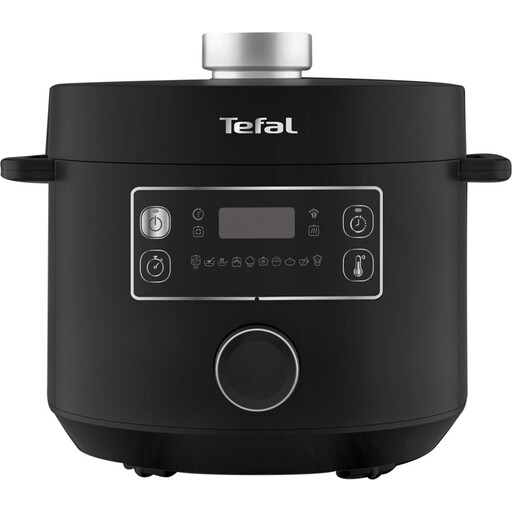 Image unavailable
An option if you want to pressure-cook beef stew and brown the ingredients beforehand.
The product information lists a 5 L capacity, ten automatic programmes and a dishwasher-safe ceramic inner pot.
Follow the pressure-release instructions and don’t force the lid open.
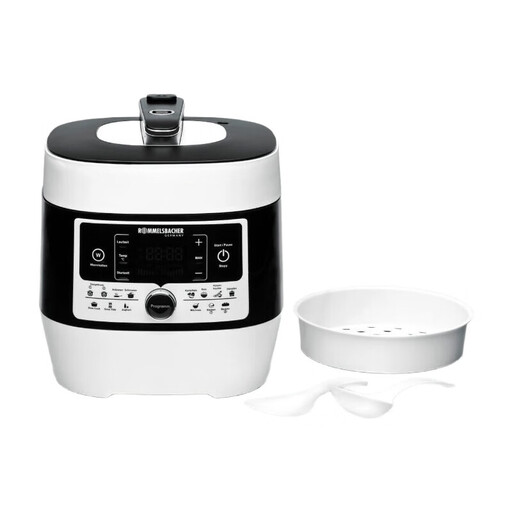 Image unavailable
A more compact way to cook meat, provided you match the pan’s usable capacity to your portion sizes.
The product information lists 4 L of usable capacity from a total capacity of 6 L, fourteen programmes and two pressure settings.
Follow the fill marking and the pressure-release instructions.
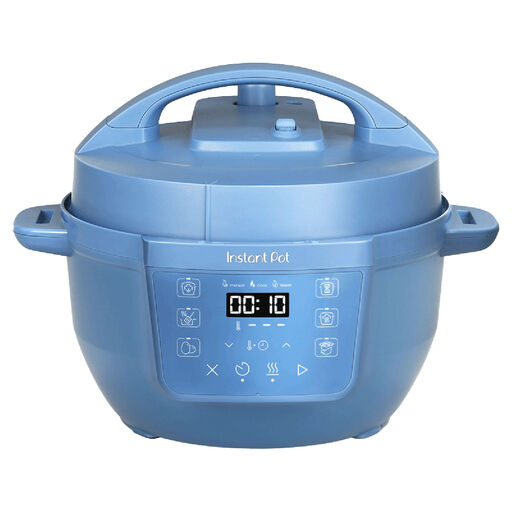 Image unavailable
A compact choice for smaller portions if you also want to sauté ingredients before pressure cooking.
The product information lists a 3.8 L capacity, up to four portions and a stainless steel inner pot.
Keep to the maximum fill marking and don’t open the lid until the pressure has been released.
 Image unavailable
The larger pan could be a good fit if you want to make several portions at once and have enough storage space.
The product information lists a 6 L capacity, 1000 W, fourteen functions and a stainless steel inner pot; it describes the capacity as suitable for 6–8 people.
When pressure cooking, follow the maximum fill marking and the model-specific instructions.
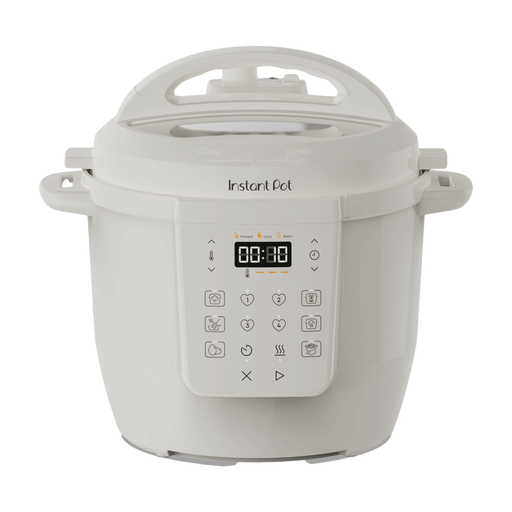 Image unavailable
A larger option if you want to combine pressure cooking and browning, and regularly cook for more people.
The product information lists a 5.7 L capacity and a stainless steel inner pot.
The generous capacity is described as suitable for medium to large families; when pressure cooking, follow the fill marking and pressure-release instructions.
No, wait until the pressure has been fully released. The Instant Pot instructions warn you not to force the pan open; for other models, follow their own instructions.
According to Voedingscentrum, allow leftovers to cool within two hours and store them in a sealed container. Eat refrigerated leftovers within two days, and reheat them thoroughly until piping hot before eating.
Yes. The NVWA states that CE marking is compulsory for electrical products. This general requirement doesn’t in itself confirm that a specific model complies; check the marking on the appliance you choose.
No. ACM ConsuWijzer describes statutory warranty as a right that exists alongside a retailer’s or manufacturer’s warranty. If a product breaks sooner than you could reasonably expect under normal use, the retailer is responsible for providing an appropriate solution.