
Vandaag of morgen in huis

Kwaliteit gegarandeerd

Welkomstaanbiedingen ontgrendelen: GRATIS bezorging | Tot 80% korting | Gratis 30 dagen JoyPlus-proefperiode
Download de app
A bedside crib gives your baby their own sleeping space close to your bed. That sounds simple, but differences in height, attachment, dimensions and age limits determine whether a model will really work in your bedroom. For example, an inexpensive baby bedside crib may not align with the height of your mattress, while a portable baby cot may prove impractical if it needs to be moved regularly.
So don’t just focus on colour, price or phrases such as “extra comfortable”. Above all, check the product specifications and usage limits.
A height-adjustable baby crib is only practical if its range matches the height of your mattress. Measure the distance from the floor to the top of the mattress before ordering. Also check whether the stated measurement refers to the base height or the top edge, as these are not always the same.
A bedside crib that is too low will not align properly with the parents’ bed. A setting that is too high can also make it awkward to lift your baby in and out.
Wheels are useful if you want to move the bedside crib to another room during the day. However, they only add value if they can be locked securely. Check whether the product has lockable castors and whether the bedside crib is secured to the parents’ bed with fastening straps.
Do not allow a gap to form between the parents’ mattress and the bedside crib. Check the attachment again every time you move the crib or adjust its height.
Many bedside cribs are intended for babies from birth to around 6 months, with a maximum load of, for example, 9 kg. The age limit is not the only criterion. With some models, you must stop using them sooner if your baby can sit, kneel or pull themselves up unaided.
A crib described as “3-in-1” is therefore not automatically suitable for every stage of development. Always check the manufacturer’s age, weight and safety warnings.
Compare these points:
Mesh sides can improve visibility of your baby and, according to the product description, help with air circulation. Treat this as a practical feature, not a guarantee of a particular effect. Do not use extra pillows, thick blankets, soft toys or other loose items in the crib if the manufacturer advises against them.
Also check how the cover should be cleaned. With several models, only hand-washing with a mild detergent is permitted. Allow all fabric to dry completely before putting it back.
The Chicco Next2Me Go lists EN 716-1 in its product specifications. For every model, check which standard, warnings and instructions are actually stated for the product. A European standard does not replace the assembly instructions or the need to check the straps, brakes, frame and mesh.
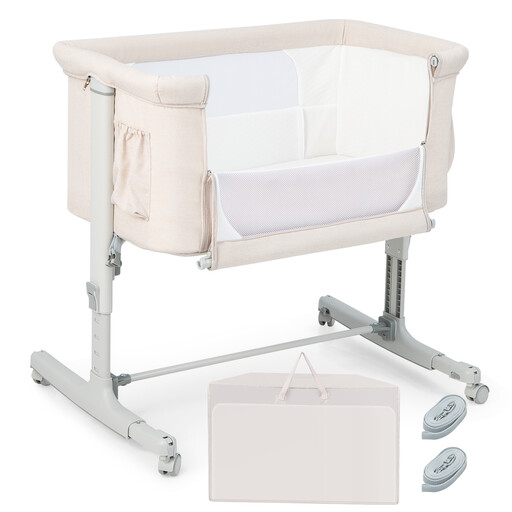
Why it suits this profile: This model combines a bedside crib, cot function and bassinet in one design. The five height settings and supplied carry bag are practical for parents who use different rooms.
The height is adjustable and the crib comes with two straps. However, check beforehand that the stated dimensions are suitable for your bed.
Five height settings, four lockable swivel castors, foldable legs and a carry bag. Suitable from birth to around 5 months and up to 9 kg.
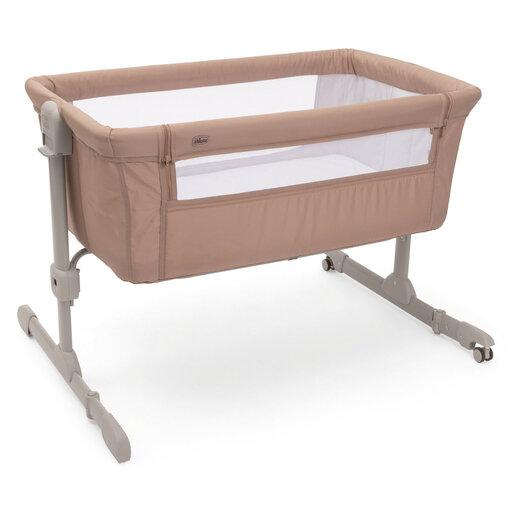
Why it suits this profile: The Next2Me Essential has a metal frame, six height positions, two mesh windows and a supplied carry bag. It is well suited to parents who value everyday practicality and clearly defined product specifications.
The manufacturer specifies six height positions, foldable legs and a fastening kit. This allows you to check the fit and assembly requirements in advance.
Dimensions of 98.5 x 70.5 cm, a height range of 65 to 80 cm, two lockable wheels and a breathable mattress according to the product description.
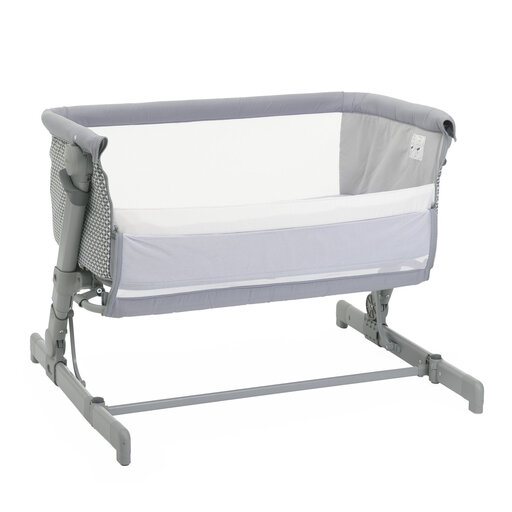
Why it suits this profile: This bedside crib is designed for parents who want to fold it away regularly, take it with them or use it as a freestanding cot.
According to the product information, the crib can be folded without removing the mattress or legs. The supplied straps are designed to secure it to the parents’ bed.
Six height positions, mesh on both sides, a carry bag and a stated maximum load of 9 kg. The manufacturer lists EN 716-1.
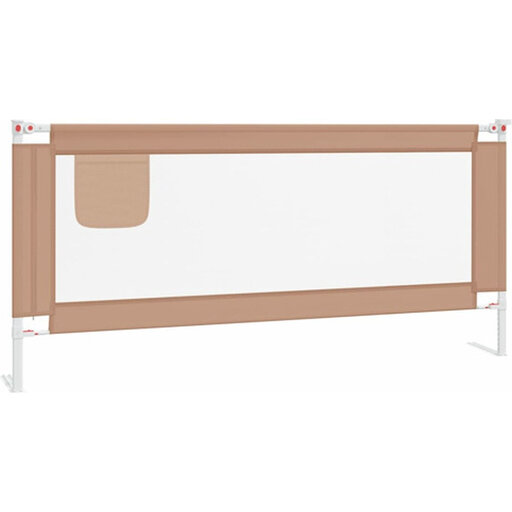
Why it suits this profile: This is not a bedside crib, but a toddler bed guard for children aged 18 months to 5 years. It is suitable for families who want to protect the edge of an existing mattress after the baby stage.
The age recommendation is clearly stated. The guard must not be used on bunk beds, waterbeds or airbeds. Position it firmly against the mattress and check the attachment regularly.
Length of 200 cm, a metal frame with plastic connectors and polyester cover. The model is not foldable.
We have put together a complete, up-to-date list of products that fully meet these strict selection criteria and the applicable European safety regulations.
Use this checklist before your baby sleeps in the crib:
A baby crib with mosquito net may seem appealing for travel or warm rooms, but check that the mosquito net is part of the original design and is fitted correctly. Do not add loose accessories that have not been approved for the model.
It varies by model. The bedside cribs mentioned are generally suitable from birth to around 6 months, with a maximum load of 9 kg. The developmental limit may be reached sooner: always follow the warning to stop using the crib once your baby can sit, kneel or pull themselves up unaided.
Not automatically. Check the height, the space beneath the bed and the attachment method. A bed with an unusual edge, a divan-style construction or limited space beneath the frame may be less suitable. Measure before buying and check that the straps can be fitted according to the instructions.
That depends on the design and how you use it. A foldable baby cot with wheels and a carry bag is practical for moving around, but it must be checked again after every assembly. Do not transport the cot with your baby inside it, and only use it within the stated age and weight limits.
