
Bedside charger
Wants to top up their phone within easy reach, while keeping both the phone and power bank clear and uncovered. The Dutch fire service advises against charging devices under a pillow or duvet.


A power bank is most useful beside your bed if you need a portable power source. If there’s a suitable socket at your regular charging spot, a standard mains charger may be all you need. For one phone, a wired model with around 10,000 mAh is a sensible starting point. More capacity or wireless charging is only worth considering if you’ll genuinely use those extra features. Charge your phone and power bank in a clear, uncovered space: the Dutch fire service advises against charging devices under a pillow or duvet and recommends charging during the day where possible.
Wants to top up their phone within easy reach, while keeping both the phone and power bank clear and uncovered. The Dutch fire service advises against charging devices under a pillow or duvet.
Wants a portable backup for one phone and needs to weigh the stated capacity against the energy actually delivered and the power bank’s size. The Dutch Consumers’ Association compares power banks on, among other things, how much power they really deliver.
Wants to use fewer separate cables or charge more than one device. Check compatibility and the power available when charging devices at the same time.
First, decide whether you really need a separate power source beside your bed. Then compare the connection and usable capacity. Only consider wireless charging or extra ports if those features suit the way you use it.
| What to consider | What to look for | Who should consider this? |
|---|---|---|
| Safe place to charge | Can your phone and power bank sit clear and uncovered, away from pillows and duvets? | I want to charge my phone nearby, but not on or under the bedding; around 40% of consumers put safe bedside charging first. |
| Backup for one phone | Compare the stated capacity with independent measurements of the energy delivered, as well as the size of the exact model. | If I want to top up one phone and take the power bank with me, usable backup matters more to me than extra capacity; around 30% of consumers say this is their main concern when buying. |
| Connection and positioning | Check your phone’s connection and the power bank’s cable or charging method. For wireless charging, check compatibility with your exact phone model. | I don’t want to search for a separate cable or be unsure about wireless compatibility; around 20% of consumers choose connection and ease of use as their top priority. |
| Multiple devices | Check how many outputs there are and how much power remains when you connect several devices at once. | If you want to charge several devices, check whether the power is shared; around 10% of consumers put charging multiple devices or repeated charging first. |
A power bank doesn’t remove the need to let heat escape. The Dutch fire service advises against charging devices under a pillow or duvet.
Choose a clear spot in advance where your phone and power bank can sit uncovered, and charge them while you’re awake where possible.
A warning issued by the Netherlands Food and Consumer Product Safety Authority in July 2025 names four specific Anker models; it doesn’t automatically apply to every power bank from the brand.
Before using a power bank, check its full model number against current safety warnings. Don’t use a model covered by a warning.
The capacity actually delivered may differ from the stated capacity. The available power can also change when you use several ports at once; Belkin, for example, notes this for the BPB027hqBL tested.
Where possible, compare independent test results and check the specifications for the number of connections you want to use at the same time.
Not every phone has the same connection or supports the same type of wireless charging. A fixed cable also isn’t the same as a separate, replaceable cable.
Check your exact phone model, its connection and what’s included with the power bank.
If the model doesn’t come with a suitable cable, you may need to buy one separately.
The BoostCharge models tested vary in capacity, ports and cable: there’s a 10,000mAh model with two USB-C ports and a separate cable, and a 20,000mAh model with an integrated cable.
The Fiera model tested has a 10,000mAh capacity, a fixed USB-C cable and an extra USB-C port.
The EB-U2510XUEGEU tested combines wired and wireless charging, making it an option if you want to set down a compatible phone without a cable.
According to Xtorm, the Fuel Series 5 FS5103U has a capacity of 10,000 mAh, with two USB-C ports and one USB-A port.
This selection includes wired and wireless power banks for charging your phone beside the bed, with options for one phone and for multiple connections. For each model, check that its connection or wireless charging method is compatible with your phone.
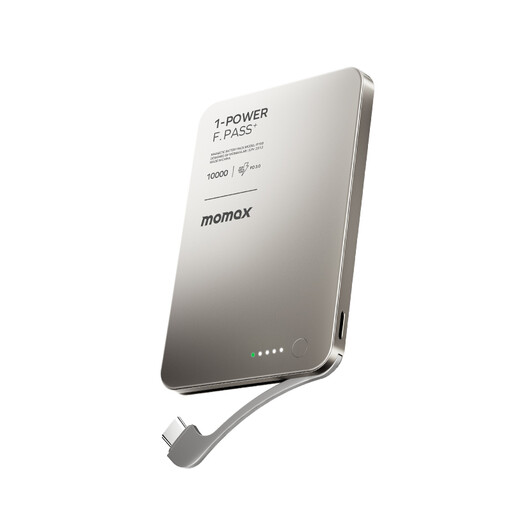 No image available
An option if you want portable backup and don’t want to carry a separate USB-C cable.
The product name states 10,000 mAh and a built-in cable. The description lists USB-C input and output, and a USB-A output.
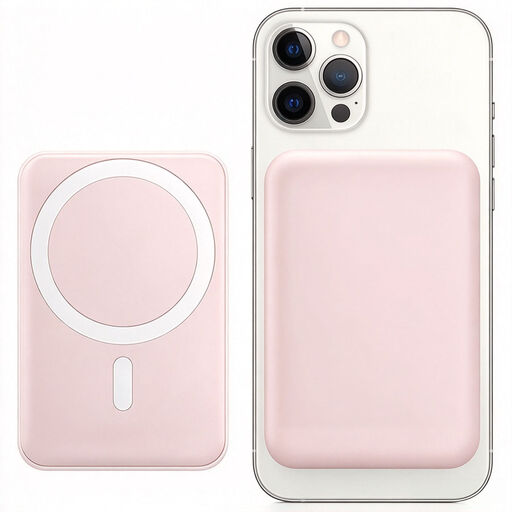 No image available
Ideal if you want to set your phone down while it charges wirelessly. Check that your phone or case is compatible with the magnetic attachment.
The product name states 10,000 mAh, 15 W and wireless charging.
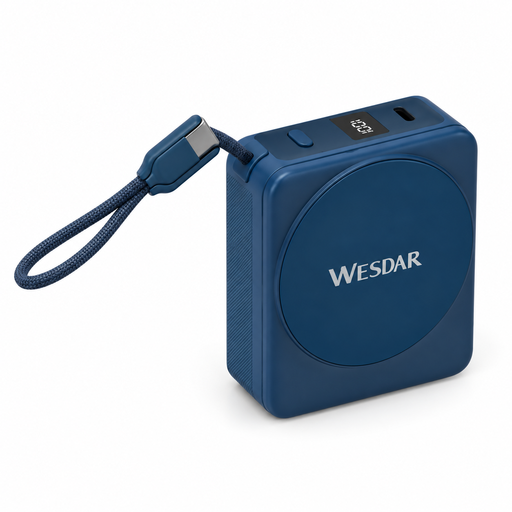 No image available
An option if you want to charge wirelessly or use a built-in cable. Check that the magnetic positioning works with your device.
The product name states up to 22.5 W wired charging, 15 W wireless charging and a digital display.
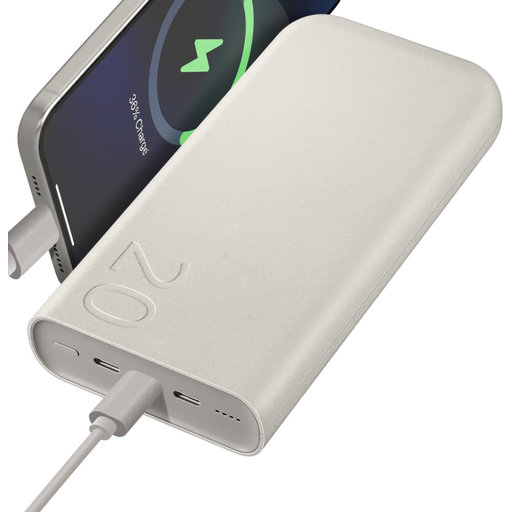 No image available
A higher stated capacity and multiple connections may suit you if you want to top up more than one device. Weigh that against how portable you want the power bank to be.
The product name states three USB-C ports and 45 W. According to the description, 45 W applies when one device is connected.
 No image available
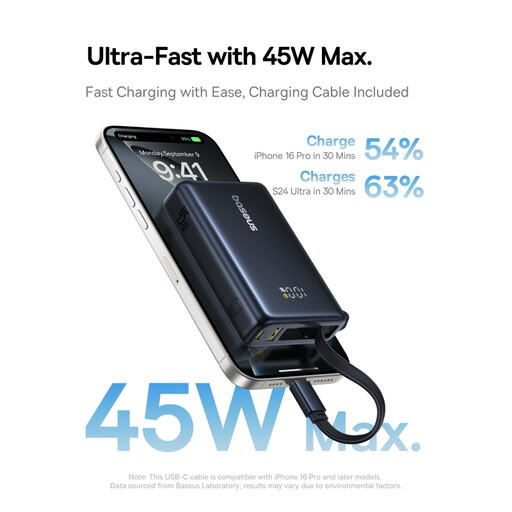
A wired option if you want portable backup and prefer to use USB-C.
The product name states 10,000 mAh and 45 W. The description lists USB-C input and output, and a USB-A port; the product name states that it’s suitable for iPhone 17.
No. The Dutch fire service advises against charging devices under a pillow or duvet. It recommends placing chargers in a clear space so heat can escape. Using a power bank doesn’t change this advice.
The Dutch fire service recommends charging during the day where possible, when you’re nearby. Place devices on a hard surface and charge them in a clear, uncovered space.
No. The stated capacity doesn’t tell you how many full charges your phone will get. The Dutch Consumers’ Association compares how much power banks actually deliver with the manufacturers’ claims; you should also take your phone use into account.
Check your phone’s connection, then check the output and supplied cable for the exact power bank. For the Belkin BPB027hqBL tested, for example, Belkin states that an iPhone 13 or 14 needs a USB-C to Lightning cable, which isn’t included.
No. ACM ConsuWijzer explains that statutory guarantees in the Netherlands don’t have a fixed time limit: what you can expect with normal use depends, among other things, on the type of product and its price. A manufacturer’s warranty doesn’t replace your rights against the seller.