
Vandaag of morgen in huis

Kwaliteit gegarandeerd

Welkomstaanbiedingen ontgrendelen: GRATIS bezorging | Tot 80% korting | Gratis 30 dagen JoyPlus-proefperiode
Download de app
A bedside crib can make night-time care easier. Your baby sleeps nearby, so you don’t have to keep walking to a separate nursery. However, many models look similar. Marketing terms such as “multifunctional”, “breathable” and “ergonomic” only mean something if you know which specifications really matter.
Look out for these common pitfalls:
An adjustable baby crib is only useful if its height settings suit your bed. So, measure:
A model with 5 height settings offers more flexibility. According to the product information, the mattress height of the crib mentioned ranges from approximately 30 to 44 cm across five settings. Always check this against your own bed, as mattress heights vary from bedroom to bedroom.
Don’t just look at the mattress thickness. More important are:
According to the product descriptions, the models mentioned have a 76 × 43 × 3 cm mattress and are recommended for babies aged 0 to 5 months, with a weight limit of 9 kg. These are product details you can check, not a general guarantee that every baby will fit in the crib for the same length of time.
Some models state that they have a 10-degree incline. The product description says this is intended to help reduce milk reflux. Don’t consider this a medical benefit or a substitute for safe-sleep advice. Use the crib only as directed in the instructions, and check that the sleep surface remains flat and stable.
A breathable mesh crib makes it easier to see your baby and can help air circulate around the sides. However, mesh is no substitute for keeping enough clear space around your baby’s face. Loose blankets, pillows and toys should not be in the crib.
A baby crib with wheels is handy for moving between the bedroom and living room. Ideally, choose swivel wheels with brakes, as on the models mentioned. Lock the brakes as soon as the crib is stationary. A folding baby crib or one supplied with a travel bag is particularly useful for visits and trips, but check the frame, base and attachment points every time you set it up.
For products sold in Europe, also check whether the retailer provides information about relevant safety standards, warnings, materials and assembly. A reference to a standard is only useful if it’s clear which model and version it applies to.
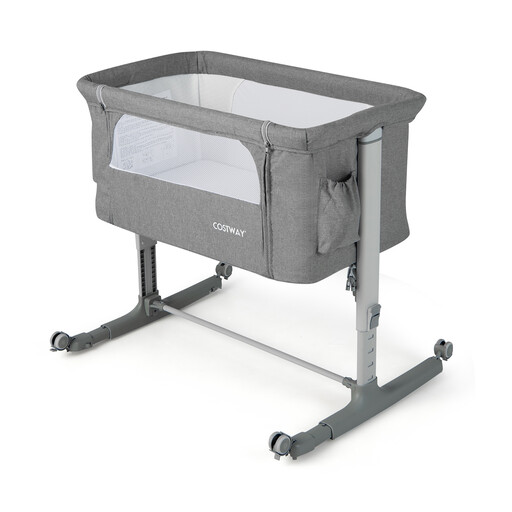
Why it suits this profile: A practical choice for parents who want one crib to use as a co-sleeper, a regular crib and a bassinet.
The five height settings make it possible to adjust the crib to different bed heights. The supplied straps are designed to secure it to the bed; follow the instructions to do this.
3-in-1 design, mesh sides, four swivel wheels with brakes and a side pocket.
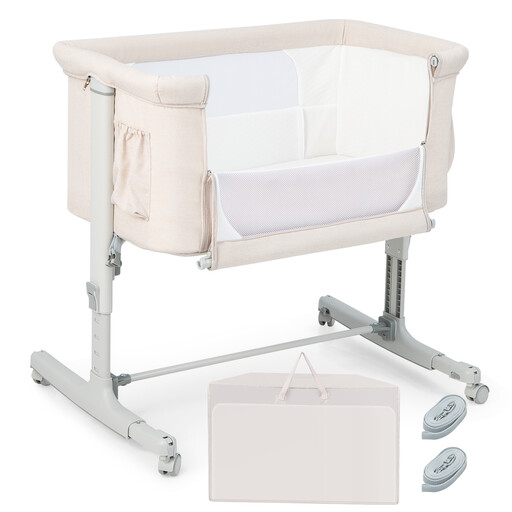
Why it suits this profile: A good fit for parents who want flexibility at home and would also like to take the crib to visit family or stay away from home.
The travel bag makes it easier to carry than a loose frame. After transport, check that all the parts have been securely assembled again.
Five height settings, breathable mesh panels, a folding design and an Oxford travel bag.
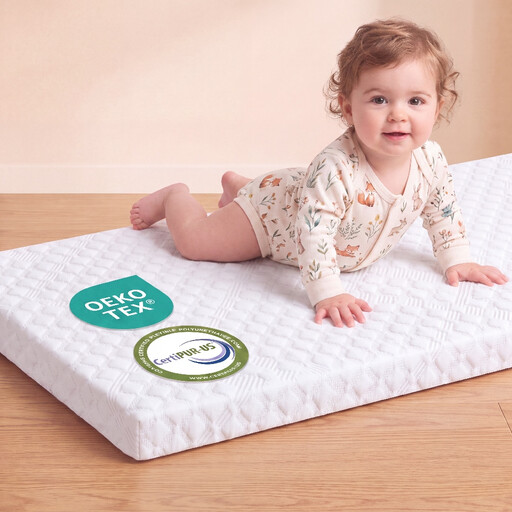
Why it suits this profile: Useful as a separate mat for the floor, pushchair or outdoor use, but not automatically a replacement for the mattress in a bedside crib.
The removable, water-repellent cover makes everyday care easier. Always check that the size suits the intended surface before use.
120 × 60 cm, TPU water-repellent coating and non-slip underside.
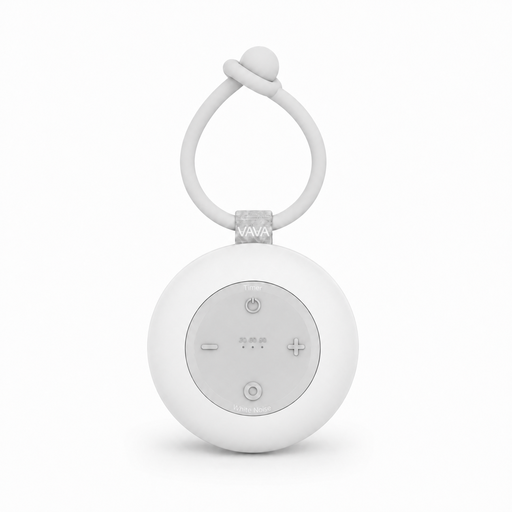
Why it suits this profile: A portable aid for maintaining a consistent sleep routine at home, on the go or during night-time care.
The device can support a routine, but it can’t guarantee sleep. Keep it out of reach, use a low volume and don’t point the speaker towards your baby’s head.
18 sounds, five light settings, timer options and up to 40 hours of battery life according to the stated test setting.
We’ve put together a complete, up-to-date list of products that meet these strict selection criteria and the applicable European safety requirements.
Fit the straps according to the instructions and check that the crib sits flat against the bed. There must be no dangerous gap. Lock the wheels and, once assembled, check that the frame remains stable when you place your baby in the crib.
This depends on the age limit, maximum weight and your baby’s development. The models mentioned are listed as suitable from 0 to 5 months and up to 9 kg. Stop using the crib sooner if your baby can roll over independently, pull themselves upright or if the manufacturer instructs you to do so.
Only use a mattress designed for the specific frame and one that fits exactly. A separate model such as the Thin baby mat has different dimensions from the cribs mentioned, so don’t automatically use it in the crib. Always check the size, thickness and manufacturer’s instructions.
