
Viewer with limited bedroom space
You want to follow the stage and any on-screen text from bed without choosing a screen that won’t fit where you plan to put it. Measure your viewing distance and the available width before deciding on a size.


First, measure the distance from your eyes in bed to where the TV will go, then choose a screen size that suits both the distance and the room. Next, compare how it displays dark scenes, its viewing angle and how clearly it reproduces voices. Also check that the app, playback method and subtitles you need are available for each recording. A 4K TV won’t automatically make a recording with a lower source resolution look sharper.
You want to follow the stage and any on-screen text from bed without choosing a screen that won’t fit where you plan to put it. Measure your viewing distance and the available width before deciding on a size.
You want to distinguish between dark parts of the set and performers in the spotlight, and judge the picture from where you’ll actually be watching. The Consumers’ Association points out that LCD TVs often have a more limited viewing angle than when viewed straight on.
You prioritise clear dialogue, music and useful subtitles over picture specifications alone. Where possible, compare sound tests for the specific model and check the subtitles for each recording.
Start with the distance and where the TV will go in your bedroom. Then compare picture and sound from your usual viewing position, and check that you can play the recording you want to watch there.
| What to consider | What to look for when buying | Who should prioritise this? |
|---|---|---|
| Screen size and placement | Measure the viewing distance from your eyes and check the TV’s dimensions with its stand. The Consumers’ Association cites around 2.4 times the screen diagonal as a viewing distance people found comfortable in its own research. Use this as a guide, not a fixed rule. | If I want to follow the action on stage from bed, the screen needs to suit both the distance and the space available. Around 28% of consumers put screen size and placement first. |
| Dark scenes and viewing angle | Compare specific models and view the picture from your usual viewing position. The Consumers’ Association explains that OLED technology allows individual pixels to display black; LCD and QLED models vary from one TV to another. | If I need to distinguish dark sets from performers in the spotlight, I focus on how the picture looks from bed. Around 22% of consumers put dark scenes first. |
| Clear dialogue and music | Look for a sound test of the specific model and, where possible, listen to speech and music at a suitable volume. Check the connections if you might want to use external audio. | If dialogue and singing matter as much to me as the picture on stage, I want to be able to follow voices clearly at my usual volume. Around 22% of consumers put clear dialogue and music first. |
| Recording and subtitles | For each title, check current availability, subtitle languages and the supported app or playback method. A smart TV doesn’t guarantee that every recording will be available on the device. | If I want to watch a particular performance or read along with the text, I first check that the title and subtitles I need are available. Around 17% of consumers prioritise playback and subtitles. |
| Energy use and other costs | Compare the energy labels and stated energy consumption of the models. Also check the terms of your chosen content service and any equipment you may need. | If I want to factor in ongoing energy use and possible content costs, I look beyond the TV itself. Around 11% of consumers put running costs first. |
A recording with less detail won’t automatically gain the detail of content originally filmed in 4K.
First check the picture quality available for the recordings you want to watch, then compare specific TV models.
QLED is a type of LCD, while OLED works differently. Black levels and viewing angles can vary, even between models using the same screen technology.
Compare specific TVs from your viewing position and in the lighting conditions you use in your bedroom.
Availability, subtitles and broadcast rights can vary by title and over time. OperaVision says the recording of Fidelio has not been available to watch in full since 3 October 2026.
Before you buy, check that the title, language and playback method you want are available on the device you plan to use.
A manufacturer’s warranty and your statutory rights in the Netherlands are not the same thing.
Keep your proof of purchase and contact the retailer if a product may be faulty. Consider any extended warranty packages separately from your existing rights.
LG offers compact OLED and LCD models, including the 42-inch OLED42C5ELB and the 43-inch 43UT73006LA.
According to Philips, the 43PUS9000/12 is a 43-inch 4K QLED TV with Ambilight.
According to TCL, the P7K range also includes a 43-inch QLED version, model 43P7K.
According to Samsung, the QE43Q7FAAUXXN is a 43-inch QLED model to compare with other compact LCD and OLED options.
These TVs come in different screen sizes and are worth comparing for a bedroom set-up. Measure your viewing distance and check whether each model can play the recording you want using the available playback method.
 No image available
A 43-inch option if that size suits your viewing distance and the space available.
43 inches; 4K QLED; Smart TV.
 No image available
A 43-inch model to consider if the screen size suits your bedroom and viewing distance.
43 inches; 4K UHD; 60 Hz; Dolby Vision; VIDAA Smart OS.
No image available
A 50-inch screen will only be suitable if your viewing distance and the space available in your bedroom allow for it.
50 inches; 4K UHD; Dolby Vision; VIDAA Smart TV.
 No image available
A 32-inch model to compare if a smaller screen is a better fit for your available space.
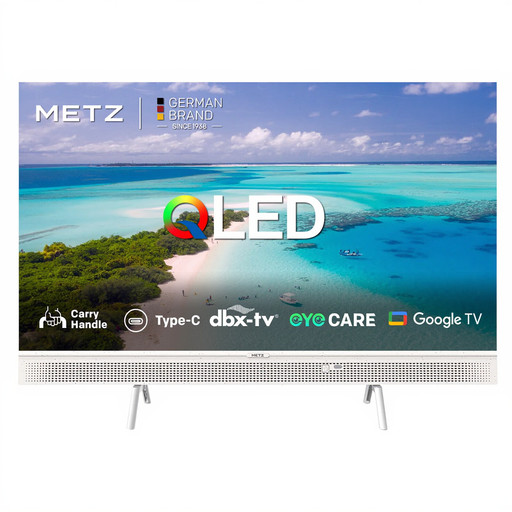
32 inches; HD; QLED+; Smart TV; Dolby Audio.
 No image available
Compare this 50-inch model with your viewing distance, and measure in advance to check that it will fit where you plan to put it.
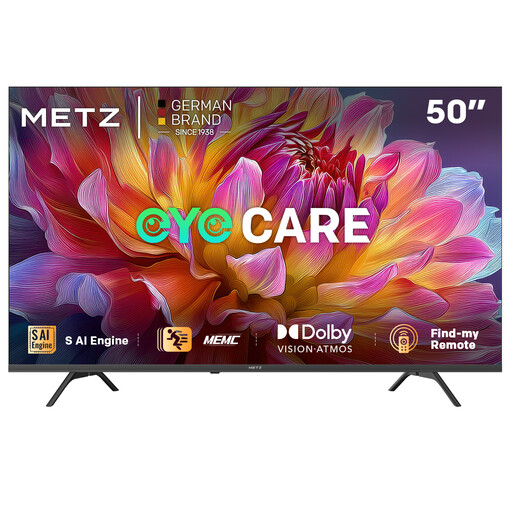
50 inches; 4K UHD; HDR10; Dolby Vision; Google TV.
No. A TV supporting 4K isn’t enough on its own: the recording and the stream also need to contain enough detail. First choose a screen size that suits your viewing distance, then compare the picture quality of the specific TV.
According to NPO, you can open the player settings in the app to turn subtitles on or off. Also check that the recording and subtitles you want are available; the controls may differ on another service.
First, compare sound assessments for the specific TV model and try listening to speech at your usual volume. If you’re considering external audio, check which connections the TV has. A stated speaker power rating isn’t a listening test in itself.
According to ACM ConsuWijzer, online purchases generally come with a statutory 14-day cooling-off period after delivery, although exceptions may apply. If a product is faulty, you also have statutory rights against the retailer; these rights do not simply depend on the manufacturer’s warranty.