
Watching from bed
Wants a screen that is comfortable to watch from the measured distance and fits in the chosen spot.


First, measure the distance from your bed to where you plan to put the TV, and check that the set will fit. The Dutch Consumers' Association suggests dividing the viewing distance by 2.4 as a starting point for the screen diagonal in centimetres. For dark scenes, you can compare OLED models with LCD and QLED TVs, but the picture processing of the specific set and the light in your bedroom matter too. Also check that your chosen subtitles and sound options are available in the app, broadcast or receiver you actually use.
Wants a screen that is comfortable to watch from the measured distance and fits in the chosen spot.
Focuses on how a specific screen displays dark interiors and evening scenes, and compares the contrast with the light in the bedroom.
Checks subtitles and sound options in the app, broadcast or TV receiver they actually use.
The main things to weigh up are the viewing distance and available space, the lighting conditions you watch in, and support for your chosen viewing source.
A good fit when: the bedroom or TV space is small and the measured viewing distance allows for a smaller screen.
Consider: compare how the specific set displays dark scenes, and measure the available space before choosing a smaller size.
A good fit when: you sit further from the screen in bed, or watch in daylight too, and the size suits the room.
Consider: QLED is a type of LCD, not OLED. Compare specific models rather than assuming how they display dark scenes based on the technology name alone.
A good fit when: you often watch in a darkened bedroom and place a high priority on contrast in dark scenes.
Consider: also take the light, size and cost into account. A long-lasting static image can cause image retention; tests of older models do not predict the risk for a current set.
| What to consider | What should you check? | Who is this important for? |
|---|---|---|
| Size and placement | Measure the distance from your eyes to the screen; divide that distance in centimetres by 2.4 as a starting point for the diagonal. Also check the external dimensions, including the stand. | When I watch from bed, I want a screen that is comfortable to watch from my viewing distance and fits on the cabinet. Consumers who prioritise size and placement account for around 31% of consumers in this comparison. |
| Dark scenes and lighting | Compare specific models showing dark and bright scenes, and take the usual light in your bedroom into account. The Dutch Consumers' Association points out that the picture processing of the individual set also plays a part. | For evening scenes, I want to judge how the picture looks in my usual viewing light, rather than relying on the screen type alone. Around 31% of consumers give dark scenes or lighting the highest priority. |
| Dialogue and subtitles | Test your preferred language and subtitles in your own app, broadcast or receiver. Also check which audio outputs the model offers. | When I want to follow dialogue clearly, subtitles need to be available from the source I actually use. Consumers who prioritise clear speech account for around 23% of this comparison. |
| Apps and energy consumption | Check that the exact version supports the apps you want, and compare SDR and HDR consumption on the same basis using the EU energy label. | I want to use my usual viewing source and compare energy consumption without mixing up different viewing settings. For around 15% of consumers, ease of use or running costs matter most. |
The distance from your bed and the available width together determine whether the screen is comfortable to watch and fits in the space.
Measure the viewing distance and the space available. Use the calculated diagonal as a starting point, then check the set's dimensions, including the stand.
QLED is a type of LCD. The picture processing of the individual set also affects colour and contrast, so the technology label alone does not tell you how a specific model performs.
Compare specific sets showing both dark and bright scenes, rather than judging only the screen technology.
The broadcast or receiver you use must support your preferred subtitles. TV settings cannot help if the source does not provide them.
Test your preferred language in the app, channel or set-top box you actually use.
The Dutch Consumers' Association found image retention in older test models under prolonged, partly unusual conditions. That result is not a measurement of current models.
Weigh the benefits for watching dark scenes against your own use of long-lasting static images, and check the terms for the model you choose.
The versions listed offer different sizes to compare for a bedroom set-up: the 32PFS6900/12 is Full HD, while the 43PUS8500/12 is 4K QLED. Both product descriptions mention Ambilight.
The OLED42C55LA is a 42-inch 4K OLED TV with webOS, as listed by LG Netherlands.
The QE43Q7F2AUXXN is a 43-inch 4K QLED version to compare with other LCD and OLED models.
The XR42A90KAEP is a 42-inch model from Sony's A90K OLED range, giving you another option to compare for size and features.
These Joybuy models offer a range of screen sizes and display technologies to weigh up against your viewing distance, the space available and the scenes you enjoy watching.
 No image available
A 42-inch OLED version to compare with LCD models if dark scenes are important to you.
4K Ultra HD, Dolby Vision, HDR10, Dolby Atmos, HDMI 2.1, AMD FreeSync, webOS and Wi-Fi.
 No image available
A 43-inch version to weigh up against your viewing distance and the space available in your bedroom.
4K UHD, 60 Hz, Dolby Vision, VIDAA and Game Mode Plus.
 No image available
A QLED model to compare with other screen technologies if the room and viewing distance suit this version.
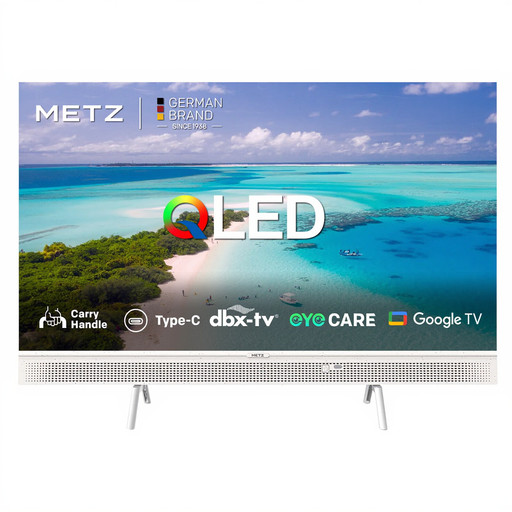 No image available
A 32-inch version to consider if a more compact screen suits your viewing distance and available space.
QLED+, HDR10, Dolby Audio and Chromecast; the product name also mentions power bank compatibility.
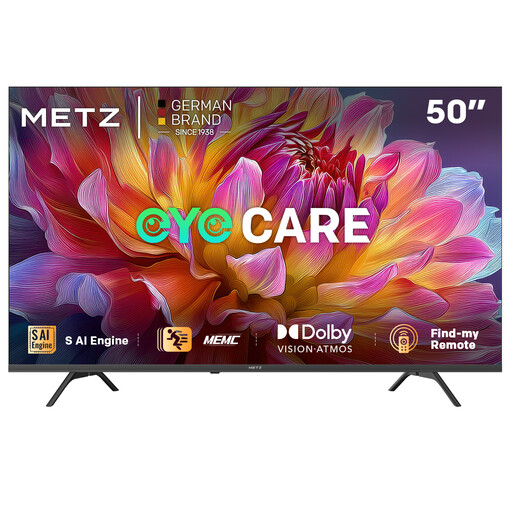 No image available
A 50-inch version to include in your comparison only if your viewing distance and available space allow for this size.
UHD, HDR10, Dolby Vision, Dolby Atmos, MEMC and Google TV.
Measure the distance between your eyes and the planned screen position. The Dutch Consumers' Association suggests dividing the distance by 2.4 as a starting point for the diagonal in centimetres. Also compare nearby sizes and check the external dimensions, including the stand.
No. The broadcast or viewing source you use must provide your preferred subtitles. LG notes that availability can vary by source and that the TV feature described does not work with a set-top box. So test your own app, broadcast or receiver.
Check that the cabinet has enough space for the TV and stand, or measure the space for a wall bracket. Also measure from your usual viewing position; the screen diagonal alone does not tell you whether the set will fit.
The EU energy label gives information about efficiency and consumption for SDR and HDR, among other things. Compare TVs on the same basis; the label rating alone does not predict your personal annual energy use.
When you buy online from a business, you generally have a 14-day cooling-off period. You are also entitled to a product that is fit for purpose; in the Netherlands, there is no fixed statutory two-year warranty period. If something is wrong, contact the seller.