Start by measuring the viewing distance and checking whether the TV, including its stand or bracket, will fit where you want it. The Consumentenbond suggests around 2.4 times the screen’s diagonal as a comfortable starting point, not a hard-and-fast rule. For dark scenes, compare contrast and viewing angle in particular; in daylight, reflections and brightness matter too. Also check the quality of your documentary source and whether you can listen without disturbing anyone.
Who is this guide for?
Watching from bed with limited space
If you watch from bed, you’ll want to know which screen size and overall dimensions suit your viewing distance and available space. The Consumentenbond uses viewing distance as a starting point for choosing screen size.
Evening viewing of dark nature scenes
If you mostly watch in the evening, compare contrast, black levels and viewing angle, and weigh these against the light in your room and the features of the specific TV. The Consumentenbond lists these as factors when assessing picture quality.
Watching without disturbing others
If you watch in a shared bedroom, check whether the TV has a useful headphone socket or Bluetooth audio. The Consumentenbond notes that ports and features vary between TVs.
What should you look for when choosing?
OLED
Best for: watching in dim light, with a focus on dark scenes, contrast and viewing from an angle.
Also consider: compare the brightness and reflections of the specific model; prolonged display of an unchanged image needs extra consideration.
LCD, QLED or Mini LED
Best for: anyone who also watches during the day or wants to compare an alternative to OLED.
Also consider: compare brightness, reflections, contrast and viewing angle for each model; the QLED or Mini LED label alone doesn’t determine picture quality.
Compact 32-inch TV
Best for: a bedroom or viewing distance where there’s little room for a larger screen.
Also consider: assess picture quality and your documentary source; a 4K label alone doesn’t tell you how good the picture is.
| What to consider |
What should you check? |
Who should bear this in mind? |
| Size and positioning |
Measure from your usual viewing position to the screen; use around 2.4 times the screen’s diagonal as a starting point. Also check the dimensions including the stand, or the requirements for a wall bracket. |
If I watch from bed, I want a screen that’s comfortable to view and physically fits in the room. Around 27% of consumers prioritise size and positioning. |
| Contrast in evening light |
Compare dark and light scenes, the viewing angle from your bed and HDR support for the source you use. The Consumentenbond emphasises that the panel label alone doesn’t determine picture quality. |
If you mainly watch dark nature scenes in the evening, you’ll want to follow details and colour differences without relying solely on the name of the technology. Around 27% of consumers make this their top priority. |
| Visibility in daylight |
Consider the position of windows and lamps, and compare reviews of reflections, brightness and visibility in direct light. Compare specific models rather than just the term QLED. |
In daylight, I want reflections not to dominate the scene, and I want to be able to assess brightness for each model. Around 20% of consumers prioritise visibility in a bright room. |
| Listening and watching documentaries without disturbing others |
Check whether the exact model has Bluetooth audio or a suitable headphone socket. Also check whether your preferred streaming service and picture format are available. |
In a shared bedroom, I want to listen without disturbing others and use my preferred documentary source. Around 13% of consumers prioritise these features. |
| Energy use and streaming service |
Compare the EU energy label for standard picture and HDR on TVs of a similar size. Also check the terms and conditions of your streaming service. |
If you want to take ongoing energy use and streaming service terms into account, look beyond the purchase price. Around 13% of consumers make running costs their top priority. |
Common mistakes
-
Measuring only the diagonal
A screen might suit your viewing distance but still not fit on your furniture or in the alcove.
Measure both the viewing distance and the available width and height. Check the overall dimensions, including the stand, and follow the installation instructions for your chosen model.
Brands to consider
LG
LG’s Dutch OLED evo C6 range includes the 42-inch OLED42C67LA, a model to compare if you’re considering a compact OLED screen.
- LG lists OLED and webOS for this model.
- Assess reflections and prolonged static images separately; claims about black levels and colour aren’t an independent measurement of this particular TV.
Samsung
The Dutch 43-inch QN90F is a Neo QLED 4K Mini LED model to compare with OLED and other LCD TVs.
- Mini LED is the listed screen technology for this model.
- Compare brightness, reflections and contrast for each model; the technology name doesn’t prove that a TV is better suited to every bedroom.
Philips
According to Philips, the 43PUS8001/12 combines a 4K LED screen with Ambilight and Titan OS.
- Ambilight and Titan OS are listed product features.
- Check whether your preferred apps are available, and assess screen quality separately from the lighting behind the TV.
Sony
The BRAVIA 3 II family includes the K-43XR32M2, a 43-inch alternative with Google TV and 4K HDR.
- Sony’s support information lists Google TV and 4K HDR.
- Sony says that included components may vary by region of purchase, so check the exact version.
Hisense
The 43E71Q is described as a 43-inch LCD/QLED model with 4K and Dolby Vision.
- For the 43E71Q, the Consumentenbond lists Bluetooth, a 3.5mm socket and dimensions including the stand, among other details.
- This information applies to the 43E71Q and doesn’t prove that a version with a different model number has the same specifications.
TVs at Joybuy
These models are for anyone comparing TVs for watching nature documentaries in the bedroom. The range includes 42- and 43-inch options, with both OLED and LCD-based models.
 No image available
LG OLED42C68LA 42-inch 4K Ultra HD OLED Smart TV
The 42-inch screen could be an option if its size suits your viewing distance and available space.
Specifications: 4K Ultra HD OLED, HDR10, HLG and Dolby Vision; webOS, Wi-Fi and Bluetooth.
View at Joybuy
 No image available
LG 43NU800B6LC 43-inch 4K UHD Smart TV
Compare this 43-inch model with the distance from your bed and the space available for the TV.
Specifications: 4K UHD, direct backlight, HDR10 and HLG; webOS.
View at Joybuy
 No image available
Philips 43PUS8001/12 43-inch 4K LED TV
This 43-inch TV could be a good fit if your viewing distance and chosen location have room for this screen size.
Specifications: 4K, HDR10+ and HLG; Ambilight and Titan OS.
View at Joybuy
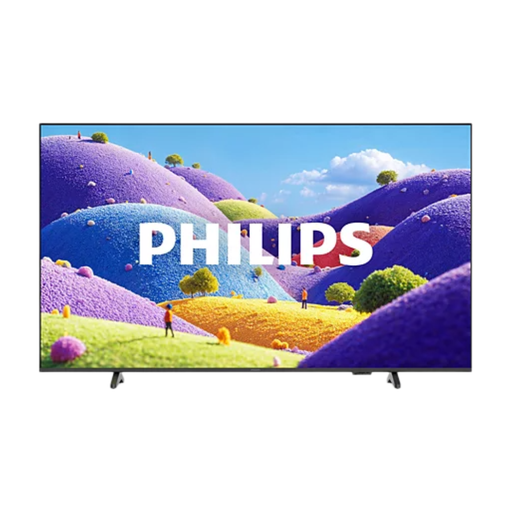 No image available
Philips 43PUS7061/12 43-inch 4K LED TV
Compare the 43-inch screen size with your viewing distance, and check whether its features suit your viewing habits.
Specifications: 4K, HDR10+, HLG, Titan OS, Bluetooth and AirPlay.
View at Joybuy
 No image available
Philips 43PQS7801 43-inch 4K QLED Smart TV
The 43-inch size is worth comparing if it suits your viewing distance and available space.
Specifications: 4K QLED, HDR10+, HLG and Titan OS.
View at Joybuy
Frequently asked questions
Is a 32-, 42- or 43-inch TV right for your bedroom?
That depends on your viewing distance and where the TV will go. The Consumentenbond suggests around 2.4 times the screen diagonal as a starting point; then measure the overall dimensions of the TV you’ve chosen.
Does a 4K TV make every nature documentary look sharper?
No. You need a suitable source to show original 4K detail. The Consumentenbond notes that extra pixels don’t always make a visible difference to picture quality; also compare contrast, colour and the picture quality of the specific model.
How can you watch without disturbing someone else in the bedroom?
Check whether the exact TV model has Bluetooth audio or a useful headphone socket. Ports and the ability to use headphones and speakers at the same time vary between TVs.
What should you consider when installing and using an OLED TV?
Check that the stand fits on your furniture, or find out which bracket is suitable according to the model’s instructions. Prolonged static images are something to bear in mind with OLED; the Consumentenbond tested older models, so those tests don’t give a risk percentage for new TVs.
What are your rights when buying a TV online in the Netherlands?
According to the Dutch government, when you buy online from a business, you generally have a 14-day cooling-off period. Dutch law also provides a statutory guarantee without a fixed legal guarantee period; if a product is faulty, the retailer is your point of contact. An extended warranty doesn’t replace these statutory rights.


