
Viewer with a small bedroom
You want to watch comfortably from bed without the screen or stand taking over the space. Measure your viewing distance and where the TV will go before choosing a screen size.


First, measure the distance from your eyes in bed and check that the TV, including its stand, will fit where you plan to put it. If you mainly watch dark scenes, compare the picture quality of the exact models you’re considering. Also check that your streaming services and preferred listening options are available. No screen size or technology is right for every bedroom without taking these factors into account.
You want to watch comfortably from bed without the screen or stand taking over the space. Measure your viewing distance and where the TV will go before choosing a screen size.
For evening viewing, look for visible detail, good contrast and consistent blacks. Compare more than just the resolution or HDR label.
You want to use your own streaming apps and hear conversations clearly without making the bedroom unnecessarily loud. Check the apps and audio connections available on each TV.
Start with the viewing distance and available space. Then compare how the TV displays dark scenes and check that its apps and listening options suit the way you plan to use it.
| Buying consideration | What to look for | Who it’s for |
|---|---|---|
| Screen size and positioning | Measure the viewing distance from your eyes, as well as the available width and height, including the stand. In its own research, the Consumers’ Association (Consumentenbond) suggests a comfortable viewing distance of around 2.4 times the screen diagonal. Use this as a starting point, not a hard-and-fast rule. | When I watch from bed, I want the screen to feel comfortable to view and fit in the chosen spot with its stand. Around 27% of consumers prioritise getting the screen size and positioning right. |
| Dark scenes | Compare the contrast and black uniformity of the exact model. Don’t judge picture quality by an OLED, QLED or HDR label alone. The Consumers’ Association includes contrast and visibility in ambient light among the assessment criteria in its TV testing methodology. | When watching in the evening, I want to follow details in dark scenes without relying on a technology label alone. Around 27% of consumers give picture quality in dark scenes top priority. |
| Streaming apps | Check that your preferred streaming services are available on the exact TV model. Also consider whether you’ll need a spare HDMI port if you want to use a compatible media player later. | I want to be able to watch detective series through the services I use. Around 20% of consumers put the availability of streaming apps at the top of their list. |
| Dialogue and listening | Compare sound ratings for the exact models and check that your preferred headphones or audio setup will connect. | If I share a bedroom, I want to follow conversations without turning the volume up unnecessarily. Around 13% of consumers prioritise clear listening at a comfortable volume. |
| Energy use and budget | Compare the energy labels of the exact models on a like-for-like basis. Include a wall bracket, installation or media player only if you need one for your setup. | For a second TV, I want to factor in energy use and any extra equipment in advance. Around 13% of consumers rank running costs and the overall budget among their main buying considerations. |
The screen diagonal won’t tell you whether the TV will fit on your unit or look comfortable from your usual spot in bed.
Measure the viewing distance and available width and height, then check the dimensions of the exact model, including its stand.
You may need to change your setup or use a different mounting option.
The Consumers’ Association describes QLED as LCD technology. Contrast, light distribution and image processing vary between models, so a technology name alone doesn’t tell you how a particular TV will display dark scenes.
Compare ratings for contrast and uniformity on the exact model, rather than judging the result by a label alone.
According to the Consumers’ Association, not every app is available on every smart TV, and the range can change over time.
Before buying, check that your services are available on the exact model. If you want to connect another viewing device, check that an HDMI port is available.
If an app you want is missing, you may need a compatible external media player.
The Consumers’ Association describes a test from 2017 involving older OLED TVs. Its findings don’t establish the risk for a specific current model.
Look for information about the exact model and don’t base your choice solely on a test of older TVs.
The models mentioned include a 42-inch OLED42C55LA and a 48-inch OLED48G56LS. Compare their sizes with your viewing distance and available space.
The models mentioned range from the 32-inch Full HD UE32F6000FUXXN to the 43-inch QE43QN90FATXXN with mini LED.
The 43PUS9000/12 is a 43-inch 4K TV with Ambilight.
The 43E7Q is described as a 43-inch 4K Hi-QLED TV with VIDAA Smart OS.
The models shown range from 32 to 77 inches and include QLED and OLED options. First, measure your viewing distance and available space to work out which models are worth comparing for your bedroom.
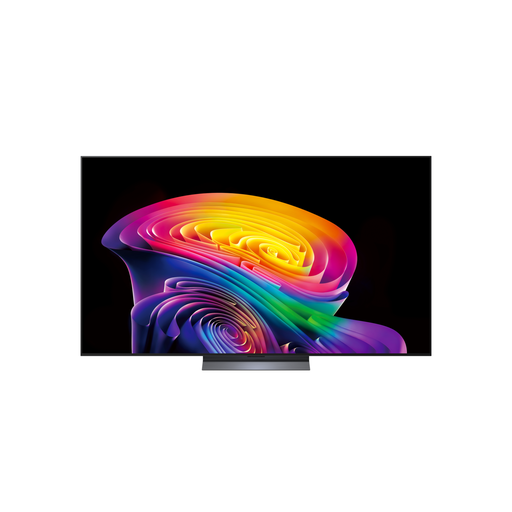 No image available
A 42-inch OLED model to compare if the screen size suits your viewing distance and available space.
Product name: 4K UHD, OLED, webOS, Dolby Vision, HDR10, Dolby Atmos, HDMI 2.1, AMD FreeSync and Wi-Fi.
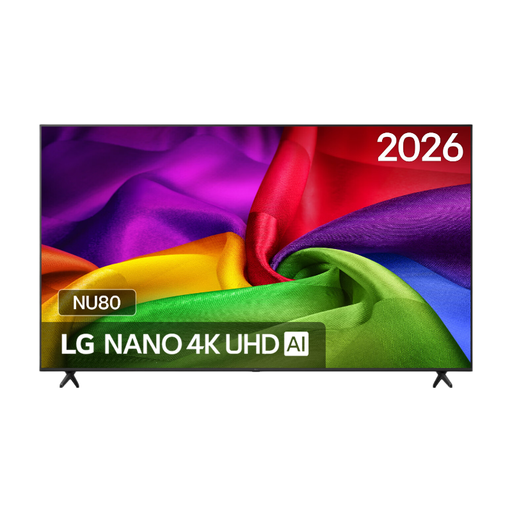 No image available
Compare this 43-inch smart TV only if its size suits your viewing distance and the space available in your bedroom.
Product name: 4K, Nano UHD and AI.
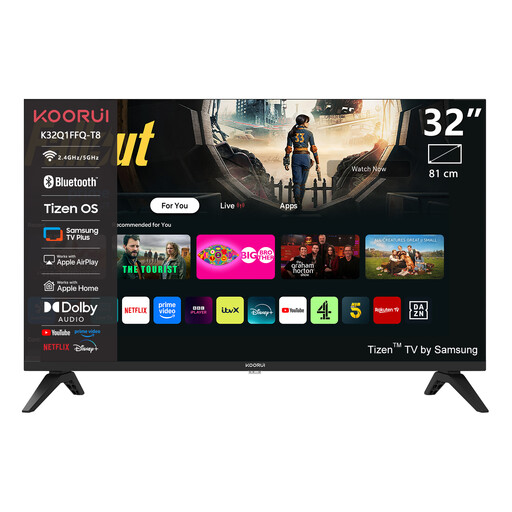 No image available
This compact 32-inch model is worth comparing if you’re short on space and its size suits your viewing distance.
Product name: Full HD, QLED and Tizen OS.
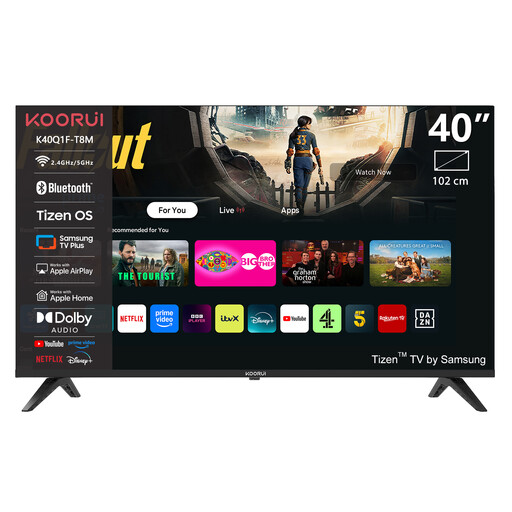 No image available
Consider this 40-inch model if the larger screen still suits your viewing distance and available space.
Product name: Full HD, QLED and Tizen OS.
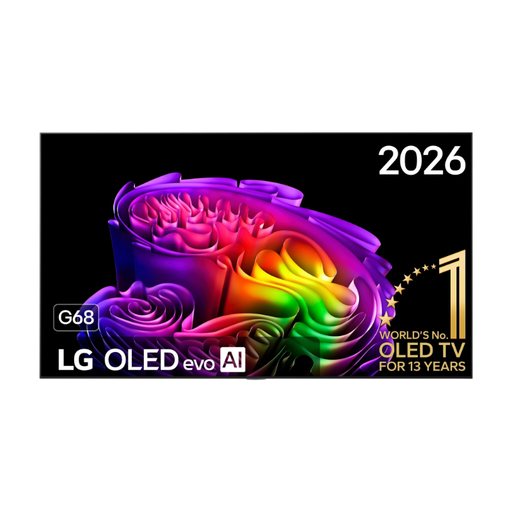 No image available
Its stated large screen size makes this model less of an obvious choice for a small bedroom. Carefully check your available space and viewing distance.
The product name specifies OLED.
Measure from your eyes, in your usual viewing position, to where the screen will be. In its own research, the Consumers’ Association suggests a comfortable viewing distance of around 2.4 times the screen diagonal. Use this as a starting point and also check that the TV, including its stand, will fit.
Before buying, check whether the app you want is available on the specific TV model. If a service isn’t available, a compatible external media player connected via HDMI may be an alternative. Check that you have a spare port.
Compare a scene you know well, with both light and dark areas, and see how the picture looks with the available settings. The Consumers’ Association includes contrast, viewing angle and visibility in ambient light in its TV testing methodology. An HDR label alone won’t predict how a specific model displays a picture.
Compare the energy labels and product information sheets for the exact models on a like-for-like basis. The European Commission states that TVs fall under the rules for electronic displays, so use the model details when making your comparison.
For online purchases, ACM ConsuWijzer states that you have up to 14 days after delivery to change your mind, subject to legal exceptions. This is separate from your rights if the TV is faulty: if a product breaks sooner than you could reasonably expect under normal use, the seller must put it right for you free of charge, according to ACM ConsuWijzer.