
Vandaag of morgen in huis

Kwaliteit gegarandeerd
Download de app
Categorieën

A beard trimmer that tugs at your hair, a battery that dies mid-trim, or an uneven finish. Choosing a new trimmer can be a challenge. The specifications are often numerous, and it's not always immediately clear which model fits your personal grooming routine.
This article is your practical guide. We'll cover the key features to look for and highlight several models based on their specifications. This will help you make an informed decision that matches your beard, style, and needs.
The right choice depends on your specific needs. A short stubble requires different features than a full beard or grooming body hair. Below are the most important criteria to consider.
A trimmer's precision is determined by the increments in which its length can be adjusted.
The total range of length settings (e.g., 0.5 mm to 20 mm) determines the trimmer's versatility for different beard lengths.
Not every men's trimmer is the same. Consider what you will primarily use the device for.
Below is a selection of trimmers, highlighted for their features and specifications.
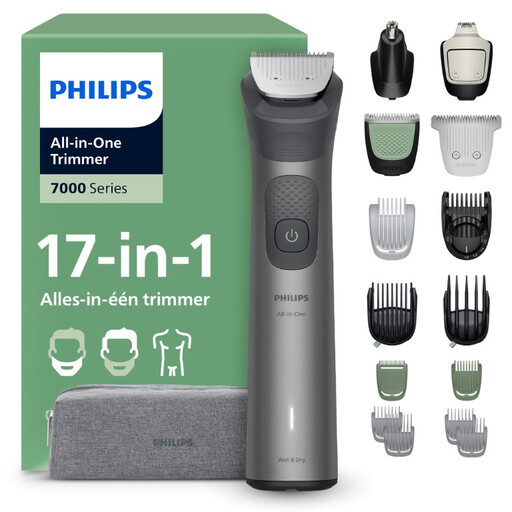
Why We Chose It This all-in-one trimmer is designed for versatility. With 17 attachments, it can be used to trim your beard, head, body, nose, and ears. The self-sharpening metal blades are built for long-lasting performance. According to Philips, its BeardSense technology adapts the power based on beard density, scanning it 125 times per second.
Key Features
Who is this for? For the man looking for a single device for his entire grooming routine, from detailed beard styling to touching up his haircut or trimming body hair.
View the Philips Multigroom 7000 Series
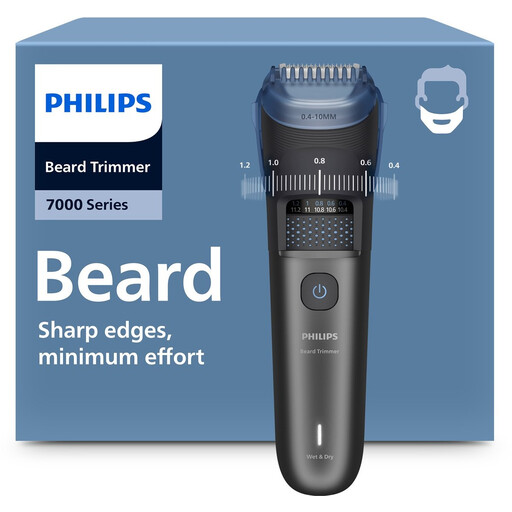
Why We Chose It This Philips beard trimmer focuses on a precise and clean trim. The model stands out with 40 lock-in length settings in 0.2 mm increments, allowing for highly detailed styling. A unique feature is the integrated hair collection system, which the manufacturer claims captures up to 80% of trimmed hairs. This means less cleanup after grooming.
Key Features
Who is this for? For the man who demands high precision for his beard lines and appreciates a clean bathroom. The small increments make this model particularly suitable for short to medium-length beards.
View the Philips Beard Trimmer 7000 Series
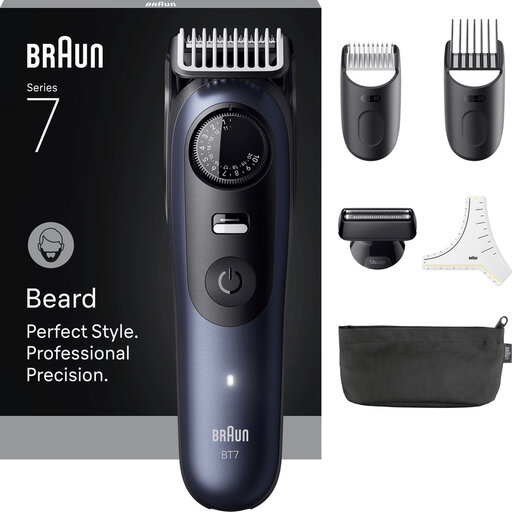
Why We Chose It This Braun beard trimmer is equipped with a ProBlade and AutoSense technology. According to Braun, the AutoSense motor ensures constant power, even on thicker beards. The device offers 40 length settings in 0.5 mm increments. The trimmer is 100% waterproof and has a Li-Ion battery with a runtime of up to 120 minutes.
Key Features
Who is this for? For the man with medium to thick beard growth who wants a reliable trimmer with a long battery life and consistent performance. Its waterproof design makes it a practical choice for those who want to use their trimmer in the shower or rinse it quickly.
View the Braun BT Styler BT7520
The models mentioned above are a great starting point for various needs. However, are you looking for a package with specific accessories like a travel case, multiple combs, or a charging stand? Or do you simply want to compare more options? Then check out our full range of beard trimmer sets.
Discover all beard trimmer sets
1. What is the difference between a beard trimmer and hair clippers? A beard trimmer is designed for precision work and shorter hair lengths, featuring finer blades and smaller adjustment increments. Hair clippers are primarily intended for head hair, have wider blades, and are built to quickly remove larger amounts of hair. A multigroom often combines features of both.
2. Can I use a beard trimmer on my head hair? Yes, you can, especially with a multigroom model that includes specific combs for head hair. However, for a full haircut, dedicated hair clippers may be more efficient due to their wider blades. A beard trimmer is, however, very suitable for touching up sideburns or the neckline.
3. How often should I clean and oil my beard trimmer's blades? It is recommended to clean the trimmer after each use by brushing away loose hairs and, if it's waterproof, rinsing it. Oiling the blades can improve their lifespan and performance. Consult the manufacturer's manual for specific recommendations, but a general guideline is to do this monthly.