
Vandaag of morgen in huis

Kwaliteit gegarandeerd

Welkomstaanbiedingen ontgrendelen: GRATIS bezorging | Tot 80% korting | Gratis 30 dagen JoyPlus-proefperiode
Download de app
A beard trimmer might seem simple at first: choose a device, set a length and start trimming. In practice, models vary considerably in precision, battery life, maintenance and suitability for use on the body. The wrong choice could leave you with uneven stubble, a flat battery halfway through trimming or a device that isn’t suitable for use in the shower.
As a Joybuy Product Recommendation Officer, I focus on the key product specifications and common buying pitfalls. This helps you choose a beard trimmer with confidence, rather than relying on marketing terms alone.
A trimmer with dozens of settings might sound appealing, but check its actual length range and increments too. A model with settings in 0.5 mm increments may be better for short stubble than a device with lots of combs but larger gaps between settings.
Also consider how you adjust the length. A locking dial or PrecisionWheel can help prevent the setting from shifting while you trim. Always check the product specifications, though: manufacturers may count the number of settings differently.
Water-resistant, washable and suitable for wet use don’t necessarily mean the same thing. You can rinse a washable beard trimmer under the tap after use, whereas product information for a waterproof beard trimmer may say it can also be used in the shower.
Never use a device connected to the mains near water. Many cordless models can only be used wet when the charger is disconnected, too. So check the manual and look for an explicit “wet & dry” specification.
A beard trimmer with long battery life is useful for regular grooming and travel. But charging time matters too. Some models offer dozens of minutes of use but take a long time to charge. Check both figures, and see whether the trimmer can be used while charging.
For short stubble, you’ll often need a trimmer with a minimum setting of around 0.5 mm. For a fuller beard, an adjustable length of up to 20 mm or more is more practical. A trimmer with adjustable length settings will usually give you more control than a model with just one fixed comb.
Look out for the difference between:
A precision beard trimmer is particularly useful for shaping moustache edges, jawlines and sideburns. A multi-purpose trimmer with several heads may also be suitable for nose, ear or body hair, but more attachments mean more parts to clean and store.
For everyday use, 40 to 60 minutes is often enough, depending on your grooming routine. If you share the device, travel frequently or maintain a longer beard, you may prefer 120 minutes or more.
Check the battery type, the cable supplied and the charging method, too. A USB cable is handy when travelling, but an adaptor isn’t always included. Some devices work both cordless and with a cord; for safety reasons, others can’t be used while charging.
A model designed for facial hair isn’t automatically suitable for every area of the body. Check whether the manufacturer describes it as a beard and body trimmer. Guards, rounded edges and a dedicated body head can make it more practical to use on sensitive areas.
Also consider the maintenance required. Stainless steel and ceramic blades are common, but both need to be cleaned and maintained according to the instructions. Don’t use a trimmer on irritated or damaged skin.
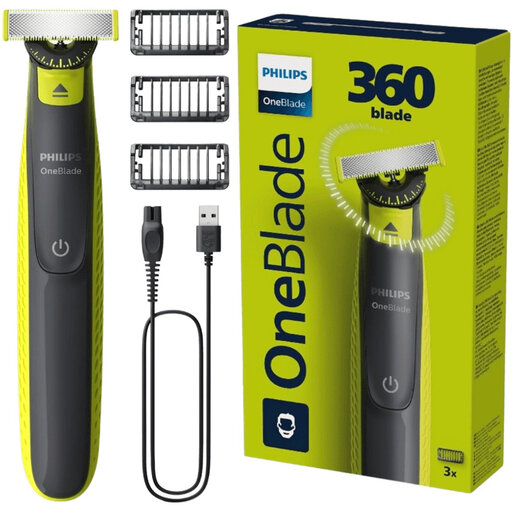
Why it suits this profile: This cordless model is designed for the face and fine beard growth. The included trimming comb and dual-sided head let you trim, shape and shave with one device.
The product listing makes clear that the device is intended for the face and is washable. This gives you a clearer idea of where it can be used than a general multi-grooming model does.
45 minutes of use, a replaceable dual-sided head, a trimming comb and a USB cable.
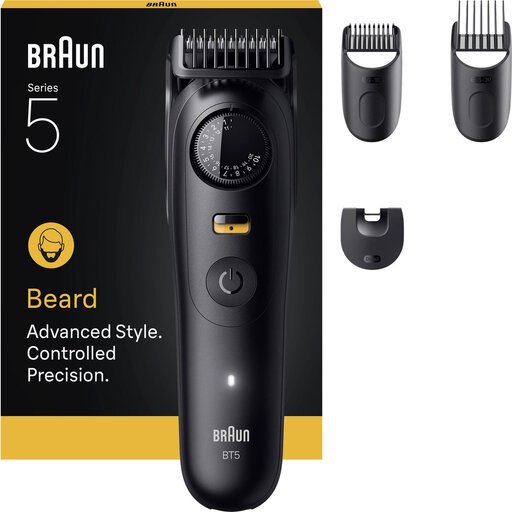
Why it suits this profile: The combination of numerous length settings, a battery indicator and long battery life makes it a good fit if you regularly trim your beard and want a precise finish.
The specifications list a PrecisionWheel with 0.5 mm increments and a range of 0.5 to 20 mm. The listing also describes a waterproof design; always check the manual before use.
Up to 120 minutes of cordless use, 39 listed length settings, three combs and a cleaning brush.
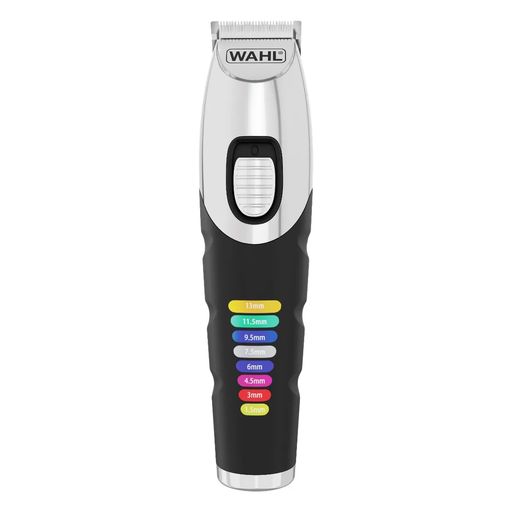
Why it suits this profile: This model is worth considering for frequent use, travel and situations where you want the option of using it either cordless or with a cord.
The listed battery life is 240 minutes, and the eight colour-coded combs make it easier to identify the different lengths. The trimmer is washable; dry it before connecting it to the power supply.
Lithium-ion battery, fast-charge function, corded or cordless use and an adjustable range of 0.5 to 13 mm.
We’ve put together a complete, up-to-date list of products that meet these strict selection criteria and current European safety regulations.
Remove any hairs from the head after each use. If the device is washable, you can rinse the blade area under the tap, following the instructions. Dry the trimmer before storing or charging it. Only use a drop of oil if the manufacturer recommends it.
Its lifespan depends on how often you use it, how well you maintain it, how you store it and whether the blades or shaving heads can be replaced. A replaceable head can be more practical if you use the device often. Also check the statutory guarantee and ask the retailer about the availability of replacement parts.
The main running costs are electricity, replacement heads and maintenance products. Charging costs per session are generally low. Pay particular attention to the price of replacement blades and accessories: over time, these can have a greater impact than electricity use.
