Start by checking the available width and depth, how many cups you’ll need during a break, and who will clean the machine. A slim domestic model may suit occasional use, but check the terms for business use. For regular, higher volumes, a professional model such as the WMF Peak 50 is an option, with a WMF-recommended capacity of up to 80 cups a day. Bear in mind that WMF lists the Peak 50 as 571 mm deep, including the power cable.
Who is this choice for?
A workshop with a narrow kitchenette
You’re looking for a machine that fits and remains easy to reach when it needs filling or maintenance. Even a slim machine can be deep: Melitta lists the Solo as 20 cm wide, but that measurement alone tells you nothing about the depth you’ll need.
A workshop with busy coffee breaks
You want to serve several participants and match the expected level of use to the machine’s capacity and intended purpose. WMF recommends the Peak 50 for up to 80 cups a day.
A workshop with varied drink preferences
You’re choosing between mainly black coffee and milk-based drinks, while allowing for the extra steps and cleaning involved with a milk frother or milk system.
What to consider when buying
Slim machine for black coffee
Choose this if: worktop width is your main constraint and espresso or café crème is enough. Melitta lists the Solo as 20 cm wide and says it can prepare two cups of these drinks at once.
Trade-off: its width doesn’t confirm that the machine will fit in terms of depth or suit your intended business use; check the applicable terms too.
Domestic bean-to-cup machine with manual milk frothing
Choose this if: use is limited and you want to make milk-based drinks as well as black coffee. Philips says the EP2220/10 has a classic milk frother.
Trade-off: manual frothing involves extra steps, and Philips recommends cleaning the classic milk frother daily. A domestic model isn’t confirmation that it’s suitable for workshop use.
Professional bean-to-cup machine for larger groups
Choose this if: the expected level of use could make a domestic model unsuitable. WMF recommends the Peak 50 for up to 80 cups a day.
Trade-off: WMF lists the Peak 50 as 325 × 473 × 571 mm (width × height × depth, including the power cable). A fixed water connection and milk system depend on the version you choose.
| What to consider |
What should you check? |
Who should consider this? |
| Placement and access |
Measure the width, depth and height, and leave room to fill and clean the machine. Siemens lists the EQ300 TF301E09 as 383 × 251 × 433 mm (height × width × depth); WMF lists the Peak 50 as 325 × 473 × 571 mm (width × height × depth, including the power cable). |
If my kitchenette is compact, I want the machine to fit and remain accessible for maintenance. Around 36% of consumers put placement first. |
| Peak demand and usage |
Work out how many cups you’ll need on a typical day and during the busiest break. WMF recommends the Peak 50 for up to 80 cups a day; this figure doesn’t indicate waiting times during a peak. |
If participants want coffee at the same time, I want to know whether the machine suits the expected level of use and the terms for business use. Around 29% of consumers put this level of use first. |
| Cleaning and maintenance |
Check who will clean the machine and follow the instructions for the exact model. Philips recommends cleaning its classic milk frother daily. |
If several people use the machine, I want a cleaning routine that someone can carry out afterwards. Straightforward shared maintenance is the main concern for around 21% of consumers. |
| Black coffee or milk-based drinks |
Find out which drinks participants want. Check whether the version you choose has a milk frother or milk system, and what cleaning it requires. |
If participants also want milk-based drinks, that matters more to me than a machine designed mainly for black coffee. Variety of drinks is the top priority for around 14% of consumers. |
Common pitfalls
-
Comparing width alone
Melitta’s listed width of 20 cm for the Solo doesn’t tell you how much depth or clearance you’ll need. WMF lists the Peak 50 as 571 mm deep, including the power cable.
Measure the available space in every direction and check that you can reach the parts you need to fill and clean.
A machine that’s hard to reach makes filling and cleaning more awkward.
-
Assuming a domestic model can handle intensive studio use
WMF distinguishes professional machines from domestic models by their intended setting. The terms may also differ between a business and a consumer order.
Discuss your expected level of use and busiest coffee break with the seller, and ask which terms apply to the exact machine.
-
Thinking milk-based drinks come with no extra cleaning
A milk frother or milk system brings its own cleaning tasks. Philips recommends cleaning its classic milk frother daily; this instruction doesn’t automatically apply to other versions.
Decide in advance who will take care of maintenance and follow the cleaning instructions for the model you choose.
Allow regular time to clean the milk system.
Brands compared
Melitta
According to Melitta, the Solo is an example of a slim machine designed mainly to make espresso and café crème.
- Melitta lists a width of 20 cm and a function for preparing two cups of espresso or café crème at once.
- These measurements don’t confirm that the machine will fit in the available depth or suit business use in a workshop. Melitta’s online shop terms apply to consumer orders; check which terms apply to your order.
WMF
WMF positions the Peak 50 as a professional option for settings with regular demand.
- WMF recommends the machine for up to 80 cups a day and offers a choice between a water tank and a fixed water supply.
- WMF lists the Peak 50 as 571 mm deep, including the power cable. This may be a limitation in a compact kitchenette; also check which version suits the drinks you want to serve.
De’Longhi
The Magnifica S ECAM20.110.B is presented as a domestic option with adjustable coffee preparation.
- De’Longhi lists a 1,8 l water tank for the ECAM20.110.B.
- Don’t assume features from another Magnifica S or Magnifica Start version apply to this model. Check separately whether the supplier supports your intended business use.
Philips
According to Philips, the Philips 2200 Series EP2220/10 has a manual milk frother, as well as adjustable strength and volume.
- The classic milk frother gives you a manual way to make milk foam.
- Philips recommends cleaning the classic milk frother daily. The product specifications don’t confirm a capacity for a particular workshop volume.
Siemens
The EQ300 TF301E09 is an example of a domestic machine with front access.
- Siemens lists dimensions of 383 × 251 × 433 mm (height × width × depth) and specifies a removable brewing unit.
- The dimensions and front access don’t show how many cups the machine can handle in a workshop setting.
Bean-to-cup machines at Joybuy
This Joybuy selection includes fully automatic bean-to-cup machines for coffee and, depending on the model, milk-based drinks. Compare the dimensions with your kitchenette and check that the machine and terms of use suit the expected workshop demand.
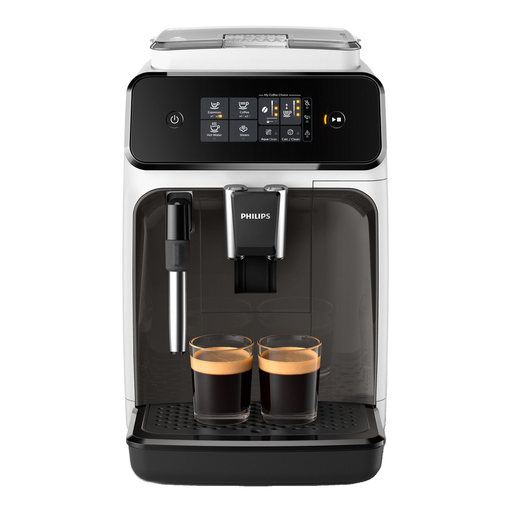 No image available
Philips 1200 Series EP1223/00
Suited to anyone who wants bean-to-cup coffee and a manual milk-frothing option; check the space required and intended use.
Ceramic grinder; adjustable coffee strength and volume; manual milk frother; removable brewing unit. The product name lists a capacity of 1,8 l and a pressure of 15 Bar.
View at Joybuy
 No image available
Philips 5500 Series EP5547/90 LatteGo
Suited to anyone looking for a range of coffee drinks and a milk system; check that the dimensions and cleaning routine work for your kitchenette and shared use.
The description lists 20 coffee varieties and two user profiles. The machine can prepare two cups at once, according to the description; LatteGo parts can be rinsed under the tap or cleaned in the dishwasher.
View at Joybuy
 No image available
De’Longhi Magnifica Evo ECAM290.61.SB
Suited to anyone who wants automatic coffee preparation and a milk container; compare its dimensions and expected use with your available space and workshop demand.
The description lists 13 grinder settings, adjustable coffee strength and temperature, a LatteCrema system and the option to prepare two cups.
View at Joybuy
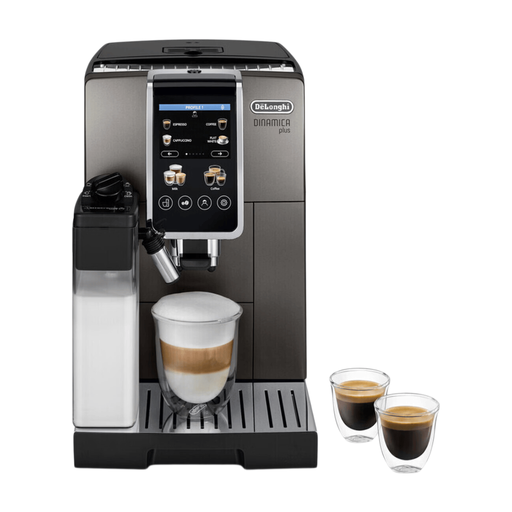 No image available
De’Longhi Dinamica Plus ECAM380.95.TB
Suited to anyone looking for automatic milk preparation and several programmes; compare the listed dimensions with the space available in your kitchenette.
The description lists 24 programmes, adjustable grinding and water volume, a touchscreen, automatic milk frothing and a removable 1,8 l water tank. The stated bean capacity is 0,3 kg.
View at Joybuy
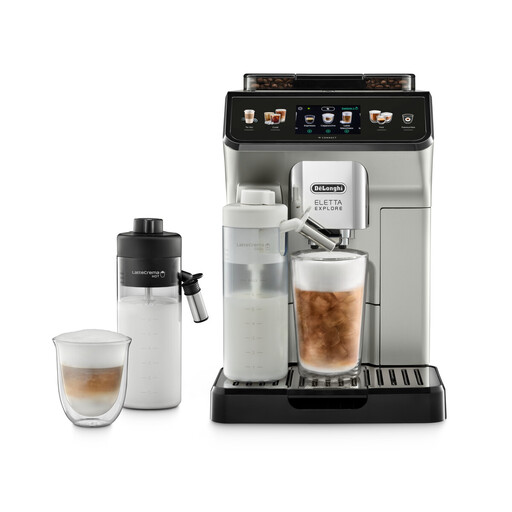 No image available
De’Longhi Eletta Explore ECAM450.65
Suited to anyone looking for a choice of drinks and automatic milk preparation; check the dimensions of this version before deciding where it will go in your kitchenette.
The description lists 13 drinks, including espresso, latte and cold brew, as well as the option to prepare two cups and a removable water tank.
View at Joybuy
Frequently asked questions
Is a domestic bean-to-cup machine suitable for a workshop?
That depends on the expected level of use and the terms for the exact machine. A domestic model alone doesn’t confirm that it’s suitable for busy workshop days; discuss your expected demand with the seller.
What does the WMF Peak 50’s capacity tell me about a busy coffee break?
WMF recommends the Peak 50 for up to 80 cups a day. This doesn’t indicate how long participants will wait if they all want coffee at once; discuss peak demand and the version you need with the supplier.
Do I need to clean a milk frother after use?
Follow the instructions for the machine you choose. Philips recommends cleaning its classic milk frother daily and warns that milk can dry inside the milk circuit; other versions may have their own cleaning steps.
Does consumer protection automatically apply if my studio buys the machine?
No, not automatically. The Chamber of Commerce distinguishes between business and consumer contracts, and notes situations in which small businesses may still be able to rely on consumer law. Before ordering, check who the contracting party is and which terms and service arrangements apply to your purchase.
Does a workshop need to register as a food business to serve coffee?
That depends on how the coffee is provided. The Netherlands Food and Consumer Product Safety Authority says that businesses which sell food or drink to consumers more than once a year must register and have a food safety plan or hygiene code. First establish whether the workshop’s activities fall into this category.


