Start by considering how many cups you want to serve in quick succession and whether participants expect milk-based coffee. Then look at brewing two drinks at once, ease of use and how to clean the specific milk system. A compact machine for black coffee involves different trade-offs from a model with a wider choice of drinks. A two-cup button or a large water tank alone won’t tell you how quickly you can serve everyone at a workshop.
Who is this advice for?
Organiser of a short coffee break
You want to serve participants one after another, so ease of use, brewing two drinks at once and refilling are important. The Consumers’ Association highlights available space and the number of cups per day as factors to consider; Melitta says the Solo can make two espressos or cafés crème at once.
Host welcoming milk-coffee fans
You want to offer cappuccino while keeping cleaning up afterwards in mind. Philips describes one LatteGo model as having a two-part milk system, although additional cleaning is still required.
User of a small workshop space
You need to fit the machine on a limited worktop, so you may choose one with fewer drink functions. Melitta states that the Solo is 20 cm wide; also measure the space needed to remove its components.
What should you look for when buying?
Compact machine for black coffee
A good fit if: you mainly serve espresso or regular coffee and have limited worktop space.
Bear in mind: the Melitta Solo described does not have an integrated milk system.
Machine with a removable milk system
A good fit if: you want to offer cappuccino and rinse the milk components after the break.
Bear in mind: Philips says additional cleaning is still required; check the exact model.
Machine with more drink or bean options
A good fit if: participants choose different milk-based drinks or personalised recipes.
Bear in mind: milk components need cleaning; a wider choice doesn’t prove that you can serve a large group without a wait.
| What to consider |
What to look for when buying |
Who should pay particular attention? |
| Serving speed during the break |
Check which drinks can be made two cups at a time and how you refill the machine. |
If participants come back in quick succession, I want to minimise separate brewing cycles and make refilling easy. Around 31% of consumers make serving speed their top priority. |
| Choice of black or milk-based coffee |
Check whether the exact model automatically prepares your preferred milk-based drink and how its milk components are cleaned. |
If I want to offer cappuccino as well as black coffee, that choice will influence which machine I pick. Around 25% of consumers prioritise the choice of milk-based coffee. |
| Cleaning after use |
Check the cleaning steps for the exact model and which components need cleaning after use. |
After serving coffee, I want to be able to clean the machine easily, especially if I’ve used milk. Around 19% of consumers make maintenance their top priority. |
| Worktop space |
Measure the space for the machine and the room needed to remove the water tank and drip tray. |
If my worktop is limited, I want to know how much space the machine takes up before weighing up its features. Space is a top priority for around 13% of consumers. |
| Personal taste |
Check which settings or profiles the exact model offers and whether switching between bean types matters for your group. |
For returning participants, I want to cater for different coffee preferences without adding unnecessary steps. Around 12% of consumers make personal taste their top priority. |
Things to watch out for when buying
-
Confusing lots of recipes with fast serving
A recipe list tells you which drinks you can choose, not how many full orders the machine can make in a given time.
Compare how easy the machine is to use, which drinks it can make at the same time and how you refill it for the coffee break you have in mind.
An inconvenient set-up can mean extra steps and longer waits during the break.
-
Assuming automatic milk cleaning means no maintenance
Even with an automatic programme, milk residue needs to be removed; cleaning the milk components is still part of using the machine.
Before buying, read the cleaning instructions for the exact model and follow the manual after use.
Expect to clean the machine regularly after making milk-based drinks.
-
Assuming similar model names mean the products are the same
Models with different full product codes may vary in features or included components.
Compare the full model code and the features of that specific version, not just the series name or product photo.
Brands to consider
Philips
The 5500 Series is worth considering if you want to compare automatic milk-based drinks and a wider choice of recipes.
- Philips lists 20 recipes for the EP5544/50. For one LatteGo model, Philips describes two milk components with no tubes.
- Additional cleaning is still required; check which features apply to the exact model.
De’Longhi
The Magnifica Evo ECAM290.81.TB EX:1 is worth considering if you want to choose coffee and milk-based drinks directly.
- De’Longhi lists seven selections for this model and says the LatteCrema Hot system cleans itself automatically after use.
- An automatic cleaning function doesn’t mean you can skip manual cleaning.
Melitta
The Solo is designed for compact preparation of black coffee, while the Barista TS Smart offers different bean and settings options.
- Melitta says the Solo is 20 cm wide and can make two espressos or cafés crème at once. For the Barista TS Smart, Melitta lists two bean hoppers and up to eight profiles.
- These features belong to different models and do not automatically apply to every Melitta machine.
Siemens
The EQ6 plus range is worth considering if you want to compare how milk-based drinks are prepared and how the milk system is cleaned.
- Siemens lists a coffeeSelect display and autoMilk Clean for the TE653M11RW.
- Features of other EQ6 plus models, including their water tanks, do not automatically apply to the TE653M11RW.
Bean-to-cup machines at Joybuy
These models offer different options for workshop coffee, including milk-based drinks, a range of coffee preferences and cleaning after use.
 No image available
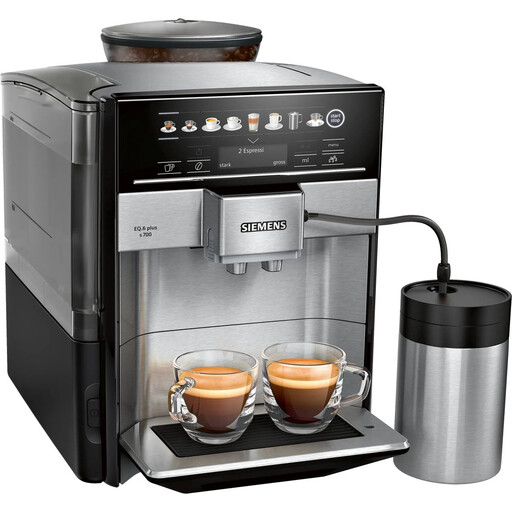
Siemens TE657M03DE EQ.6 Plus s700
Worth considering if you want to serve both coffee and milk-based drinks at your workshop.
Joybuy
 No image available
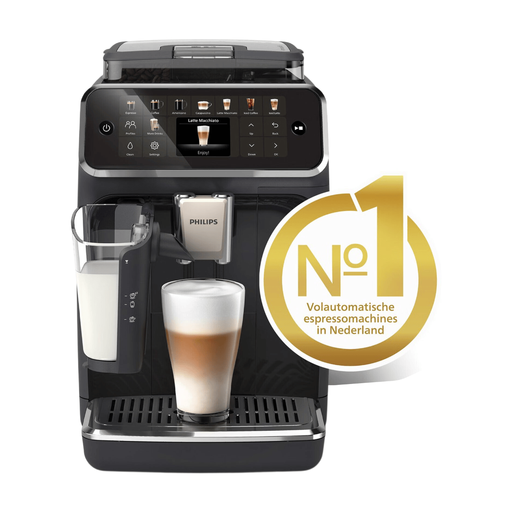
Philips EP5541/50 LatteGo 5500 Series
An option if you want to serve a range of coffee and milk-based drinks; check the cleaning steps for this model.
The product name lists 20 drinks and a 1,8 l water tank.
Joybuy
 No image available
De’Longhi Rivelia EXAM440.55.G
An option for a workshop where milk-based drinks and changing coffee preferences matter.
The product name lists the LatteCrema Hot milk system and Bean Switch System.
Joybuy
 No image available
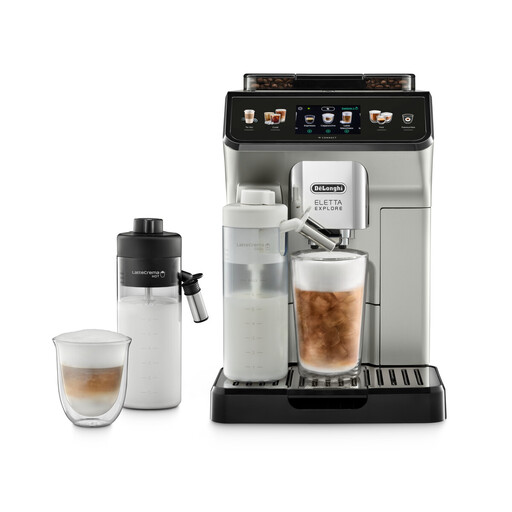
De’Longhi Eletta Explore ECAM450.65
An option if you want to serve milk-based drinks and offer a choice of drinks alongside black coffee.
The product name lists 13 drinks and a LatteCrema system.
Joybuy
 No image available
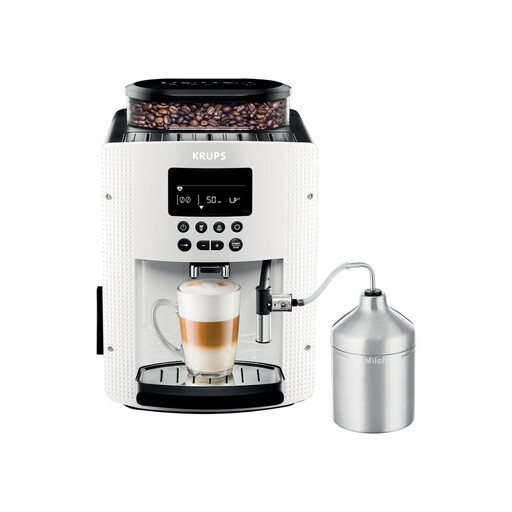
Krups EA8161 white
An option if you want to make cappuccino or latte as well as espresso.
Bear in mind that the machine and milk system need to be cleaned manually.
Joybuy
Frequently asked questions
Is a two-cup button enough for a busy workshop break?
Not on its own. Check which drinks the function applies to and how often you’ll need to refill the machine or empty the drip tray. Melitta says the Solo can make two espressos or cafés crème at once; that doesn’t tell you how quickly you can serve everyone.
What should I clean after making milk-based drinks?
Follow the manual for the exact model and remove milk residue after use. The Consumers’ Association recommends rinsing daily and removing milk residue; an automatic cleaning programme doesn’t make further cleaning unnecessary.
Who should I contact if there’s a fault, and do I need extra cover?
For a consumer purchase in the Netherlands, the seller is your point of contact for the statutory guarantee. The Dutch Government says extra cover is only worthwhile if it gives you additional rights; check the terms and conditions. If you’re buying in a business’s name, check the applicable purchase and guarantee terms separately.
Do food safety rules apply if I serve coffee to workshop participants?
If you sell food or drink to customers as a business, the Netherlands Food and Consumer Product Safety Authority says you must handle it safely. For businesses that prepare, process or sell food, the NVWA describes the use of an HACCP plan or hygiene code. Simply offering coffee during a workshop does not automatically mean you are selling it.


