Choose based on what your study group drinks: for espresso and café crème, a compact model with a function for brewing two black coffees at once could be a good fit. If cappuccinos are a regular order, automatic milk preparation can reduce the need for manual frothing, though parts that come into contact with milk still need cleaning. Melitta says the Solo is 20 cm wide and uses Double Cup to make two espressos or café crèmes. Also check that you have enough room to access the reservoirs and other parts; brewing two cups at once doesn’t tell you how long it will take to serve the whole group.
Who is a bean-to-cup machine for a study group suitable for?
Host serving black coffee
You usually make one or two cups at home, but want to serve several espressos or black coffees when your study group visits. Check which drinks the two-cup function applies to for each model: Melitta specifies that the Solo can make two espressos or café crèmes at once.
Host serving milk-based drinks
Your guests regularly order cappuccinos or other milk-based drinks. Automatic milk preparation can reduce the need for manual frothing, but parts that come into contact with milk need attention after use; the Consumentenbond recommends cleaning these parts daily.
Buyer with limited worktop space
You want a machine that fits in a small kitchen and can still make coffee from beans when you have guests. As well as checking its external dimensions, make sure there’s enough room to remove the water tank, drip tray and any other parts.
What should you look for when buying a bean-to-cup machine?
Start with your guests’ drink preferences, then weigh these against the space you have available and how much cleaning you’re prepared to do.
| What to consider |
What should you check? |
Who is this important for? |
| Two black coffees |
Check which drinks the two-cup function covers for the exact model. Melitta specifies espresso and café crème for the Solo; this doesn’t give a measured brewing time for a group. |
If you’re serving several black coffees during a break, you’ll want to know whether the machine can make two of those drinks at once. Around 33% of consumers give serving several black coffees their top priority. |
| Milk-based drinks |
Check the drink options for the exact version, how the milk is supplied and which parts need cleaning after use. |
If your guests order cappuccinos, you’ll want to know how much manual frothing is involved and what cleaning is required. Around 25% of consumers prioritise milk-based drinks. |
| Kitchen space |
Compare the stated external dimensions with your worktop, and leave enough room to remove the reservoirs, drip tray and any removable brewing unit. Siemens gives the dimensions of the TP601E01 as 378 × 284 × 472 mm (height × width × depth). |
If you have a small worktop, you’ll want to fill and clean the machine without having to move your whole set-up each time. Around 25% of consumers put limited space at the top of their list. |
| Maintenance with regular use |
Check how to clean the brewing unit and any parts that come into contact with milk on the exact model. The Consumentenbond recommends cleaning milk-contact parts daily. |
If the machine is used frequently, you’ll want to know in advance how much daily cleaning is involved when making milk-based drinks. Around 17% of consumers give maintenance and the effort involved in regular use their top priority. |
Common mistakes when buying a bean-to-cup machine
-
Assuming two cups means two cappuccinos
A two-cup function may be limited to black coffee. Melitta specifies espresso and café crème for the Solo; Krups specifies two black espressos for the Evidence Plus.
Check the function for each drink and the exact model, rather than relying on a picture or the series name.
If the machine can’t make your chosen milk-based drink two at a time, serving guests and waiting between orders could take longer.
-
Confusing an automatic cleaning programme with maintenance-free use
A cleaning programme doesn’t remove the need to clean parts that come into contact with milk. The Consumentenbond recommends cleaning these parts daily and cleaning a steam wand immediately after use.
Check the manual to see which parts need cleaning after use and how to remove them.
-
Measuring only the width of the machine
You’ll also need to be able to reach the machine to fill the reservoirs and remove parts. The stated dimensions don’t tell you how much clear worktop space your set-up needs.
Measure the space available and check how to fill and clean the model you’ve chosen.
Brands to compare
Melitta
The Solo is a compact benchmark for anyone who mainly makes black coffee.
- Melitta lists a width of 20 cm, a removable brewing unit and Double Cup, which makes two espressos or café crèmes at once.
- The drinks listed don’t make this an automatic cappuccino machine.
De’Longhi
Within the Magnifica Evo range, the full model number matters when choosing between manual frothing and automatic milk-based drinks.
- For the ECAM290.21.B, the manufacturer lists coffee, espresso, long coffee and steam, among other options. For the ECAM290.61.SB, De’Longhi lists five drink options, including cappuccino.
- The models don’t offer the same milk preparation. Check the exact model and its drink options.
Siemens
The EQ600 TP601E01 is a useful comparison if you want to weigh up milk-based drinks and the space available in your kitchen.
- Siemens lists a 1,8 l water tank, a 300 g bean hopper and external dimensions of 378 × 284 × 472 mm.
- The tank capacity alone doesn’t tell you how many rounds of drinks you can make for a group; cup size and rinsing also play a part.
Philips
The 2200 Series EP2220/10 is a useful reference if you want adjustable black coffee and the option to froth milk yourself now and then.
- Philips lists a classic steam frother and adjustable coffee strength and volume for the EP2220/10.
- A steam frother isn’t an automatic cappuccino button, and cleaning after using milk is still important.
Krups
The Evidence Plus EA894T10 is a useful comparison if you’re looking for favourite settings and an automatic milk option.
- Krups lists six favourite settings and says this version can make two black espressos at once.
- Making two espressos at once doesn’t automatically mean the machine can make two cappuccinos at once as well.
Bean-to-cup machines at Joybuy
This selection includes bean-to-cup machines for making mainly black coffee, milk-based drinks and both, with manual and automatic milk preparation options.
 No image available
Philips 1200 Series EP1220/00, matt black, with Pannarello steam wand
An option for anyone who mainly drinks black coffee and wants to froth milk by hand now and then.
The product name specifies a Pannarello steam wand.
View at Joybuy
 No image available
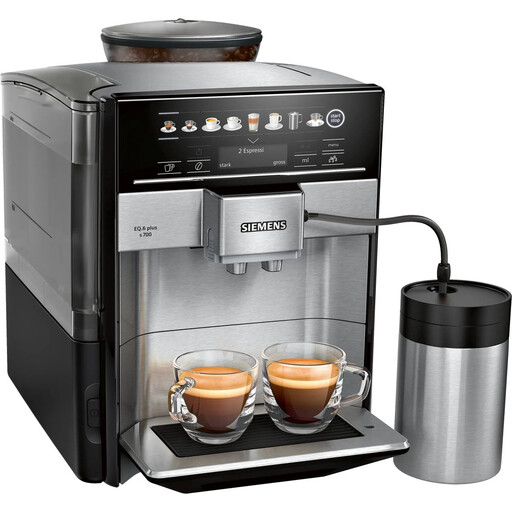
Siemens TE657M03DE EQ.6 Plus s700
An option to compare if you want to make both coffee and milk-based drinks for a group.
View at Joybuy
 No image available
Philips 5500 Series EP5547/90 LatteGo
An option to compare if you want to serve a mix of coffee and milk-based drinks to a group.
The product name specifies the LatteGo milk system.
View at Joybuy
 No image available
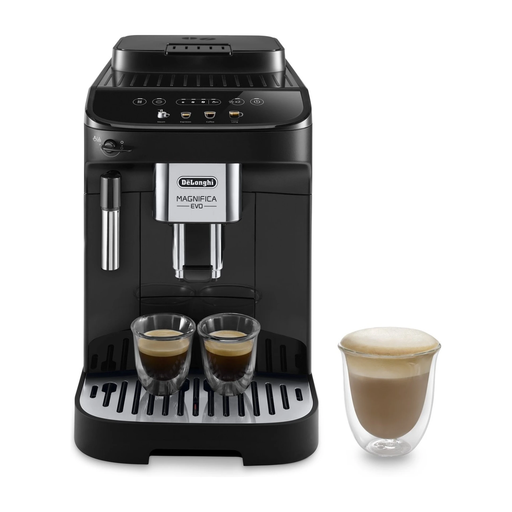
De’Longhi Magnifica Evo ECAM290.21, black
An option for anyone who mainly drinks black coffee and wants to froth milk by hand now and then.
If you froth milk by hand, the steam wand needs cleaning after use.
View at Joybuy
 No image available
De’Longhi Magnifica Evo ECAM290.61.SB
An option to compare if your group orders both black coffee and milk-based drinks and you’re looking for automatic milk preparation.
Automatic cleaning doesn’t remove the need to clean parts that come into contact with milk every day; the Consumentenbond recommends doing so daily.
View at Joybuy
Frequently asked questions about bean-to-cup machines for a study group
Does brewing two cups at once mean I can make two cappuccinos at once too?
No, not unless this is confirmed for the exact model and drink. Melitta specifies that the Solo can make two espressos or café crèmes at once; Krups lists two black espressos for the Evidence Plus. Check the options for milk-based drinks separately.
What should I clean after making a cappuccino?
Clean the parts that come into contact with milk every day. The Consumentenbond recommends cleaning a steam wand immediately after use; also follow your model’s manual for the milk jug, brewing unit and descaling.
Am I legally entitled to only a two-year guarantee in the Netherlands?
No. According to the Dutch government, there’s no fixed period for statutory guarantee in the Netherlands: your rights depend on what you could reasonably expect from the product. The retailer is your point of contact for statutory guarantee; normal wear and tear or damage caused by you isn’t automatically covered by free repairs.


