
The volunteer keeping the coffee station running
Wants to make and top up the coffee during an event without being away from the repair tables for too long.


For a small Repair Café that mainly serves small numbers of black coffees, a straightforward bean-to-cup machine is a sensible choice, provided the water tank, coffee grounds container and brew group are easy to access. If several people are likely to order at once, or you serve lots of milk-based drinks, it is worth comparing a workplace model too. However, a stated daily capacity won’t tell you how long the queue will be during a short busy period. Agree in advance who will clean the machine, and check the service terms before the organisation buys it.
Wants to make and top up the coffee during an event without being away from the repair tables for too long.
Needs to make cleaning, descaling and arrangements for use and servicing manageable for volunteers who take turns.
Needs to choose between frothing milk by hand and one-touch operation, while factoring in the extra cleaning.
Assess the busiest period separately, then compare capacity, maintenance and the drinks you want to serve. A daily capacity figure doesn’t indicate how quickly a machine can handle a short rush of visitors.
Choose this option: if worktop space is limited and you mainly serve espresso or café crème. Melitta lists the Solo model reviewed as 20 cm wide.
Bear in mind: this model doesn’t make milk-based drinks automatically, and making two cups at once doesn’t guarantee a short queue.
Choose this option: if black coffee is usually enough and someone can froth milk by hand from time to time.
Bear in mind: frothing milk involves an extra step and cleaning the components.
Choose this option: if visitors regularly ask for cappuccinos or lattes, and straightforward operation is important for volunteers who take turns.
Bear in mind: being able to select a drink automatically doesn’t mean the milk system won’t need cleaning.
Choose this option: if you expect to serve noticeably more cups during events and want to minimise interruptions.
Bear in mind: manufacturers’ daily capacity figures don’t tell you how quickly a machine will handle a short rush. Match capacity and servicing to how it will actually be used.
| What to consider | What should you check? | Who is this important for? |
|---|---|---|
| Keeping things running during a rush | Estimate the number of cups per event and during the busiest half-hour; compare the water tank and coffee grounds container. | If I expect several visitors at once, I want to know how often the machine will need refilling or emptying. Around 36% of consumers prioritise capacity during busy periods. |
| Cleaning by volunteers | Check how to access the brew group and drip tray, what cleaning is required and who will do it at the end of the event. | When volunteers take turns, I want a maintenance routine anyone can follow. Around 29% of consumers prioritise maintenance that is easy to hand over. |
| A compact, straightforward setup | Measure the space and leave room to remove the tanks and brew group; compare the drinks you want with the features required. | With small numbers of drinks and limited worktop space, I don’t want a larger machine than necessary. Around 21% of consumers mainly choose a compact, straightforward setup. |
| Milk-based drinks and cleaning | Ask how often milk-based drinks are ordered, and compare the controls and cleaning instructions for the exact model. | If visitors want cappuccinos or lattes, I want to know who will froth the milk and clean the machine. Around 14% of consumers prioritise milk-based drinks. |
JURA positions the WE8 for around 30 speciality coffees a day; that figure doesn’t tell you how many cups the machine can make during a busy half-hour.
Map out the busiest period separately and check the water tank, coffee grounds container and process for handling successive orders on the exact model.
A poor estimate can lead to queues and extra trips to refill or empty the machine.
A traditional frother and an automatic milk-drink setting work differently, but neither means there’s no need to clean the machine.
Choose a milk option only once you know how many milk-based drinks to expect and who will clean the components as instructed.
Components that come into contact with milk take time to clean.
According to ACM ConsuWijzer, consumer protection depends, among other things, on the circumstances of the contract and how it is used.
Before buying, ask the seller which warranty and service terms apply to the actual buyer and the intended use at the Repair Café.
Unclear arrangements can leave you unsure about repairs, replacement or servicing.
These references relate to the product ranges mentioned; including a brand doesn’t indicate the availability or suitability of other models.
The Solo model reviewed is a compact option for espresso and café crème if you don’t need a built-in milk system.
The 1200 Series EP1220/00 reviewed combines black coffee with a traditional milk frother.
The Magnifica S ECAM22.110.B reviewed is an option for straightforward coffee choices with occasional manual milk frothing.
The EQ300 TF301E09 reviewed suits a team that wants to select milk-based drinks at the touch of a button.
The professional WE8 reviewed is a workplace option for locations that need to serve more cups per event.
Joybuy product options for bean-to-cup machines for small batches, with models to compare for black coffee and milk-based drinks.
 No image available
Worth comparing for small batches of black coffee if you also want the option to make two cups at once. Philips lists a traditional milk frother for the EP1220/00; making milk-based drinks requires manual frothing.
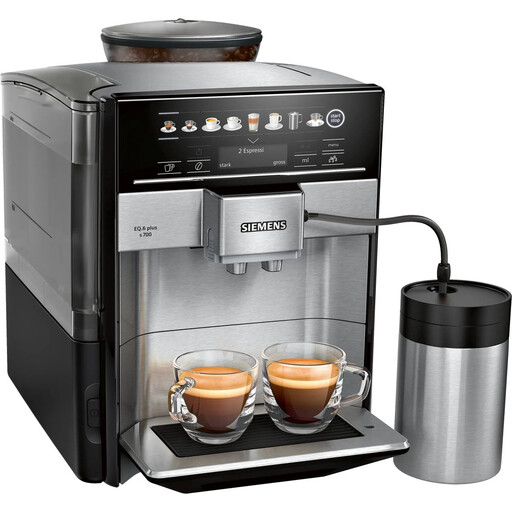 No image available
An option to compare if the Repair Café also wants to serve milk-based drinks; check the cleaning requirements and capacity of this exact model in advance.
 No image available
Worth comparing if milk-based drinks are part of your offering; check which cleaning steps and capacity will suit your busiest periods.
Assess a domestic bean-to-cup machine based on the busiest period, not just the number of cups per event. Then compare the water tank, coffee grounds container and ease of access for refilling. JURA positions the WE8 for around 30 speciality coffees a day; that isn’t a measured capacity per half-hour.
When volunteers take turns, agree who will empty the drip tray and coffee grounds container, clean the components according to the model instructions and respond to descaling alerts. Melitta lists a removable brew group and cleaning and descaling alerts for the Solo; check the individual instructions for other models.
No. It depends, among other things, on the circumstances of the contract and how it is used. According to ACM ConsuWijzer, consumer protection doesn’t automatically apply when a product is used mainly or exclusively for business purposes. Before buying, check who the contracting party is and what warranty and service terms the seller offers for that use.
Keep the milk system and any materials that come into contact with food clean. The NVWA says that businesses and organisations serving unpackaged food are required to provide information about allergens. Check whether this applies to the way the Repair Café serves coffee.