
Organising short coffee breaks
You make several cups in a row during a small workshop and want to avoid interrupting the break to refill, empty or wait for the machine.


Start by considering how many cups you want to make in a row during a break, and which drinks your participants are likely to choose. If you mainly serve black coffee, a compact machine with a two-cup function could be a good fit; for cappuccinos, you’ll also need to factor in the extra cleaning required for the milk system. Then measure the space available for the machine and, if you’re buying for a business, check the applicable service terms.
You make several cups in a row during a small workshop and want to avoid interrupting the break to refill, empty or wait for the machine.
You’re looking for a machine that participants can use, with clear arrangements for cleaning the brew group and any milk components.
You expect to serve both black coffee and milk-based drinks, and are weighing up the choice of drinks against the extra maintenance.
First, decide what matters most for your workshop: a smooth coffee round, manageable maintenance, a choice of drinks, or the space available and the purchasing terms.
| What to consider | What should you check? | Who is this important for? |
|---|---|---|
| Small coffee rounds | Count the cups needed for each break and check that you can reach the water tank, bean hopper and coffee grounds container where the machine will be set up. Melitta says the Solo 6774063_NL can make two espressos or café crèmes at once; this isn’t a measured time for making coffee for a whole group. | If I want to make several cups in a row, I want to know in advance whether refilling and emptying will be straightforward. Around 40% of consumers prioritise small coffee rounds. |
| Cleaning | Read the instructions for the milk components and brew group on the exact model, and agree on who will clean the machine after use. | If there’s no dedicated barista, I want the cleaning steps to fit the time someone has available after the workshop. Around 30% of consumers put maintenance first. |
| Choice of drinks | Decide which drinks participants will actually ask for, and compare the recipes, settings and cleaning requirements for each full model number. | If participants want both black coffee and milk-based drinks, I want to weigh up the extra milk components against that choice. Around 20% of consumers prioritise a variety of drinks. |
| Space and purchase | Measure the available space, including room to operate and clean the machine. If you’re buying for a business, check the terms that apply to your contract. | If worktop space is limited or the machine is being bought for a business, I want to know in advance whether the set-up and terms are suitable. Around 10% of consumers prioritise placement and purchasing terms. |
A two-cup function doesn’t tell you how long it will take to make all the coffee for a group. The time needed for a break also depends on the number of cups and the tasks in between.
Count how many cups you need for each break and check that the tanks and drip trays will remain accessible in the planned position.
A cleaning function doesn’t automatically replace all other cleaning. Philips recommends cleaning LatteGo after every use; other components, such as the brew group, also need maintenance in line with the model’s instructions.
Read the cleaning steps for the exact model and agree on who will take care of the components after the workshop.
The Netherlands Chamber of Commerce explains that business owners generally have less consumer protection under a contract; small businesses can rely on it only in certain circumstances.
Before ordering, check whose name the purchase will be made under and which service terms apply to that contract.
The Solo 6774063_NL is designed for black coffee and a compact set-up. Melitta lists espresso, café crème and the option to make two cups at once.
According to De’Longhi, the Magnifica Evo ECAM290.81.TB EX:1 makes both black coffee and automatic milk-based drinks.
According to Siemens, the EQ6 plus s500 TE655203RW offers several coffee and milk specialities, with different ways to connect the milk supply.
The Philips 5400 EP5447/90 could suit regular participants with different drink preferences. Philips lists 12 drink varieties and four user profiles.
This selection includes fully automatic machines for small coffee rounds, with options for black coffee, milk-based drinks and settings participants can customise.
 Image unavailable
An option for adjusting coffee strength and volume to suit participants’ preferences.
The product description lists a ceramic grinder, adjustable strength and volume, and a removable brew group. For milk froth, this model has a classic Pannarello steam wand that requires manual steps.
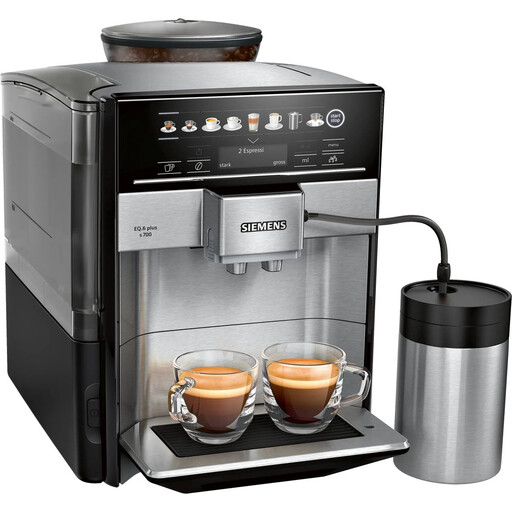 Image unavailable
An option if participants choose milk-based drinks and want to make two cappuccinos at once.
The product description lists OneTouch DoubleCup, AutoMilk Clean and the option to save up to four favourite drinks.
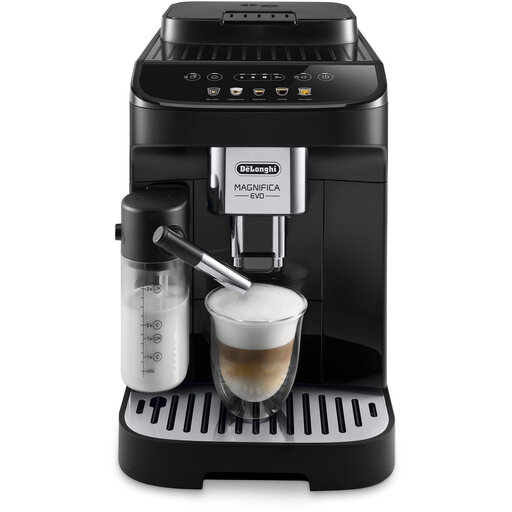 Image unavailable
An option for workshops where participants want both black coffee and milk-based drinks.
The product description lists the option to make two espressos or lungos at once, an integrated milk container and LatteCrema Hot. It also lists five drinks at the touch of a button.
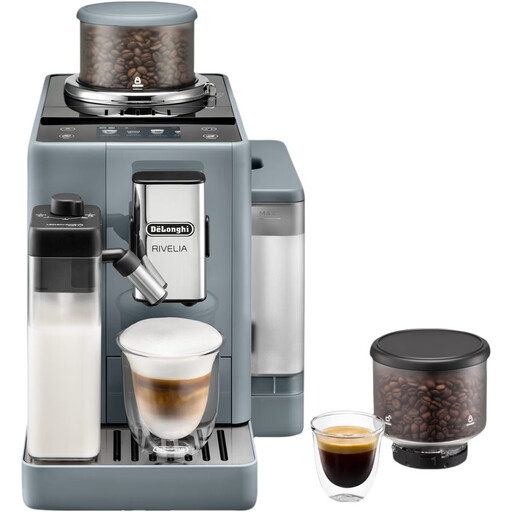 Image unavailable
An option if participants have different bean preferences and you also want to serve milk-based drinks.
The product description lists two interchangeable bean hoppers and automatic milk preparation, including two milk-based drinks at once. The milk container needs to be filled and connected to make milk-based drinks.
 Image unavailable
An option for regular participants who want a variety of drinks and saved preferences.
The product description lists 20 coffee drinks and two user profiles. Check the LatteGo cleaning instructions and plan for maintenance after use.
Count the cups you need to make in a row during one break, and check that the tanks and drip trays are easy to reach. Melitta lists a two-cup function for the Solo; Siemens gives the tank capacity for the TE655203RW. These specifications don’t provide a measured waiting time or guarantee a particular number of cups per break.
Follow the cleaning instructions for the exact model. Philips recommends rinsing or washing the LatteGo components after every use; the brew group and drip trays also have their own maintenance steps. Don’t assume an automatic milk rinse replaces all cleaning.
Not automatically: according to the Netherlands Chamber of Commerce, business owners generally have less consumer protection, although small businesses can rely on consumer law in certain circumstances. Before paying, check whose name the purchase is under and which terms the seller applies to that contract.
It depends on the activity: the Netherlands Food and Consumer Product Safety Authority (NVWA) says you need to register if you sell food several times a year, and notes that registration isn’t needed if you sell once a year. Don’t automatically apply this rule to serving free coffee; first work out exactly what will happen at your workshop and, if necessary, ask the NVWA how the rules apply.