What should you look for?
Domestic machine for black coffee
A good fit if: club members help themselves to coffee at different times and espresso or regular coffee is enough.
Bear in mind: making two black coffees at once doesn’t guarantee a fast service for a whole round; frothing milk may involve extra steps.
Domestic machine with an automatic milk system
A good fit if: several cappuccinos or other milk-based drinks are likely to be ordered and someone can clean the milk system afterwards.
Bear in mind: automatic milk preparation doesn’t eliminate cleaning; also check whether the machine can make two milk-based drinks at once.
Machine for professional or shared use
A good fit if: the club often serves a larger group and wants to explore a model designed for use in an office or club setting.
Bear in mind: JURA gives the W8 a recommended maximum daily capacity of 50; this isn’t a measured speed for a lunchtime rush. The manufacturer says it is sold through specialist dealers.
Compare models based on your expected peak, preferred mix of drinks and cleaning requirements; tank capacity alone won’t predict waiting times.
| Consideration |
What should you check? |
Who does this matter most to? |
| Service during the lunchtime peak |
Look at the busiest planned part of the round, the function for making two black coffees and any available preparation-time data for the exact model. |
If I want to avoid orders piling up, I focus on the peak rather than just the tank capacity. Around 36% of consumers put lunchtime service speed first. |
| Milk-based drinks |
Check how the milk is supplied and whether the exact model can make two milk-based drinks at once. |
For several cappuccino orders, I want to do less frothing by hand while still knowing what cleaning involves. Around 29% of consumers put milk-based drinks first. |
| Controls and cleaning |
Check the manual for instructions on emptying the containers and cleaning the milk components, brew group and machine. |
If different volunteers use the machine, I want the controls and clear-up after lunch to remain manageable. Ease of maintenance is the top priority for around 21% of consumers. |
| Purchase and maintenance |
Compare the club’s budget with the maintenance requirements and the cost of any filters and cleaning products. |
If the club will only use the machine occasionally, I want to weigh up the cost against the ongoing maintenance. Around 14% of consumers focus first on the overall cost. |
Bean-to-cup machines at Joybuy
These Joybuy product picks suit a club coffee round with black coffee and milk-based drinks; check for each model whether its features match your orders and the time available for cleaning.
 No image available
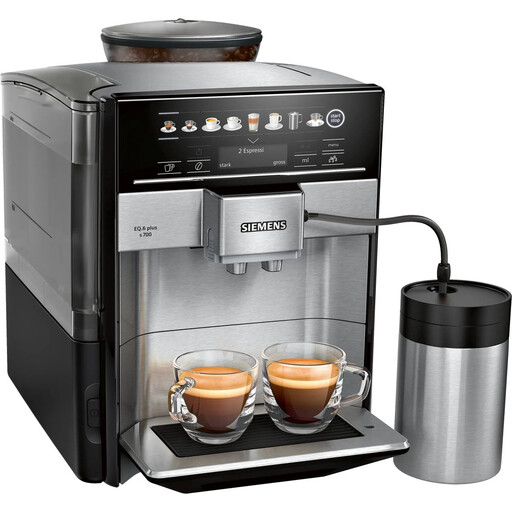
Siemens TE657M03DE EQ.6 Plus s700
The product description lists two cappuccinos at once and automatic cleaning of the milk system—features worth comparing if you expect several milk-based orders at lunch.
It also mentions storage for four favourite drinks.
View at Joybuy
 No image available
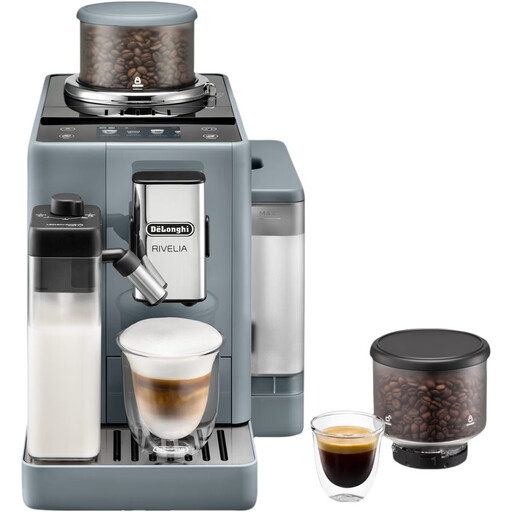
De'Longhi Rivelia EXAM440.55.G, Pebble Grey
The product description lists automatic milk-based drinks, including two at once; check whether this feature suits the orders you expect.
It also lists two interchangeable bean hoppers, which may be useful if people have different coffee preferences.
View at Joybuy
 No image available
Philips 5500 Series EP5547/90 LatteGo
The product description lists automatic milk preparation and LatteGo components that can be cleaned under the tap or in the dishwasher.
It also mentions twenty coffee varieties and two user profiles; check which options suit the club’s preferences.
View at Joybuy
 No image available
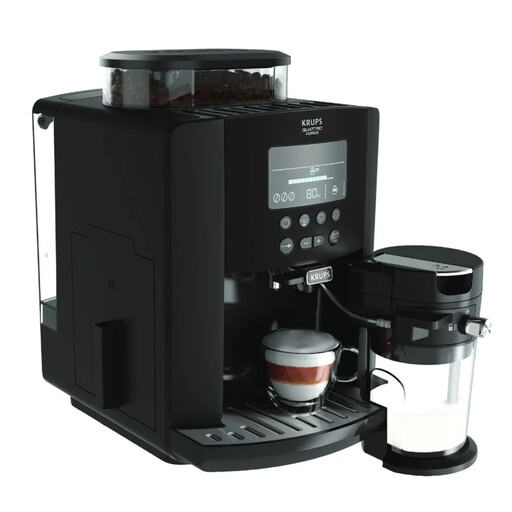
Krups EA819N Arabica Latte, black
The product description lists automatic milk preparation and the ability to make two cups at once; check separately which milk-based drinks can be made simultaneously.
Listed specifications include a 1,70 l water tank and a 260 g bean hopper.
View at Joybuy
 No image available
De'Longhi ECAM290.61.SB Magnifica Evo
This machine makes coffee from beans and has a manual steam wand. It may suit a club that mainly drinks black coffee, with the occasional milk-based drink, but preparing milk-based orders involves extra steps.
The product description lists adjustable grind and coffee strength settings, as well as a removable brew group.
View at Joybuy
Frequently asked questions
Is a 1,8 l water tank enough for a photography club lunch?
That depends on the number of orders, the drink sizes you select and how much water the machine uses for rinsing. Work out what you’ll need for the planned round and check whether the tank is easy to refill during the gathering; 1,8 l doesn’t equate to a fixed number of cups.
How do you clean the machine after making milk-based drinks?
Follow the manual for the exact model and clean the components that come into contact with milk. The Consumers’ Association recommends, among other things, cleaning the milk system and drip trays daily; also check the model-specific instructions for the brew group.
What costs and warranty terms should you check if the club is buying the machine?
Include cleaning and descaling products and any replaceable filters in your comparison. The Authority for Consumers & Markets explains statutory guarantees for sales to consumers; if the machine is bought in the name of an association, don’t assume the same consumer protections automatically apply. Check the seller’s terms in advance.
What food safety rules apply during the club lunch?
Holding a shared lunch doesn’t in itself mean that the club is selling food or drink. If food or drink is sold at an event, the Netherlands Food and Consumer Product Safety Authority says that private sellers must also follow rules for safe and hygienic preparation, sale and storage. The Authority also lists allergen information requirements for businesses and organisations that offer non-prepacked food; consider this separately if the club sells food or drink.


