
Organising the coffee round
You make several drinks one after another when the class finishes. So look at how easy the machine is to use, how often you’ll need to refill its tanks and whether it can make two cups of your chosen drink per cycle.


If your group mostly drinks black coffee, a fully automatic machine with a manual steam wand is a natural choice. If cappuccinos are ordered regularly, automatic milk preparation can save steps with each order. For each specific model, check whether it can make two cups of your chosen drink per cycle and whether the water tank, bean hopper and drip tray are easy to access. Two cups per cycle alone do not tell you how long the whole group will have to wait.
You make several drinks one after another when the class finishes. So look at how easy the machine is to use, how often you’ll need to refill its tanks and whether it can make two cups of your chosen drink per cycle.
If cappuccinos or lattes are ordered regularly, weigh up the convenience of automatic milk preparation against the work involved in cleaning the milk system.
You’ll want a manageable cleaning and descaling routine, the right maintenance products and clear repair terms. The Consumers’ Association explains that fully automatic machines need maintenance and descaling; the exact steps depend on the model.
Choose this if: your group mostly drinks espresso or black coffee, with milky drinks requested only occasionally.
The trade-off: you froth the milk yourself and check the cleaning instructions for the exact model.
Choose this if: guests regularly order cappuccinos or lattes and you don’t want to froth the milk by hand for every cup.
The trade-off: milk components mean extra cleaning; also check whether the machine can prepare two of your chosen drinks per cycle.
Choose this if: guests want a variety of drinks and you’d like to compare the cleaning steps in advance.
The trade-off: a wider choice of recipes doesn’t prove that a machine will serve the group faster; check exactly what it can prepare.
| What to consider | What to look for when buying | Who is this important for? |
|---|---|---|
| Making several drinks in a row | For each drink you want, check whether the machine can make one or two cups per cycle. Also see whether the water tank, bean hopper and drip tray are easy to access. | If several guests want coffee after the class, you’ll want to know what the machine can manage per round and how easy it is to refill. Around 36% of consumers say serving a group is their main concern when buying. |
| Milky drinks with less hands-on work | Check whether the model has a steam wand, milk container or milk tube, which drinks it prepares automatically and how the system is cleaned. | If cappuccinos or lattes are regularly on the menu, automatic preparation can mean fewer steps for each order. Around 29% of consumers say convenience when making milk-based drinks is their top priority. |
| Cleaning after use | Read the manual for instructions on cleaning the milk components and brew group, and on descaling; check which products you’ll need. | If several people use the machine, you’ll want to know in advance who can clean it and what the job involves. Easy maintenance is the main buying concern for around 21% of consumers. |
| Space and running costs | Measure the available space, including room to remove the tanks and drip tray. Then consider which features your group will actually use. | If the machine will be in a shared space, you’ll want it to fit without paying for features that are rarely used. For around 14% of consumers, cost and available space are the main considerations. |
Making two black coffees and making two milk-based drinks per cycle are different capabilities. The Consumers’ Association also treats them as separate selection criteria.
Check how many cups per cycle the exact model can make for the drinks your guests order.
If the machine can’t make two of your chosen drinks per cycle, you may need to do more and your guests may have to wait longer.
Fully automatic machines need cleaning and descaling, and milk components need extra attention. This is also worth considering when tidying up after the class.
Compare the cleaning steps in the manual for your chosen model with the tasks of the person who will tidy up afterwards.
Allow time and budget for the products needed to clean the milk system.
The De’Longhi Magnifica Evo ECAM290.21.B has a manual steam wand. Other models may offer automatic milk preparation; the range name alone won’t tell you which features are included.
Compare the full model codes and the Dutch product specifications for each one.
The EQ500 TP553E07 could be worth considering if your group regularly orders milk-based drinks and you want to factor in tank capacity.
The 5500 EP5544/50 is an option to compare if guests want a variety of hot and cold drinks.
The Magnifica Evo ECAM290.21.B is worth comparing if your group mainly drinks black coffee and only occasionally froths milk by hand.
The Evidence UP EA897B is an option to compare for a group that enjoys both black coffee and milk-based drinks.
Melitta is worth considering when comparing maintenance products for a shared fully automatic machine.
This selection includes bean-to-cup machines with both manual and automatic milk preparation, so you can weigh up the options against your craft group’s orders and cleaning routine.
 No image available
Suited to a group happy to prepare milk-based drinks by hand and adjust their coffee to taste.
Features a Pannarello steam wand, with adjustable coffee strength and volume. The brew group is removable.
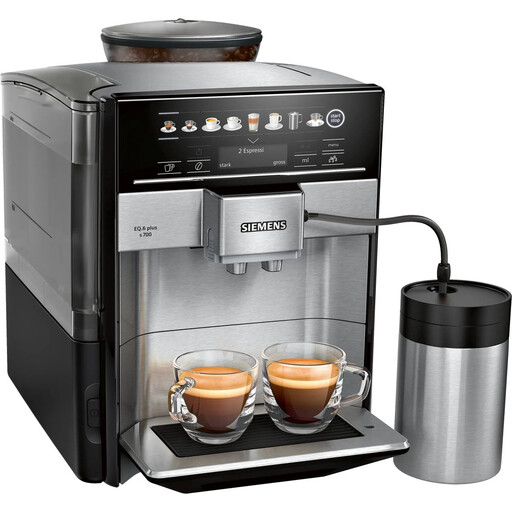 No image available
Could be a good fit if several guests want the same cappuccino and the stated automatic cleaning feature is useful for shared use.
The product description lists two cappuccinos at once, OneTouch DoubleCup and automatic steam cleaning of the milk system after a drink. You can save four favourite drinks.
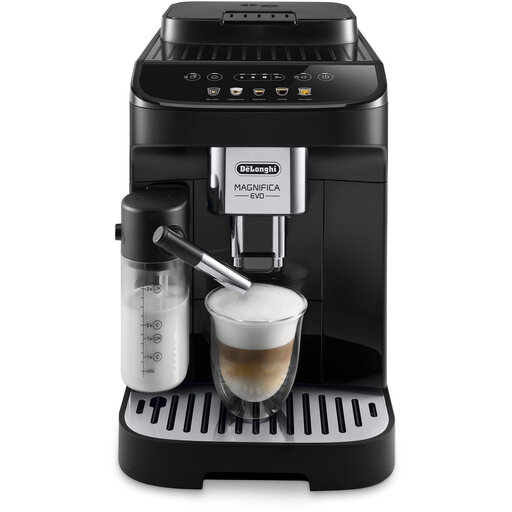 No image available
Suited to a coffee round with automatic milk preparation and several one-touch drink options.
The product title and description mention LatteCrema Hot and an integrated milk container. The description lists five one-touch drinks, two cups at once, a 1,8 l water tank and a 250 g bean hopper.
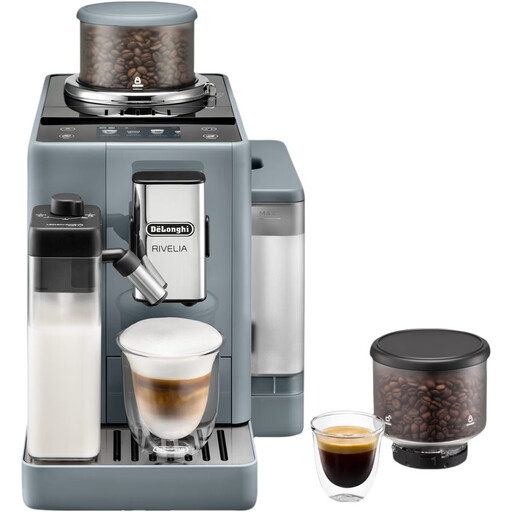 No image available
Could suit a range of orders if guests want milk-based drinks at the same time or like to switch between two types of beans.
The product title and description mention the automatic LatteCrema milk frother. The description lists two milk-based drinks at once and two interchangeable bean hoppers.
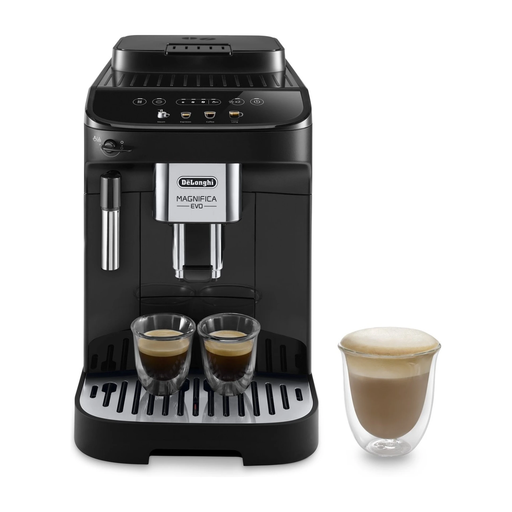 No image available
Suited to a group that mainly orders black coffee or espresso and is happy to froth milk by hand.
This model uses a manual steam wand to prepare milk. The product description mentions coffee made from beans, adjustable coffee strength and a removable brew group.
No, this feature doesn’t guarantee a short overall wait for the group. Check whether the exact model can make two cups of the drink you’ve ordered per cycle; Siemens lists this for two milk specialities on the EQ500 TP553E07.
Follow the manual for your chosen model to clean the milk system, other removable parts and the machine when descaling. Melitta offers separate products for coffee oils, milk residue and limescale; the steps required depend on the machine.
No. For consumer purchases, statutory rights in the Netherlands apply alongside any manufacturer’s warranty. According to ACM ConsuWijzer, the seller is responsible for providing an appropriate free solution if a product develops a fault sooner than could reasonably be expected under normal use. There is no single fixed statutory warranty period for every coffee machine.
If a business serves food to consumers, the NVWA requires it to provide information about allergens present. For non-prepacked products, this can be done in writing or verbally, subject to certain conditions. Whether these rules apply to your craft group depends on how it is organised and what it does in practice.