Who is this for?

Hosting guests who all want coffee

If guests order one after another, you’ll want to know how many cups of that particular drink the machine can make per cycle. KRUPS’ specifications and the Consumers’ Association’s guidance show why you should check the number of cups separately for each drink type.

Hosting cappuccino drinkers

You want to offer milk-based coffees without frothing the milk yourself, and you’re aware that milk components need attention after use. The Consumers’ Association recommends cleaning parts that come into contact with milk every day.

Hosting guests and keen to tidy up quickly

You’re looking beyond an automatic cleaning programme to the daily care needed for milk components, the drip tray and coffee grounds. The Consumers’ Association stresses that milk residue and other machine parts still need regular cleaning.

What should you look for?

Mostly black coffee

A good fit if: your guests mainly drink espresso or café crème and you’re unlikely to use a milk function much. Melitta’s Purista is designed for these coffees.

Keep in mind: a machine without an integrated milk system won’t make cappuccinos automatically.

A mixed group with milk-based coffees

A good fit if: several guests want cappuccinos or lattes and you’re looking for automatic milk preparation. KRUPS says the Evidence UP EA897B makes two milk-based coffees per cycle.

Keep in mind: milk components need cleaning. Also check whether the two-cup function on the model you’re considering applies to milk-based drinks.

A pot of coffee for everyone

A good fit if: you mainly want to serve regular coffee to everyone at once, and individual espresso or milk-based drinks are less important. The Consumers’ Association describes filter coffee as a way to brew a whole pot.

Keep in mind: a filter coffee machine with a jug works differently from a bean-to-cup machine that makes coffee one cup at a time.

What to consider What to look for Who should pay particular attention?
Cups per cycle Check separately how many black coffees and milk-based coffees the exact model makes per cycle. If guests order one after another, I want to know whether the machine can make their chosen drink per cycle. Around 33% of consumers prioritise serving the group.
Milk preparation Check which milk-based drinks the model makes automatically and how the milk system is cleaned. If guests want different drinks, I want to offer cappuccinos or lattes without frothing the milk myself. Around 25% of consumers prioritise automatic milk-based coffees.
Cleaning Check the instructions for milk components, the drip tray, the coffee grounds container and descaling. After a gathering, I want to know how much maintenance the machine needs, so I can fit tidying up around the preparations. Around 25% of consumers prioritise straightforward daily maintenance.
Supplies Check which beans, filters and suitable cleaning products the model requires, and when the filter needs replacing. I want to know in advance which consumables I’ll need besides coffee beans. Around 17% of consumers prioritise checking what they’ll need to use and maintain the machine.

Things to watch out for when buying

  • ‘Two cups at once’ doesn’t always mean two cappuccinos

    A two-cup function may apply to black coffee without confirming that the machine can make two milk-based drinks at once.

    Check the exact model’s specifications to see which drink types and how many cycles the function covers.

  • A bigger water tank doesn’t mean faster brewing

    The tank’s capacity tells you how much water it holds, not how quickly the machine can make drinks one after another.

    Consider tank capacity and the number of cups per cycle as separate features.

  • Automatic milk-system cleaning doesn’t mean the machine is maintenance-free

    Milk components, the drip tray and the coffee grounds container still need attention. The Consumers’ Association recommends cleaning parts that come into contact with milk every day.

    Before buying, read the cleaning instructions for the specific model, including the descaling steps.

    Allow time to check and clean the milk components and drip trays after use, too.

Brands to compare

KRUPS

The Evidence UP EA897B is worth comparing if your group orders both black coffee and milk-based coffees.

  • KRUPS says this model can make two black coffees or two milk-based coffees per cycle.
  • KRUPS lists an automatic milk-cleaning programme.
  • An automatic programme may not remove the need for all manual cleaning; milk components still need care.

Philips

The 5500 EP5547/90 is an option to compare for a group with a range of drink preferences.

  • The Consumers’ Association lists a milk container, two cups of coffee at once and a 1800 ml water tank for the Philips 5500 EP5547/90.
  • The mention of two cups of coffee doesn’t in itself confirm that the machine makes two cappuccinos at once.
  • For the model you choose, check that the product title and description refer to the same version.

Melitta

The Purista range is particularly worth comparing if espresso and café crème are your main focus.

  • For the Purista model it tested, Melitta lists a width of 20 cm and adjustable coffee strength and grind settings.
  • The product information doesn’t describe an integrated milk system, so check that this version suits your guests’ drink preferences.

De’Longhi

The Magnifica Evo ECAM290.81.TB EX:1 is worth comparing if you want to serve both black coffee and milk-based drinks.

  • De’Longhi lists seven one-touch drink options, including cappuccino and latte macchiato.
  • The manufacturer describes one-touch cleaning of the LatteCrema Hot system after use.
  • These features don’t tell you how long it will take to serve a group or cover all the other cleaning steps.

Joybuy products

These models are worth comparing if you’re looking for a bean-to-cup machine with milk-based drink options for your gathering.
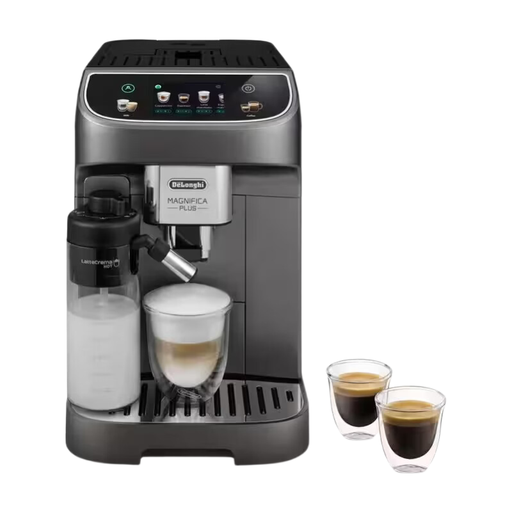
De’Longhi Magnifica Plus ECAM320.70.TB, titanium black

De’Longhi Magnifica Plus ECAM320.70.TB, titanium black

An option to compare if guests want a range of drinks and you’re looking for automatic milk preparation.

View at Joybuy
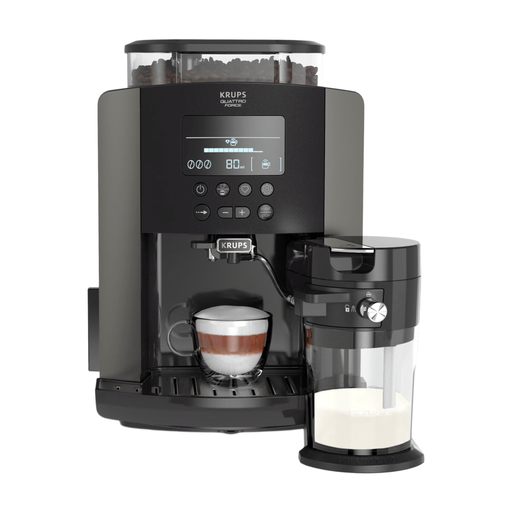
KRUPS Essential EA819E with Cappuccino Quattro Force

KRUPS Essential EA819E with Cappuccino Quattro Force

Compare this model if you’re considering espresso, lungo or cappuccino for your guests.

View at Joybuy
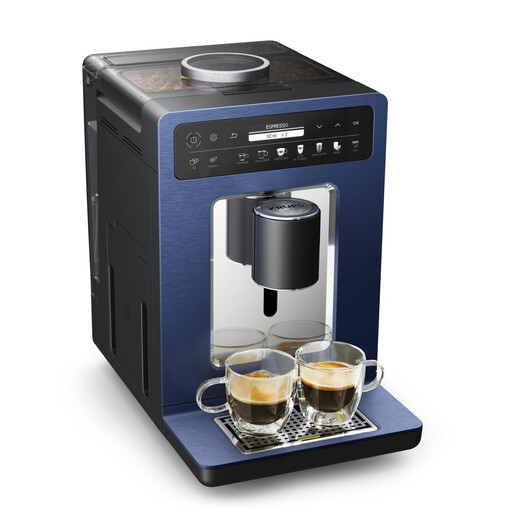
KRUPS EA89W4 Evidence by Wilmotte

KRUPS EA89W4 Evidence by Wilmotte

A model to compare if you’re considering automatic preparation of milk-based drinks for your guests.

View at Joybuy
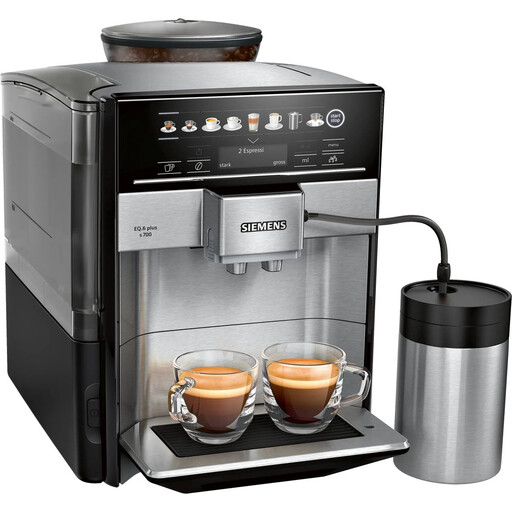
Siemens TE657M03DE EQ.6 Plus s700

Siemens TE657M03DE EQ.6 Plus s700

Compare this model if several guests want the same milk-based drink, and check the features of the version you choose.

View at Joybuy
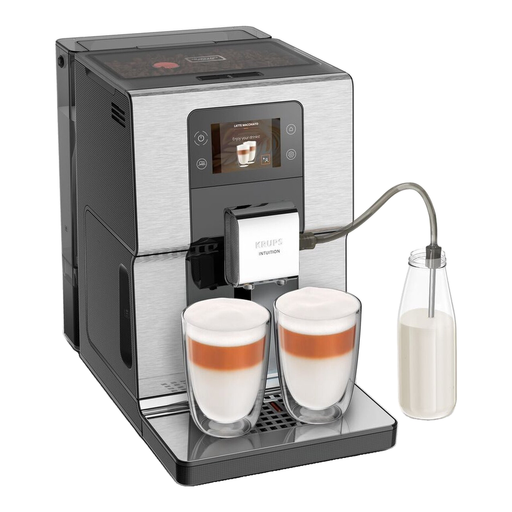
KRUPS EA876D, 15bar, 3L, stainless steel

KRUPS EA876D, 15bar, 3L, stainless steel

An option to compare if you’re considering a range of coffee and milk-based drinks for a group.

View at Joybuy

Frequently asked questions

Does ‘two cups at once’ mean two cappuccinos too?

Not unless this is confirmed for the exact model. The Consumers’ Association lists two cups of coffee at once for the Philips 5500 EP5547/90, while KRUPS specifically states that the Evidence UP EA897B makes two milk-based coffees per cycle. Check which drinks the manufacturer includes in the two-cup function.

What should you clean after making milk-based coffee?

Clean parts that come into contact with milk according to the manual; the Consumers’ Association recommends cleaning them every day. Keep the drip tray and coffee grounds container clean, too, and don’t assume an automatic cleaning programme means no further cleaning is needed.

How can you plan for the maintenance a bean-to-cup machine needs?

Check which water filters and cleaning products are suitable for your model, and follow the replacement and cleaning instructions. According to the Consumers’ Association, a water filter can mean you need to descale less often, but the filter still needs replacing regularly.

Are you always entitled to just a two-year guarantee on a coffee machine in the Netherlands?

No. According to the Dutch government, there’s no fixed statutory guarantee period in the Netherlands: you’re entitled to a product that works properly for as long as you can reasonably expect it to. If a product is faulty, contact the retailer; a manufacturer’s guarantee is extra.
