Choose a bean-to-cup machine based on the expected rush during the coffee break and who will refill the water, empty the coffee grounds and manage the milk. A wide drinks menu does not tell you how many cups the machine can make per hour. If you’ll mainly serve black coffee, a model with a manual steam wand may be enough, while automatic milk preparation can make serving milk-based coffees easier. Remember to factor in chilled milk, cleaning and how often the machine will be used after the event.
Who is this choice relevant to?
Organiser managing a busy coffee break
You want to work out whether volunteers can serve guests without refilling, emptying or choosing drinks interrupting the workshop. The Dutch Consumers’ Association covers features such as reservoirs and controls on fully automatic espresso machines.
Volunteer serving coffee and milk-based drinks
You want a machine that’s easy to use. If you’re serving milk-based drinks, you’ll also need to consider chilling and cleaning the milk, as well as potential allergens. The Netherlands Food and Consumer Product Safety Authority (NVWA) provides information about allergens when selling or serving food and drink, while the Netherlands Nutrition Centre covers the safe storage of perishable products.
Buyer looking for ongoing community use
You’re looking for a machine that will still be used after the community meal, so you’ll want to consider the beans, cleaning, descaling and warranty. ACM ConsuWijzer explains your statutory warranty rights.
What should you look for when choosing?
Start by considering the rush during the break and the help available. Then choose the milk system and features that will also suit how the machine is used afterwards.
| What to consider |
What to look for |
Most relevant for |
| Serving speed and refilling |
Estimate demand during the busiest break and check the water tank and coffee grounds container for the specific model. Don’t assume a tank size or a two-cup function tells you how many cups the machine can make per hour. |
If you want to keep queues down, focus on peak demand and who will look after the machine during the break. Around 33% of consumers prioritise serving speed and refilling. |
| Ease of use for volunteers |
Check how to select a black coffee and the milk-based drinks you want to serve, and how the machine indicates that it needs emptying or cleaning. |
If different volunteers will be using the machine, you’ll want the necessary steps to be clear. Around 27% of consumers give ease of use top priority. |
| Milk, cleaning and allergens |
Check which milk-based drinks guests want, where the milk will be kept chilled and how to clean the components of the specific milk system. Arrange to provide allergen information if it applies to the food and drink you’re serving. |
If guests expect milk-based coffee, you’ll want to plan the milk preparation, chilling and cleaning in advance. Around 20% of consumers prioritise milk preparation and safe milk handling. |
| Use after the event |
Decide whether the machine will be used regularly afterwards, and factor in beans, maintenance and cleaning products. |
If the machine will have a permanent place for community use, you’ll want its features to suit regular preferences and its maintenance to be manageable. Around 20% of consumers prioritise long-term use and associated running costs. |
Common buying mistakes
-
Confusing a wide choice of recipes with proven capacity for a group
A menu with lots of drinks or a large reservoir doesn’t tell you how many cups the exact model can make during a short break. The Dutch Consumers’ Association describes features such as making two cups at once, but this isn’t an hourly capacity measurement for your workshop.
Plan for the expected rush and the volunteers’ tasks. If you’re expecting a large group, ask for a serving-speed measurement for the exact model you’re considering.
Extra steps can lead to queues during the break.
-
Assuming an automatic milk system is maintenance-free
Milk residue still needs to be removed after automatic preparation. The Dutch Consumers’ Association describes daily cleaning and the removal of milk residue.
Before buying, check the cleaning steps for the exact model and arrange to keep the milk chilled during the event.
Cleaning takes extra time after use and may require cleaning products.
-
Assuming products with almost identical names are the same model
A model code can determine which milk function or other features you get. For example, Philips EP5544/50 and EP5547/90 have different model codes. The Melitta listing for F850-101 also has a product description that differs from the model designation.
Compare the full model code and the model’s features on the product page before attributing functions to a machine.
Relevant brands to consider
De’Longhi
The Magnifica Evo is available with a manual steam wand, as on the ECAM290.21.B, and with automatic LatteCrema Hot milk preparation on the ECAM290.61.SB.
- The different models make the choice between manual frothing and automatic milk preparation clear.
- The 1.8-litre water tank capacity applies to the ECAM290.21.B; this doesn’t tell you how many cups the machine can make during an event.
Philips
The Philips 5500 Series EP5544/50 is worth considering if you want to combine a range of drink preferences with automatic milk preparation.
- Philips lists 20 recipes and four user profiles for this model.
- These are manufacturer specifications, not a measure of how quickly it can serve drinks during a busy coffee break. EP5547/90 is a different model code.
Melitta
The Barista TS Smart is designed for regular use and a range of bean and drink preferences.
- Melitta lists two bean hoppers, 21 specialities and up to eight profiles.
- You may not need these features for a single community event. Check the full model code and specification when choosing.
Bean-to-cup machines at Joybuy
This selection includes fully automatic machines with automatic milk preparation, as well as models where you froth the milk manually. They suit different ways of operating and using the machine during and after the workshop.
 No image available
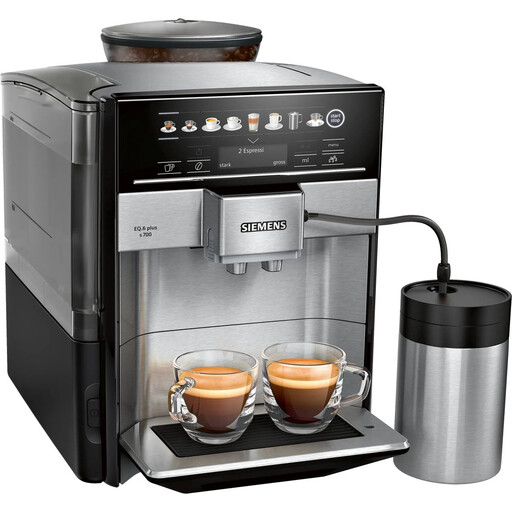
Siemens TE657M03DE EQ.6 Plus s700
Worth considering if you want to serve milk-based coffee during the break and make two cappuccinos at once.
The product description lists OneTouch DoubleCup, AutoMilk Clean after every drink and sensor controls. These details don’t tell you how many cups it can make per hour.
View at Joybuy
 No image available
Philips 5500 Series EP5547/90 LatteGo
Worth considering if guests want a choice of coffee varieties and you’d like milk to be prepared automatically.
The product description lists 20 coffee varieties, two user profiles and QuickStart. LatteGo is described as easy to clean under the tap or in the dishwasher; the milk still needs to be kept chilled.
View at Joybuy
 No image available
De’Longhi Magnifica Evo ECAM290.61.SB
An option if you want to serve cappuccino or latte macchiato with automatic milk preparation.
The product description lists LatteCrema Hot, a removable milk container and the ability to make two cups at once. The latter isn’t a measure of hourly serving speed. Clean the milk components after use and keep the milk chilled.
View at Joybuy
 No image available
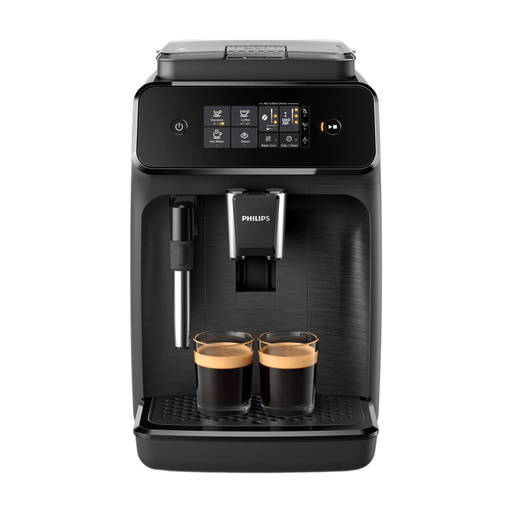
Philips 1200 Series EP1220/00
This model suits those who prefer black coffee, with a volunteer on hand to make the occasional milk-based coffee manually.
The product name lists a Pannarello steam wand and one-touch preparation. The product description mentions a touch display and adjustable coffee strength and quantity. Manual frothing takes extra work.
View at Joybuy
 No image available
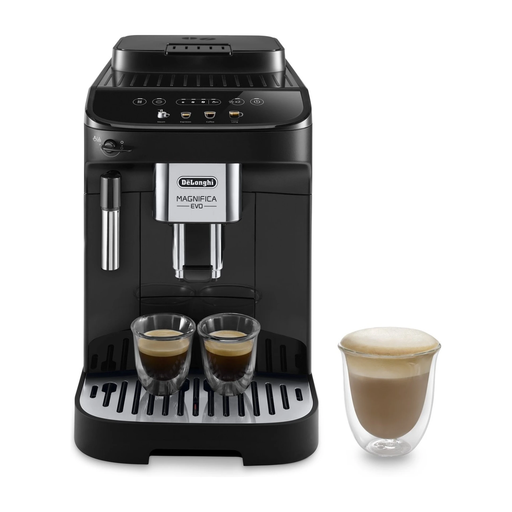
De’Longhi Magnifica Evo ECAM290.21.B
An option if guests mainly want black coffee and a volunteer can make milk-based coffee manually.
According to De’Longhi, this model has a manual steam wand and a 1.8-litre water tank. The product description lists direct drink selection and adjustable grind and aroma intensity. The tank capacity doesn’t predict how many cups it can make per hour; the steam wand needs cleaning after use.
View at Joybuy
Frequently asked questions
How do you prepare the machine for the coffee break?
First, estimate demand during the busiest break and assign someone to look after the water, beans, drip tray and coffee grounds. Get the drinks you want to serve ready, and clean any milk components you use according to the instructions for your chosen model. An automatic milk function doesn’t remove the need to do this.
Can you leave milk next to the machine for the whole workshop?
No, keep perishable milk chilled. The Netherlands Nutrition Centre recommends a fridge temperature of 4 °C and advises not leaving milk out of the fridge for more than two hours.
What warranty applies when buying as a consumer in the Netherlands?
As well as any manufacturer’s or seller’s warranty, you have statutory rights. If a product doesn’t meet what you could reasonably expect under normal use, the seller must offer an appropriate solution free of charge, according to ACM ConsuWijzer. This doesn’t establish a fixed statutory service life for this machine.
What food safety rules might apply to a community meal?
According to the Netherlands Food and Consumer Product Safety Authority (NVWA), food safety rules also apply to individuals who occasionally sell food or drink to consumers. When selling or serving unpackaged drinks, customers must be able to get information about any allergens present, including milk and soya. Whether registration or a food safety plan is required depends on the specific arrangements and how the food and drink are served.


