First, decide how many cups you want to make straight after class and whether the group mainly drinks black coffee or would also like milk-based drinks. A compact machine may suit a small group; if you regularly serve a group, it’s worth comparing a commercial machine too. A milk function offers more choice, but involves extra steps or cleaning.
Who is this choice relevant to?
Teacher serving the group straight away
Wants to serve several people one after another after class without complicated controls. Consumentenbond lists the number of cups per day and the types of coffee you want as factors to consider. A daily capacity figure doesn’t tell you how many cups can be ready during a short rush.
Organiser also offering milk-based coffee
Wants to offer participants more choice, but needs to allow time for frothing and cleaning. Philips sets out separate maintenance steps for milk components and the brew group.
Manager of a small classroom
Wants a machine that fits the available space and is easy to maintain after use. Melitta lists the black Solo as 20 cm wide; also allow space to access the reservoirs.
What should you consider when choosing?
Compact bean-to-cup machine for black coffee
Suitable when: the group is small and mainly drinks espresso or café crème. Melitta says the Solo can make two cups of these drinks at the same time.
Bear in mind: the Solo model reviewed has no milk system or hot water function. Being able to make two cups at once doesn’t tell you how long it will take to serve the whole group.
Domestic bean-to-cup machine with manual milk frothing
Suitable when: the group mainly drinks black coffee and someone can froth milk by hand from time to time. According to the manufacturers, the Philips EP2220/10 and De’Longhi ECAM22.110.B have a classic or traditional milk frother.
Bear in mind: frothing milk involves an extra step; both models mentioned have a stated reservoir capacity of 1.8 l.
Bean-to-cup machine with an automatic milk system
Suitable when: several participants want milk-based coffee and ease of use with fewer steps is important.
Bear in mind: check which drinks the specific model makes automatically and how the milk system needs to be cleaned after use.
Professional bean-to-cup machine for black coffee
Suitable when: you regularly need to make a lot of cups at gatherings; JURA recommends a maximum daily capacity of 50 for the W4.
Bear in mind: that daily capacity doesn’t tell you how many cups the machine can make per hour or how long people will wait straight after class.
| Consideration |
What to look for |
Most relevant to |
| Serving several students one after another |
Estimate how many cups you’ll need in the first short period. Check the controls, water capacity and whether the machine can actually make your chosen drink two cups at a time. |
If I have to prepare several orders in a row after class, I want to know what the machine can handle during that rush. Around 36% of consumers prioritise serving the group. |
| Cleaning at the end of the evening |
Check the cleaning instructions for the exact model, including those for the milk components, brew group and drip tray. |
After an evening class, I want to be able to leave the machine without spending a long time cleaning milk components. Around 29% of consumers put minimal cleaning at the top of their list. |
| Black coffee or milk-based drinks too |
Ask which drinks the group wants and check whether a cappuccino is made automatically or requires manual frothing. |
If participants want different drinks, I want to know whether a milk function is worth the extra effort. Around 21% of consumers prioritise drink choice. |
| Upfront and ongoing costs |
Compare the machine, beans and model-specific maintenance products based on the same expected usage. |
I want to compare the cost of the machine, beans and maintenance side by side. Around 14% of consumers prioritise total costs. |
What to watch out for when buying
-
Confusing daily capacity with speed after class
JURA’s stated maximum daily capacity for the W4 doesn’t tell you how many orders it can prepare during a short rush.
Assess the rush separately: note how many people want coffee at the same time and which drinks they choose.
-
Assuming a milk function makes cappuccino automatically
A classic or traditional frother requires you to froth the milk by hand. It’s not the same as an automatic milk programme.
Check the feature description and cleaning instructions for the exact model before you choose.
Manual frothing and cleaning add extra steps; milk and model-specific maintenance products are ongoing costs.
-
Looking only at the purchase price
Consumentenbond recommends considering the purchase price and the cost of coffee together. Maintenance costs also vary between machines.
Compare the expected amount of beans and maintenance products for the same number of gatherings, without assuming a cost per cup.
-
Assuming a similar model number means it’s the same model
The manufacturer lists ECAM22.110.B, while a Joybuy product page lists ECAM20.110. The model numbers don’t show that these are the same version.
Check the full model number and relevant features. Don’t use the ECAM20.110 page as a purchase link for the ECAM22.110.B.
Brands to consider
Melitta
The Solo model reviewed is a compact option for espresso and café crème, but not for milk-based drinks.
- Melitta says the black Solo is 20 cm wide and can make two cups of espresso or café crème at the same time. The brew group is removable.
- According to Melitta, the red Solo model reviewed has a 1.2 l reservoir and no milk system or hot water function. Check the specific version, as features may vary.
Philips
The EP2220/10 model reviewed combines black coffee with a classic milk frother; other versions may have a different milk system.
- Philips lists a 1.8 l water reservoir for the EP2220/10.
- The classic frother requires you to froth the milk by hand and clean the components. Philips provides maintenance instructions for each milk component and the brew group.
De’Longhi
The Magnifica S ECAM22.110.B model reviewed makes espresso and lungo and has a traditional milk frother.
- De’Longhi lists a 1.8 l reservoir and a traditional milk frother for this version.
- Check the full model number: don’t assume the ECAM22.110.B is the same as the ECAM20.110 without verifying the model identity.
JURA
The professional W4 is an option to compare for regular group use when black coffee is enough.
- JURA lists black coffee specialities and a recommended maximum daily capacity of 50.
- The daily capacity is a manufacturer’s specification; it doesn’t give a measured serving speed straight after a class.
Bean-to-cup machines at Joybuy
This selection includes fully automatic bean-to-cup machines for black coffee and milk-based drinks, for anyone who wants to make coffee for a group after a class. Milk preparation varies by model: some versions require manual frothing, while others have an automatic milk system.
 No image available
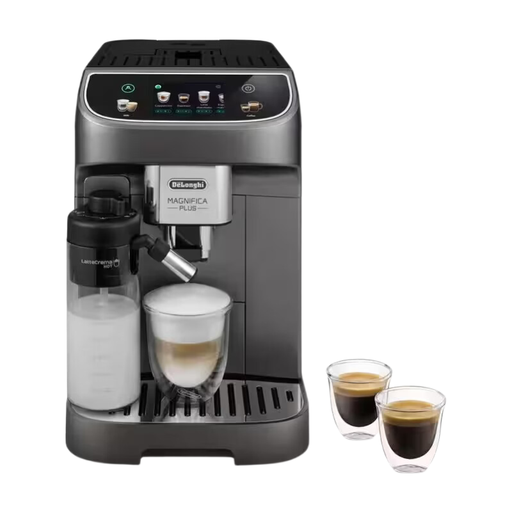
De’Longhi Magnifica Plus ECAM320.70.TB
Suited to anyone who also wants milk-based drinks and automatic milk preparation; the product information states that it’s for domestic use only, not commercial use.
The description mentions LatteCrema, a removable 1.9 l water reservoir and two milk-based drinks at once. The listed components are dishwasher-safe.
View at Joybuy
 No image available
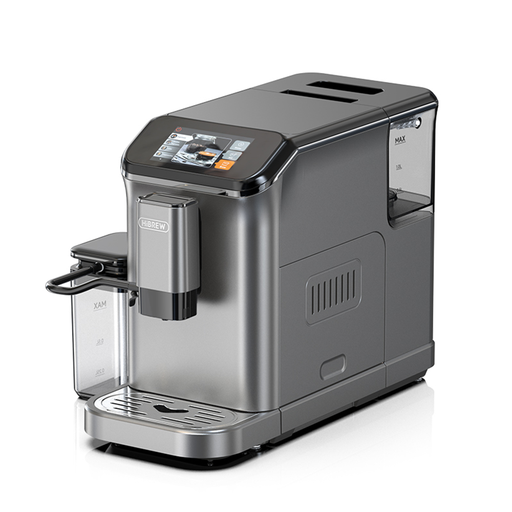
HiBREW H16 fully automatic coffee machine
Suited to anyone who wants to adjust the settings using a touchscreen and is considering both coffee and milk-based drinks.
The product title lists a 4.3-inch touchscreen, 15 grind settings, 20 bar extraction pressure, a removable milk reservoir, pre-infusion and smart cleaning.
View at Joybuy
 No image available
Philips 1200 Series EP1220/00
Suited to anyone who mainly wants to make coffee and occasionally wants to froth milk by hand.
The product information lists a Pannarello steam wand, 12 grind settings, adjustable coffee strength and volume, and a removable brew group. Milk is frothed using the steam wand, rather than through automatic milk-based drink preparation.
View at Joybuy
 No image available
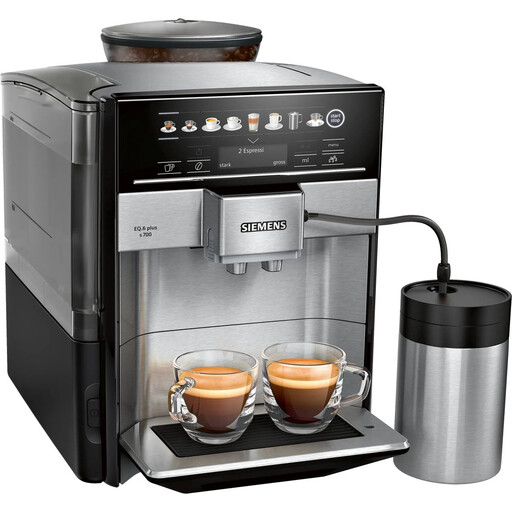
Siemens TE657M03DE EQ.6 Plus s700
Suited to anyone who wants to make a range of coffee and milk-based drinks, and values the option to make two cups at once.
The product description mentions OneTouch DoubleCup, a 1.7 l water capacity, automatic steam cleaning of the milk system and space to save up to four favourite drinks.
View at Joybuy
 No image available
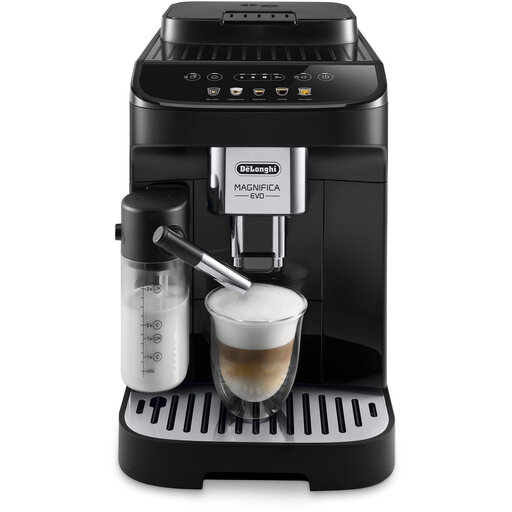
De’Longhi ECAM290.61.B Magnifica Evo
Suited to anyone who also wants cappuccino or latte macchiato and wants to make these drinks at the touch of a button.
The product information lists five one-touch drinks, automatic milk frothing and a removable 1.8 l water reservoir.
View at Joybuy
Frequently asked questions
How do you choose the capacity for coffee straight after an evening class?
Start with the number of people who want coffee within the same short period. Compare that with the drinks and controls offered by the model. JURA’s recommended maximum daily capacity of 50 for the W4 isn’t a measured number of cups per hour.
What should you consider when choosing where to put and how to use the machine?
Measure the space available and check the product specifications and instructions for the version you choose. Melitta lists the black Solo as 20 cm wide; also allow space to access the reservoirs.
What should you do with a milk system after use?
Follow the instructions for the exact model. Philips recommends rinsing LatteGo after every use or cleaning its components in the dishwasher; the classic frother has different cleaning steps.
Does a two-year manufacturer’s warranty cover the full statutory guarantee in the Netherlands?
No. According to the Dutch Government, the Netherlands has no fixed statutory guarantee period. What you can expect from a product depends on the circumstances. If a product is faulty, contact the seller. A manufacturer’s warranty or an additional warranty may offer extra cover.
What product safety requirements apply to a coffee machine in the Netherlands?
Electrical equipment sold in the Netherlands must comply with the relevant EU product rules. For equipment covered by CE rules, these include a CE mark and an EU declaration of conformity. A CE mark is not an independent performance test of the coffee machine.


