Choose a bean-to-cup machine for your language class based on how many cups you want to make in a row during the break, and whether milk-based drinks need to be prepared automatically. A larger water tank or a two-cup function doesn’t, on its own, mean a whole group will be served quickly; also consider refilling, operation and cleaning. The models mentioned are options for comparison, not confirmation of product compliance: according to the European Union, whether CE marking is required depends on the rules that apply to the product.
Who is this relevant to?
Coffee-break host
You’re serving several cups shortly after visiting the market and mainly want to avoid interruptions to the lesson while the machine is operated and refilled. Compare the tank, grounds container, two-cup function and brewing sequence. There’s no measured comparison of serving times for a group available as a purchasing detail.
Organiser catering for cappuccino drinkers
You expect regular orders for milk-based drinks and want to weigh up ease of use against cleaning a milk container or steam wand.
Organiser with a small classroom
You have limited space for the machine and want filling, emptying and cleaning after the lesson to be practical.
What should you look for?
Mainly black coffee, with limited space
Choose this if: espresso and café crème are enough, and a slim footprint matters. Melitta lists the Solo as 20 cm wide.
Bear in mind: the two-cup function mentioned is for espresso or café crème and doesn’t prove that a whole class will be served quickly.
Regular cappuccinos without manual frothing
Choose this if: milk-based drinks are ordered regularly and you’d prefer milk to be prepared automatically.
Bear in mind: automatic milk preparation doesn’t eliminate the need to clean the milk components.
Black coffee with the occasional manually frothed milk
Choose this if: you sometimes want to make milk-based drinks yourself using a steam wand.
Bear in mind: manual frothing requires extra steps; Consumentenbond advises cleaning the steam wand immediately after use.
The four rows cover the main purchasing priorities of consumers considering a bean-to-cup machine for this language class; each consumer has one main reason for choosing.
| Consideration |
What to look for when buying |
Who is this most important to? |
| Making several cups in a row |
Check which drinks can be made at the same time and how easy it is to access the water tank and grounds container. |
When learners all take a break at once, I want to know how many orders I can make one after another without having to keep refilling. Around 33% of consumers give serving several drinks during the break their top priority. |
| Milk-based drinks |
Compare the exact milk system and its cleaning instructions; consider how often learners will want cappuccino or other milk-based drinks. |
If milk-based drinks are a regular feature, I want fewer steps while making them. Around 27% of consumers put automatic milk preparation first. |
| Maintenance and consumables |
Read the instructions for cleaning the milk components and brew group, and for descaling. Check which cleaning products or filters the manual recommends. |
After the lesson, I want to know how much maintenance the machine needs and which supplies I’ll need to buy regularly. Around 20% of consumers prioritise maintenance and running costs. |
| Space and ease of use |
Measure the available space, allowing room to remove components, and check which drinks can be made without extra steps. |
In a small classroom, I want to be able to fill and empty the machine without blocking the workspace. Around 20% of consumers prioritise space and ease of use. |
Common buying pitfalls
-
Assuming tank capacity or two cups means the whole group will be served quickly
Tank capacity isn’t a measured indication of how many cups can be made during a break. A two-cup function may also be limited to certain drinks.
Make a note of which drinks and how many orders you expect during the break. Check the two-cup function for each model and whether the tanks and drip trays are easy to access.
-
Assuming automatic milk drinks mean maintenance-free use
Milk residue still needs to be removed after automatic preparation, and a manual steam wand also needs cleaning.
Compare the cleaning steps in the manual for the exact milk system, not just how easy it is to operate while making a drink.
-
Assuming every coffee machine comes with a two-year legal guarantee
The Dutch government says there’s no fixed statutory guarantee period in the Netherlands; what you’re entitled to expect also depends on the product and how it’s used.
Keep your proof of purchase and contact the seller if something goes wrong. Treat any manufacturer’s guarantee as an addition to your legal rights.
Brands to compare
Philips
The EP2333/40 we looked at combines bean-to-cup coffee with automatic LatteGo milk preparation, making it an option to compare if cappuccinos are a regular request.
- Philips describes LatteGo as a two-part milk system with no tubes.
- Philips’ quick-cleaning claim applies under the stated conditions; it doesn’t mean the entire cleaning process is completed automatically.
De'Longhi
The Magnifica Start ECAM222.20.B we looked at makes coffee, espresso and long coffee, with a steam wand for frothing milk manually.
- De'Longhi lists a 1.8 l water tank and a coffee grounds container that holds 14 portions for this model.
- Frothing milk manually takes extra effort and cleaning; these details apply to this model and not necessarily to every Magnifica Start variant.
Siemens
The EQ6 plus s300 TE653M11RW we looked at makes several milk-based drinks at the touch of a button and has a stated water tank capacity of 1.7 l.
- The stated tank capacity gives you a specific figure to consider when weighing up how often you’ll need to refill.
- Siemens’ statements about automatic steam cleaning are manufacturer claims, not independent verification of the cleaning results or serving speed during a lesson break.
Melitta
The Solo 6774131_NL we looked at is a slim option for espresso and café crème if you don’t need automatic milk preparation.
- Melitta lists a width of 20 cm and a function that makes two espressos or café crèmes at once for this model.
- The two-cup function mentioned is for these black coffee drinks and doesn’t prove that the machine can serve a group more quickly.
Bean-to-cup machines at Joybuy
This selection of Joybuy products includes bean-to-cup machines with automatic milk preparation and models with a manual steam wand. Use them as options to compare, not as confirmation of product compliance; the European Union links the CE marking requirement to the rules that apply to the specific product.
 No image available
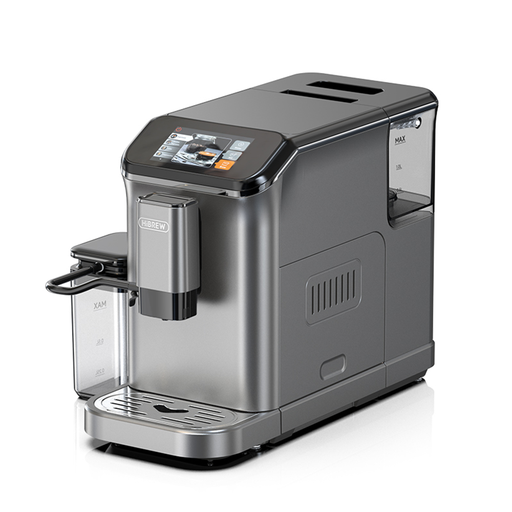
HiBREW H16 fully automatic coffee machine
An option to compare if you’re looking for bean-to-cup coffee and automatic milk preparation for milk-based drinks.
The product lists a 4.3-inch touchscreen, 15 grind settings and a removable milk container.
Also listed: adjustable settings, 20 bar extraction pressure, pre-infusion and smart cleaning.
Joybuy
 No image available
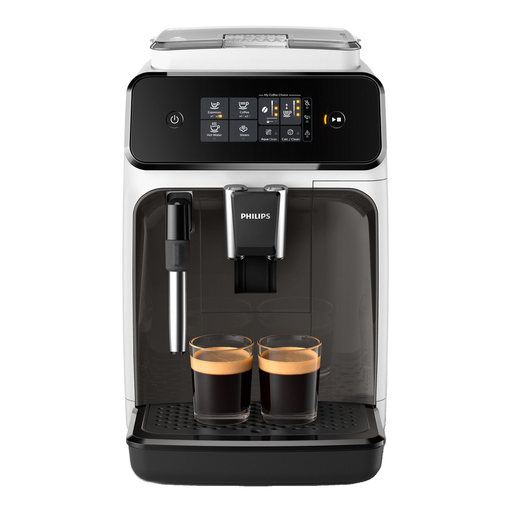
Philips 1200 Series EP1223/00
An option if you mainly make black coffee and want to froth milk yourself from time to time.
The product lists a 1.8 l water tank, 15 bar pressure and a ceramic grinder.
The classic milk frother described requires manual operation.
Joybuy
 No image available
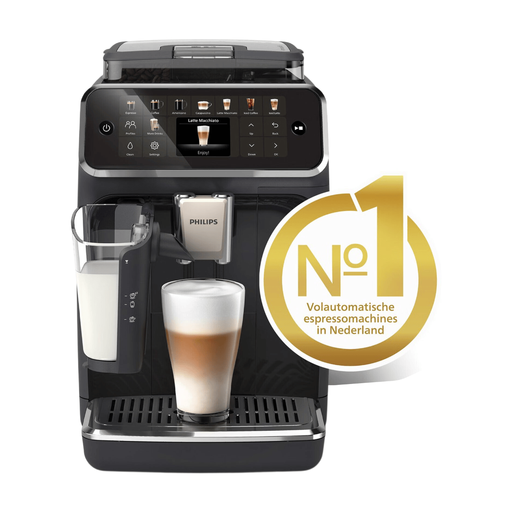
Philips EP5541/50 LatteGo Series 5500
An option to compare if you want automatic milk preparation for regular orders of milk-based drinks.
The product lists 20 coffee drinks, a ceramic grinder, 12 settings and a 1.8 l tank.
AquaClean is also mentioned in the product name.
Joybuy
 No image available
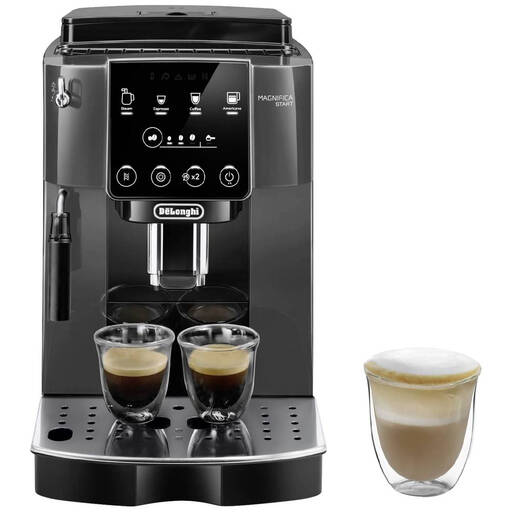
De'Longhi Magnifica Start ECAM220.22.GB
An option if you want to make a milk-based drink now and then and froth the milk yourself.
The product information lists a manual steam wand and a 1.8 l water tank.
Bear in mind that the steam wand requires extra operation and cleaning.
Joybuy
 No image available
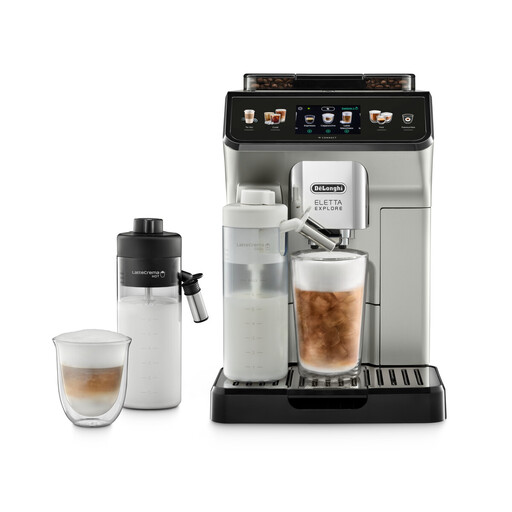
De'Longhi Eletta Explore ECAM450.65
An option to compare if you want bean-to-cup coffee with automatic milk preparation.
The product name lists the LatteCrema system and 13 drinks.
Joybuy
Frequently asked questions
Is a two-cup function enough to serve coffee to the whole class quickly?
Not necessarily. Check which drinks the function applies to and how many cups you need to make in a row. For the Solo, Melitta lists two espressos or café crèmes at once; this says nothing about the total waiting time for a group.
What should you do with the milk system after the lesson?
Remove any milk residue and follow the manual for the exact machine. Consumentenbond advises cleaning a steam wand immediately after use; also check whether each component is dishwasher-safe.
What product rules apply to an electric coffee machine on the Dutch market?
For electrical equipment covered by the relevant harmonised EU rules, the required CE marking forms part of product compliance. According to the European Union, CE marking isn’t required for every product, only when the applicable rules say it is; check the information for the exact model.
Do market rules apply if I make coffee for the language class after visiting a market?
Visiting a market before the lesson doesn’t automatically make serving coffee a market sale. If you actually sell food or drink at a market or event, the Netherlands Food and Consumer Product Safety Authority lists food safety rules; according to the NVWA, a food safety plan is required if you prepare and sell food regularly.


