
Serving coffee during a short break
You serve several small rounds of black coffee and mainly want to know how many steps and refills that will involve.


Start by matching the machine to the drinks people want during the break and the number of cups you need to serve in that time. A function for making two black coffees does not automatically mean it can make two cappuccinos at once. Consumer guidance and manufacturers’ specifications also make clear that tank capacity alone cannot tell you how long people will have to wait.
You serve several small rounds of black coffee and mainly want to know how many steps and refills that will involve.
You regularly make milk-based coffees as well as black coffee, and are weighing up ease of use against the extra cleaning involved with milk components.
You’re looking for a machine that fits the available space and is easy to clean and maintain after rehearsal.
Choose this option: if espresso or café crème is the usual order and space is limited. Melitta lists the Solo as 20 cm wide and says it can make two of these drinks at once.
Bear in mind: the Solo model reviewed is not an automatic milk-coffee machine.
Choose this option: if cappuccino or latte macchiato is a regular request. Philips lists LatteGo for the EP3349/70.
Bear in mind: milk components need cleaning, so check the instructions for the exact model.
Choose this option: if milk-based drinks are less common and someone is happy to make them by hand. De’Longhi lists a traditional steam wand for the ECAM290.21.B.
Bear in mind: frothing milk by hand involves extra steps on top of making the coffee.
Next, compare the space available for the machine with the time you have for brewing, refilling and cleaning. The priorities below will help you decide which checks matter most for your choir break.
| What to consider | What should you check? | Who is this important for? |
|---|---|---|
| Cups and break length | Check whether the exact model can make two cups at once, and which drinks it can make. Melitta says the Solo can make two espressos or cafés crème; this does not tell you how long a full round will take. | If I’m serving several rounds during a short break, I want to know how many brewing steps and refills to expect. Around 33% of consumers say serving speed is their top priority. |
| Milk-based drinks | Count the drinks people usually ask for, then check whether milk is prepared automatically or by hand and which components need cleaning. | If cappuccino or latte macchiato is a regular request, I want to know whether preparation fits the time available to serve everyone. Around 27% of consumers say milk-based drinks are their top priority. |
| Cleaning | Check the manual to see which parts can be removed and what cleaning and descaling involve. Melitta says the Solo has a removable brewing unit. | After a rehearsal, I want to know who will clean the machine and how much work it involves. Around 20% of consumers put maintenance ahead of the other considerations. |
| Space and maintenance | Measure the available space and check that you can reach the reservoirs and brewing unit. Melitta lists the Solo as 20 cm wide; also check the depth and height you’ll need. | If the coffee area is small, I want the machine to fit and its maintenance to be easy to organise. Around 20% of consumers say space and upkeep are their top priority. |
According to Melitta, the dual-cup function on the Solo model reviewed is for espresso or café crème. You can’t assume that it can also make two cappuccinos at once.
Check whether the exact model can prepare your chosen drink simultaneously.
If milk has to be frothed by hand, that means extra time and steps while you’re serving.
The capacity of a tank and the number of cups brewed at once don’t tell you how long it will take to serve everyone.
Compare the number of cups you expect to serve with the time available. Treat refilling as a separate consideration and, if needed, ask for a demonstration of the round you expect to serve.
A fully automatic machine needs cleaning and descaling. Making milk-based drinks adds components that need attention too.
Read the maintenance schedule for the exact model and agree who will clean the machine after rehearsal.
Check the manual to see which cleaning products, descaler or filters are needed for the model and when they should be replaced.
The Solo range is worth considering if space is limited and you’ll mainly be serving black coffee during the break.
The 3300 model reviewed, EP3349/70, is worth considering if you want automatic milk preparation.
The Magnifica Evo ECAM290.21.B suits black coffee, with the option to froth milk by hand from time to time.
The EQ900 TQ903R03 is worth looking at if a larger stated water capacity and the ability to make two black coffees at once are important to you.
These models could suit a choir break where people may ask for both black coffee and milk-based drinks, with milk prepared either automatically or by hand. Check how many cups the exact model can make in the time you have.
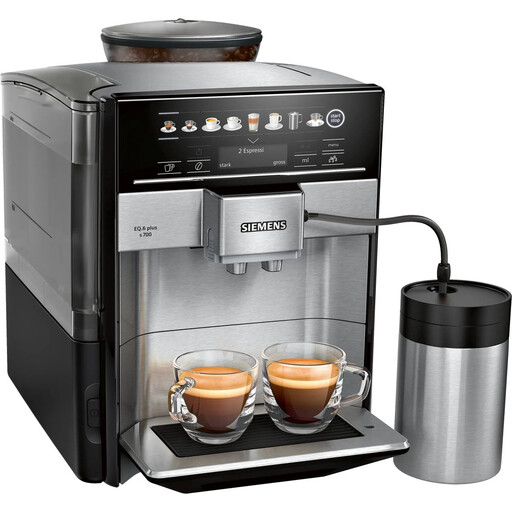 Image unavailable
Suited to a break where people may ask for several types of drink, including cappuccino.
The description lists OneTouch DoubleCup for making two drinks at once, including cappuccino, automatic cleaning of the milk system and a 1,7-litre water tank.
 Image unavailable
Suited to a coffee break where you want a choice of black coffee and automatically prepared milk-based drinks.
The description lists LatteGo, 20 coffee recipes, QuickStart and a 1,8-litre water tank.
 Image unavailable
Suited to a break where automatic milk preparation and making two cups at once are useful.
The description lists automatic milk preparation, a function for making two cups at once, a 1,8-litre water tank and a removable brewing unit.
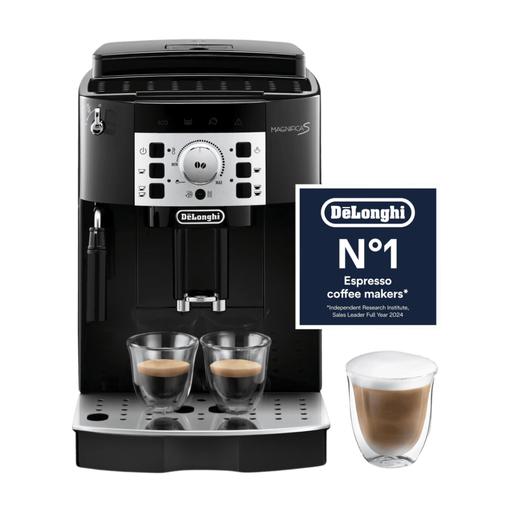 Image unavailable
Suited to serving mostly black coffee, with a manual option for milk-based drinks that are requested less often.
The description lists the ability to make two espressos or coffees at once, a manual steam wand and a removable brewing unit. Frothing milk by hand involves extra steps.
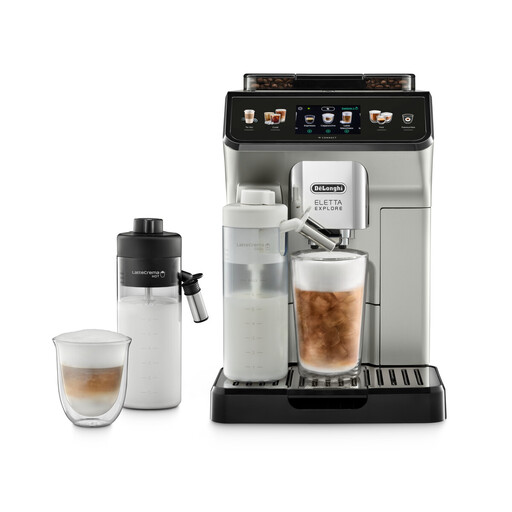 Image unavailable
Suited to a break where both black coffee and automatically prepared milk-based drinks are on the menu.
The description lists automatic milk preparation, the ability to make two cups at once, a 1,80-litre water tank and a removable brewing unit.
No, that doesn’t automatically follow from the description. Melitta says the Solo model reviewed can make two espressos or cafés crème; check the function of the exact model for milk-based coffees.
Follow the manual for your chosen model for cleaning and descaling. Check in advance which parts can be removed and which additional milk components need cleaning. Being able to select a drink automatically doesn’t mean the machine is maintenance-free.
Not without knowing the water quantity set for each drink and how much water the machine uses for rinsing. Use the stated capacity to assess how often you’ll need to refill, not as proof of how many cups you can serve.
Contact the retailer. The Dutch government explains that consumers are entitled to a product that works properly and that there is no fixed statutory guarantee period in the Netherlands. If your association buys the machine, first check which sales and guarantee terms apply to the purchase; consumer rights don’t necessarily apply in every purchasing situation.
That depends on the activity, so it’s not possible to give a blanket answer for every choir break. The Netherlands Food and Consumer Product Safety Authority says that food safety rules also apply to individuals who occasionally sell food and drink, and describes an HACCP plan or hygiene code for activities covered by those rules. If the choir sells coffee, check which requirements apply to that sale; this information does not automatically lead to the same conclusion for a private, free-of-charge break.