
Organising the coffee service
You want to serve several guests without interruptions to the coffee service just to refill or empty the machine. The Consumentenbond and Siemens Nederland offer useful points to consider.


Start by estimating how many cups you’ll need during the busiest serving period, then check how easy it is to refill the water and bean containers or empty the coffee grounds container. Next, decide whether you mainly want black coffee or automatic milk drinks. A wider choice can also mean more attention is needed for keeping milk chilled and cleaning the machine. The models mentioned here are for comparison; check the specifications of the exact product before buying.
You want to serve several guests without interruptions to the coffee service just to refill or empty the machine. The Consumentenbond and Siemens Nederland offer useful points to consider.
You’re looking for easy-to-select milk drinks as well as black coffee, with options to adjust the strength or quantity. Philips and De’Longhi outline features available on specific models.
You want to know in advance which parts, trays and maintenance steps need attention after the meal, particularly those involving milk residue. The Consumentenbond and Voedingscentrum provide relevant guidance on cleaning and chilling.
| What to consider | What should you check? | Who is this important for? |
|---|---|---|
| Keeping the coffee service moving | Check the capacity and accessibility of the water and bean containers and the coffee grounds container. Plan the order in which you’ll serve the drinks, too. | If I’m serving coffee to lots of guests in quick succession, I want the containers and grounds tray to be easy to reach; around 33% of consumers say throughput is their top priority. |
| Black coffee and milk drinks | Check the menu for the exact model and whether you can adjust the strength and quantity. | When guests want different drinks, I look for a menu that suits them; around 27% of consumers prioritise drink choice. |
| Milk and cleaning | Check which milk-system parts can be removed and what the manual says about cleaning them. Consider where you’ll keep the milk chilled while serving. | If I also have to tidy up after the meal, I want to know in advance how much attention the milk system needs; around 20% of consumers put cleaning and milk hygiene first. |
| Costs over time | Allow for suitable maintenance and any filters or descaling products. Also decide who will use the machine after the meal. | If the machine will be used more than once, I want to include maintenance in the overall decision; around 20% of consumers prioritise costs over the product’s lifetime. |
A larger capacity doesn’t tell you how many cups the machine can make per hour. Drink size, rinsing and emptying the coffee grounds container all play a part, too.
Plan the coffee service around the expected number of guests and check how easily you can reach the containers and grounds tray.
Automatic functions don’t replace the cleaning instructions for parts that come into contact with milk.
Before buying, read the maintenance instructions for the exact milk system and make sure you can keep any milk you’re not using straight away chilled.
Also allow time for daily cleaning and for any suitable cleaning products you may need.
Maintenance and consumables can add to the cost over time, too.
Decide who will use the machine after the meal and check which filters and descaling products are suitable for the model.
Beans, any filters and descaling products are ongoing costs; what you need will depend on the model and how you use it.
The EQ6 plus range is a useful point of comparison if you’re weighing up container capacity and automatic milk drinks.
The 5500 Series with LatteGo is worth comparing if adjustable drinks and a separate milk system are important to you.
The Magnifica Evo ECAM290.61.SB is an example of a fully automatic machine with automatic milk drinks.
The Evidence One EA895E10 is worth considering when comparing black espresso and milk drinks, with touchscreen controls.
The E8 Midnight Silver (ED), article number 15712, is a point of comparison if you’re looking for a wider drinks menu.
This selection at Joybuy includes fully automatic machines for black coffee and models with manual or automatic milk preparation. Compare how you’ll serve the drinks and the maintenance required for the exact model. The NVWA states that CE marking is compulsory for electrical products offered for sale on the Dutch market; check the marking and product documentation for the specific product.
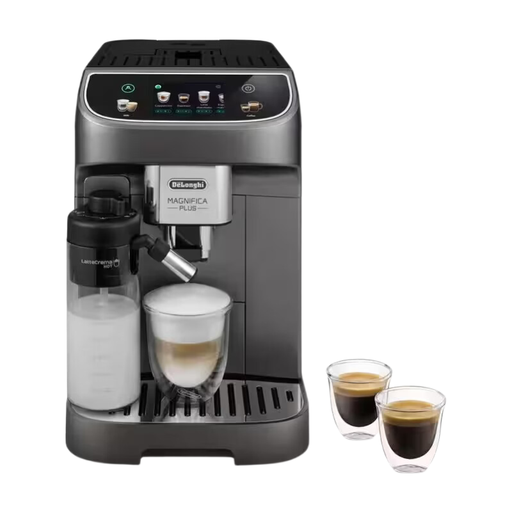 No image available
A good option if you want to compare a range of automatic milk drinks and settings for multiple users. The product description lists 18 drinks at the touch of a button, four user profiles and a removable 1.9-litre water container. It states that the machine is for domestic use and excludes commercial use.
 No image available
A good option if you mainly want to make black coffee and are happy to froth milk by hand. The product description lists a 1.8-litre water container, adjustable coffee strength and volume, and a ceramic grinder with 12 grind settings. Milk is frothed using the classic Pannarello steam wand.
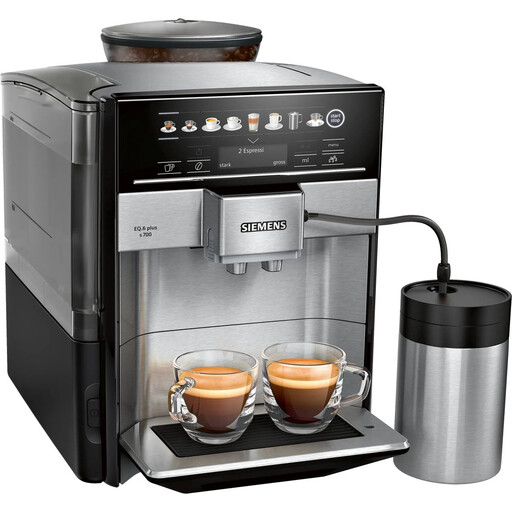 No image available
A good option if you want to make two cappuccinos at once during the coffee service. The product description lists OneTouch DoubleCup, coffee and milk specialities at the touch of a button, and a 1.7-litre water container.
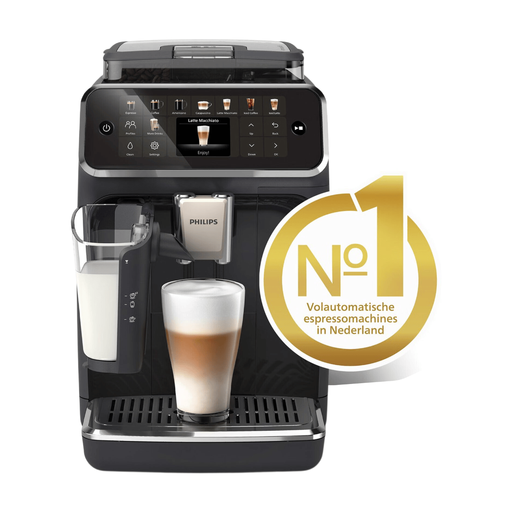 No image available
A good option if you want to compare a range of recipes and automatic milk preparation. The product information lists 20 recipes, a 1.8-litre water container and a coffee grounds container that holds 12 servings. Check the cleaning instructions for the exact milk system.
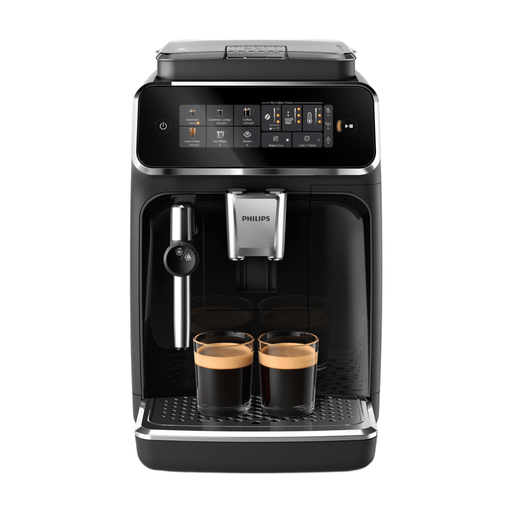 No image available
A good option if you want to compare different coffee varieties and hot water for tea, and are happy to froth milk by hand. The product information lists a 1.8-litre water container and a ceramic grinder with 12 grind settings. It has a classic milk frother.
A fully automatic machine makes coffee one serving at a time, so first estimate how many cups you’ll need during the busiest period. The container capacity alone doesn’t tell you how many cups the machine can make per hour. If you want to make a whole pot at once, filter coffee is a different brewing method, as the Consumentenbond explains.
Keep any milk you’re not using straight away chilled, and clean parts with milk residue according to the machine’s instructions. Voedingscentrum recommends keeping your fridge at 4 °C and says that highly perishable products such as milk should not be left out of the fridge for more than two hours.
Check which filters and suitable cleaning or descaling products are needed for each model. The Consumentenbond says that water filters need replacing regularly and that descaling requirements vary from machine to machine.
Yes. The Netherlands Food and Consumer Product Safety Authority states that CE marking is compulsory for electrical products offered for sale on the Dutch market. Check the marking and accompanying product documentation for the specific product; don’t assume that it complies based on the product title alone.
For a purchase by a consumer in the Netherlands, the seller is responsible under the statutory guarantee if the product doesn’t meet what you could reasonably expect. This protection is separate from any manufacturer’s guarantee. If you’re buying on behalf of a club, check which terms apply to the actual buyer.