First, measure the available width, depth and height, as well as the space needed to access the reservoirs and drip tray. Then choose a machine based on the drinks you want to serve and the number of cups needed during each interval. A slim model for black coffee, a model with a two-cup function and a model for milk-based drinks suit different needs. However, a two-cup function alone doesn’t prove that a queue of visitors can be served in time. Without knowing the number of cups, the interval length and the brewing times under the conditions you expect, it’s not possible to make a reliable choice about capacity.
Who is this choice relevant to?
Coffee server with limited worktop space
You’re looking for a bean-to-cup machine for a narrow workspace, with easy access to the water, beans and drip tray. Melitta Nederland lists the Purista as 20 cm wide; check the other dimensions and the clearance it needs too.
Serving coffee during a short interval
You want to serve several guests in a limited time. Check the complete brewing cycles for the drinks you’ve chosen, and make sure the two-cup function works with those drinks. Siemens lists this function for coffee drinks in the EQ300 range.
Serving cappuccino
You expect orders with milk and need to fit preparation and cleaning into your workflow. The models in this comparison differ in features such as manual frothing and milk-based drinks that the manufacturer says can be prepared at the touch of a button.
What should you consider when choosing?
First, decide which drinks you’ll serve and how many cups you’ll need during an interval. Then measure the full space available and check whether filling, emptying and cleaning the machine will be practical.
| Consideration |
What should you check? |
Who is this important for? |
| Space and accessibility |
Measure the width, depth and height, and check that you can access the water reservoir, bean hopper and drip tray. Melitta Nederland lists the Purista as 20 cm wide; Siemens gives the TF305EF9 dimensions as 383 × 251 × 433 mm, in the order height × width × depth. |
If I have limited worktop space, I also want to be able to reach the reservoirs and drip tray. Around 40% of consumers put finding a suitable spot first. |
| Cups during the interval |
Note the number of cups, the length of the interval and the mix of drinks. Check whether each model can brew two cups at once for your chosen drink; Siemens lists a double-cup function for coffee drinks in the EQ300 range. |
If a rush of orders comes in over a short period, I want to know how many complete brewing cycles are possible. Around 30% of consumers prioritise capacity during the interval. |
| Milk-based drinks |
Check which steps are automatic and which you’ll need to do yourself. De’Longhi lists a traditional milk frother for the ECAM220.20.W; Siemens lists one-touch milk-based drinks for the TF305EF9. |
If cappuccino is on the menu, I want to be able to fit milk preparation and cleaning into my serving routine. Around 20% of consumers give milk-based drinks top priority. |
| Cleaning and maintenance |
Check the manual for access to parts, cleaning parts that come into contact with milk, and the descaling programme. The Consumentenbond recommends cleaning milk-contact parts daily. |
If I need to maintain the machine between or after intervals, I want to know how much work is involved. Around 10% of consumers prioritise ease of maintenance. |
Common buying mistakes
-
Focusing only on width
A machine may be narrow enough, but its depth, height or reservoir position could still make it awkward to use. You’ll also need room to refill and clean it.
Measure the full space available and check that you can access the parts you need on the exact model before ordering.
-
Assuming a two-cup function proves interval capacity
A two-cup function doesn’t tell you how many different orders can be ready over the course of an entire interval. The drinks you choose, complete brewing cycles and refilling all affect this too.
First, work out the number of cups, the mix of drinks and the interval length. Then check how the exact model works and how long it takes to brew your chosen drinks.
-
Leaving cleaning and descaling out of your routine
Parts that come into contact with milk need cleaning, while a descaling programme can interrupt coffee-making.
Check the maintenance steps for the specific model and schedule cleaning and descaling outside busy serving periods.
Brands and models to compare
Melitta
The Purista range is worth considering if limited width and black coffee are priorities.
- Melitta Nederland lists the Purista as 20 cm wide.
- That width doesn’t tell you whether the machine will fit in your space with room to use it, or how many cups it can brew during an interval. Check its depth and height, and make sure you can access the parts you need.
Siemens
The EQ300 range is worth considering if you’re looking for a two-cup function or milk-based drinks, provided the dimensions suit your space.
- Siemens lists a double-cup function for coffee drinks in the EQ300 range. For the TF305EF9, Siemens lists one-touch milk-based drinks and a service door at the front.
- The function doesn’t guarantee a set number of cups per interval. Check the dimensions and operation of the exact model.
De’Longhi
The Magnifica Start ECAM220.20.W is worth comparing if black coffee is enough and you’re happy to froth milk by hand.
- De’Longhi lists a 1.8 l water reservoir and a traditional milk frother for this model.
- Milk needs to be frothed manually. Check the order of the listed product dimensions and how much clearance the machine needs.
Philips
The 2200 Series EP2220/10 is worth comparing if you’re looking for adjustable black coffee and a classic milk frother.
- Philips lists adjustable coffee strength and volume, as well as a classic two-part milk frother.
- The features described don’t tell you how many cups can be served during a theatre interval.
Bean-to-cup machines at Joybuy
These models offer different ways to make coffee from beans, including two-cup functions and manual or automatic milk preparation. Compare their dimensions and check which preparation and cleaning steps suit your serving routine.
 No image available
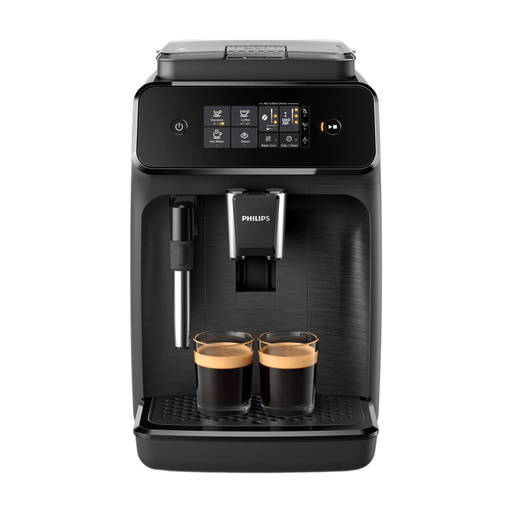
Philips 1200 Series EP1220/00, Matt Black
An option if you want to brew coffee from beans and are happy to froth milk by hand.
12 grind settings; classic Pannarello milk frother. Listed dimensions: 37,1 × 43,3 × 24,6 cm.
Joybuy
 No image available
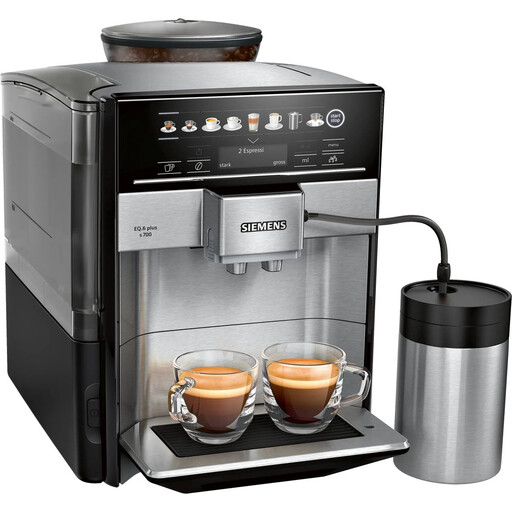
Siemens TE657M03DE EQ.6 Plus s700
Worth considering if you want to prepare two cups at once and serve milk-based drinks.
According to the product information, OneTouch DoubleCup prepares drinks for two cups at once. AutoMilk Clean cleans the milk system after each drink, and you can save up to four favourite drinks.
Joybuy
 No image available
De’Longhi ECAM290.61.SB Magnifica Evo
An option if you want to make milk-based drinks and brew two espressos or lungos at once.
LatteCrema milk system with removable milk reservoir; 1.8 l water reservoir. Listed dimensions: 36 × 44 × 24 cm.
Joybuy
 No image available
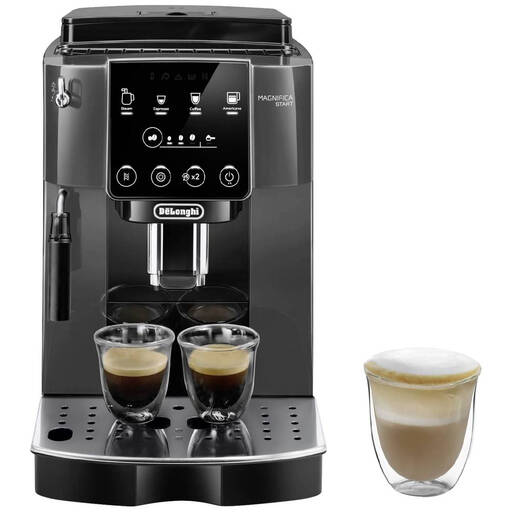
De’Longhi Magnifica Start ECAM220.22.GB, Grey & Black
An option if you want coffee from beans and milk-based drinks, and are happy to froth milk by hand.
13 grind settings; 1.8 l water reservoir. The milk frother uses a manual steam wand. Listed dimensions: 35 × 44 × 24 cm.
Joybuy
 No image available
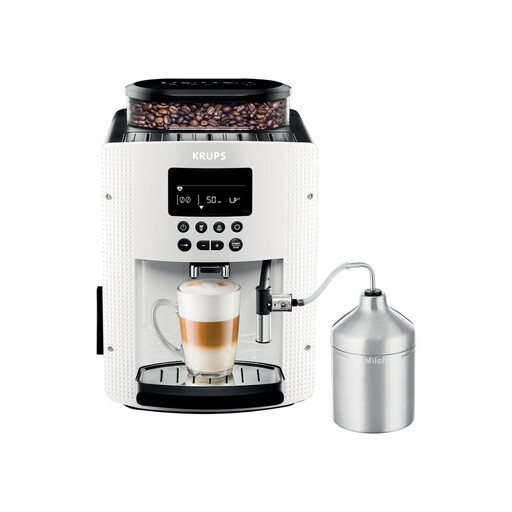
Krups EA8161, White
An option if you want to brew two cups at once and are happy to clean the brewing unit and milk system by hand.
The product information lists a two-cup function, a 260 g bean hopper and a 1.7 l water reservoir. The brewing unit and milk system need to be cleaned by hand.
Joybuy
Frequently asked questions
How can you check whether a bean-to-cup machine will fit in a narrow kitchen?
Compare the available width, depth and height with the dimensions of the exact model, and check that you’ll still be able to access the reservoirs and drip tray. Melitta Nederland lists the Purista as 20 cm wide; Siemens gives the TF305EF9 dimensions as 383 × 251 × 433 mm, in the order height × width × depth.
Do you need to clean milk-frother parts after use?
Yes, parts that come into contact with milk need regular cleaning. The Consumentenbond recommends cleaning these parts daily and cleaning a steam wand immediately after use. You should also follow the instructions for your chosen model.
Which maintenance and warranty points should you consider?
Check which cleaning and descaling products, and any replaceable filters, are suitable for the model. For a private purchase in the Netherlands, the statutory guarantee is separate from a manufacturer’s guarantee or an extended warranty you’ve bought. According to the Rijksoverheid, if a product is faulty, the seller must provide a solution.
What rules apply if a theatre sells or serves coffee to visitors?
The NVWA requires food businesses that sell or serve directly to consumers to register. When preparing, handling or selling food, you must use an appropriate HACCP food safety plan or an approved hygiene code. If you sell food or drink, customers must be able to get information about allergens, including milk. Whether these requirements apply in a specific theatre depends on the activity and how it is organised; business rules don’t automatically apply to private use.


