
Hosting a coffee round
You make coffee for several people after baking and want to know which drinks the machine can make at the same time, and how often you’ll need to refill or empty the reservoirs.


Start with the drinks your group wants and check whether the exact model can make them at the same time: making two black coffees at once doesn’t automatically mean it can make two cappuccinos at once. Then weigh up how easy it is to access the reservoirs and clean the milk system against how often you order milk-based drinks.
You make coffee for several people after baking and want to know which drinks the machine can make at the same time, and how often you’ll need to refill or empty the reservoirs.
Cappuccinos or lattes are regularly on the menu. You want to weigh up the convenience of automatic milk frothing against the cleaning involved afterwards.
After baking, you don’t want to spend ages cleaning milk-system parts, the brew group and dealing with descaling. That’s why it’s important to check the maintenance steps for the specific model.
First, check which drinks need to be made at the same time. Then consider whether the milk system and cleaning steps suit the way your group will use the machine.
| What to consider | What should you check? | Who is this important for? |
|---|---|---|
| Serving several guests | Check whether the machine can make two cups of each drink you want at the same time. Also see how easy it is to access the water reservoir and drip tray. | If I want the coffee round to run smoothly, the machine needs to make the combinations of drinks my guests order; around 32% of consumers say avoiding unnecessary waits is their top buying priority. |
| Milk-based drinks | Compare the milk-based drinks you want, whether they can be made at the same time, and the cleaning instructions. | If cappuccinos or lattes are ordered regularly, I want to know how much effort the milk function involves; around 25% of consumers say making milk-based drinks is their top priority. |
| Cleaning after use | Check which parts need cleaning after making milk drinks, whether the brew group is removable and when descaling is needed. | After an afternoon of baking, I want to know what cleaning is still needed, even if the machine rinses itself automatically; around 19% of consumers put easy maintenance first. |
| Adjusting different flavours | Compare the adjustable drink volumes, strengths and profiles. If the machine takes two types of beans, check how switching between them works. | If guests have different coffee preferences, I want to be able to adjust the settings easily; around 12% of consumers say adjustable flavour options are their top buying priority. |
| Maintenance products | Check which filters, cleaning products or descalers the model requires. | I want to know in advance which products are needed for maintenance and how to use them; around 12% of consumers first look at the maintenance products required. |
A function for making two cups of coffee doesn’t guarantee that the machine can also make two milk-based drinks at the same time. This can affect how you plan a coffee round.
Check the two-cup function for the drink you want on the page or in the manual for the exact model.
An automatic rinse doesn’t necessarily replace cleaning the milk-system parts or carrying out regular maintenance on the brew group.
Before you buy, read the cleaning steps and check which maintenance products the model requires.
Cleaning products and descalers may be needed regularly; the products you use vary by model.
A title and description may mention different model codes or versions, making it easy to associate features with the wrong variant.
Check the full model code and version in the product listing before comparing it with a model you’ve researched.
The Barista TS Smart F850-101 is worth considering if you want to compare machines with two types of beans, personalised settings and the ability to make coffee and milk specialities at the same time.
The Magnifica Evo ECAM290.61.SB is worth comparing if automatic cappuccino and MyLatte are important to you.
The 5500 Series EP5544/50 is worth considering if you want to compare a wide range of hot drinks and iced coffees.
The E8 Piano White (EC) is worth comparing if adjustable coffee specialities and a guided milk-system cleaning programme matter to you.
These models are worth comparing for serving coffee to a group of guests, with a focus on making drinks at the same time, milk-based drinks and maintenance. The NVWA states that CE marking is compulsory for electrical products; check the marking for the exact version.
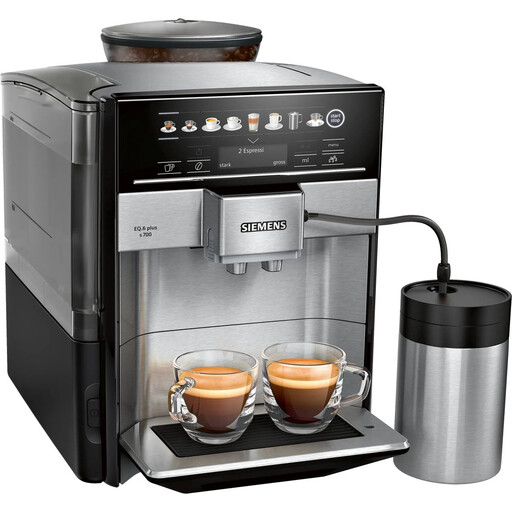 No image available
Worth comparing if making two cappuccinos at once is important; check the drink combination you want for this model.
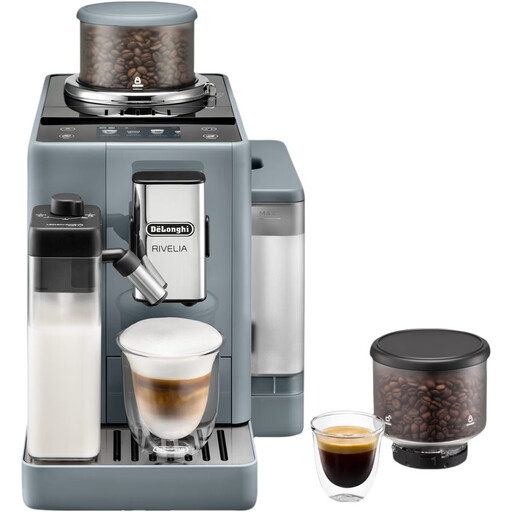 No image available
Worth comparing if you want to make two milk-based drinks at once and weigh up different bean preferences; check these features for the exact version.
 No image available
A fully automatic model to compare with other options; check that its drinks and two-cup function suit the orders your group is likely to make.
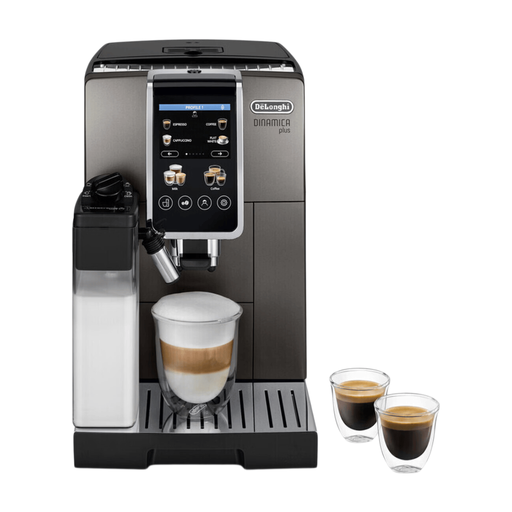 No image available
Worth comparing if automatic milk preparation and serving several coffee rounds in succession are important; check which cleaning steps apply to this version.
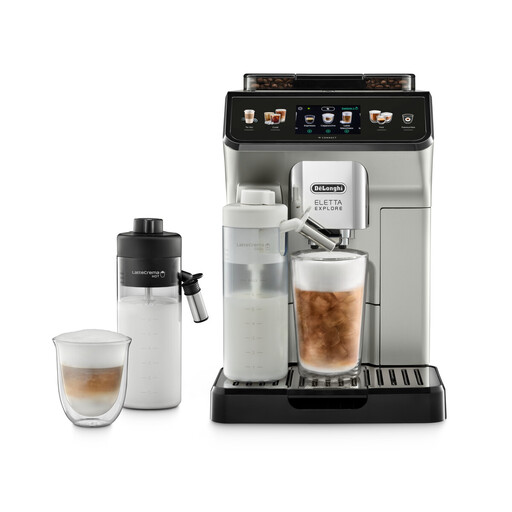 No image available
Worth comparing if you’re looking for an automatic milk system; check the drinks available and maintenance requirements for the exact version.
No, not necessarily. In its comparison tool, the Consumentenbond distinguishes between making two cups of coffee and making two cappuccinos at once. Check the specifications for the exact model to see whether it can make the drink you want; Melitta lists this feature for the Barista TS Smart F850-101.
Follow the manual for the model you choose. Siemens says to clean the milk system after every use for the EQ6 plus; this model-specific instruction doesn’t automatically apply to other brands.
No. For the EQ6 plus, Siemens describes regular removal and cleaning of the brew group as well as its service programmes. Check which parts and products are needed for other models.
Not necessarily. The Dutch government says there’s a statutory guarantee in the Netherlands, with no fixed legal guarantee period; if a product is faulty, the seller must provide a solution. Check whether additional cover really offers anything extra.
Yes. The NVWA states that CE marking is compulsory for electrical products. Check the marking for the exact version; this general requirement isn’t a separate safety assessment of a specific model.