Start by working out how many cups need to be ready during the break, and the balance between black coffee and milk-based drinks. Being able to make two cups at once, or offering a long list of drinks, does not in itself mean the queue will be short. Automatic milk preparation can save you steps, but you will need to keep the milk chilled and clean the system. If you regularly expect a larger rush, it is worth comparing a professional model and its stated capacity too.
Who is this choice relevant to?
Organiser planning a short coffee break
You want to avoid guests spending much of their break queuing, so you are comparing simultaneous preparation with how the machine performs for groups. Siemens says the EQ600 iAroma range can make two coffees at once, including milk-based drinks; JURA gives a recommended daily maximum for the W8. Neither figure is a measured number of cups within a single break.
Workshop leader expecting lots of milk-based drink orders
You want to offer cappuccinos or lattes without having to froth the milk by hand for every order. You will also need somewhere to keep the milk chilled, and the milk system must be cleaned according to the instructions. The Netherlands Nutrition Centre advises keeping fresh milk chilled and taking it out of the fridge shortly before use.
Manager who needs to tidy up quickly
You want to leave the machine clean and ready to use after a workshop session. Check that the milk system components are easy to access, and follow the manufacturer’s cleaning and descaling instructions for the specific model.
What should you look for when the coffee break is short?
Domestic machine that makes two cups at once
A good fit when: you are serving a small group and making two drinks at once suits the expected demand during the break. Siemens lists this feature for the EQ600 iAroma range, including for milk-based drinks.
Bear in mind: this does not tell you how many guests the machine can serve during the available break; refilling and emptying it can take time too.
Domestic machine with an automatic milk system
A good fit when: several guests want cappuccinos or lattes and you want to avoid frothing the milk by hand. Philips describes LatteGo on the EP5544/80; De'Longhi lists automatic milk-based drinks for the ECAM290.81.TB EX:1.
Bear in mind: milk must be kept chilled, and automatic functions do not remove the need to clean the milk components you have used.
Professional bean-to-cup machine
A good fit when: you regularly serve larger groups and a domestic model may not meet the expected peak demand. For the W8 in the Netherlands, JURA gives a recommended maximum of 50 cups per day.
Bear in mind: a daily maximum does not guarantee a particular number of cups within a single break; compare peak capacity, placement and maintenance for your needs.
Your choice will mainly depend on the rush during the break, the proportion of milk-based drinks and the time available for cleaning.
| What to consider |
What should you check? |
Who is this important for? |
| Serving drinks during the break |
Note the expected number of guests, the mix of drinks and the length of the break. Check whether the machine can prepare drinks simultaneously and, for a large group, ask about achievable peak throughput. |
If I want to serve all the orders in one short break, I focus on peak throughput rather than just the daily maximum. Around 28% of consumers rank serving speed as their top priority. |
| Milk-based coffee with less hands-on work |
Check whether the exact model prepares milk-based drinks automatically, which parts can be removed and where the milk will be kept during the break. |
If lots of guests want cappuccinos or lattes, I do not want to froth every drink by hand. Around 22% of consumers prioritise automatic milk preparation. |
| Cleaning and storing milk |
Compare the instructions for cleaning the milk components and descaling, and plan a chilled place for fresh milk. |
In a cookery space, I want to store milk safely and clean the machine properly after use. Around 22% of consumers rank hygiene and tidying up as their top priority. |
| Noise and placement |
Measure the available worktop space and decide whether coffee will be made while someone is speaking. Only compare noise figures if they are based on equivalent measurements. |
If the machine is next to a presentation, I want its noise to be unobtrusive and its controls to work well in the chosen spot. Around 17% of consumers focus mainly on keeping things quiet and getting the set-up right. |
| Costs over the period of use |
Compare the same period of use and the same expected number of cups, including any recommended maintenance products. |
For regular workshops, I want to weigh the costs against how well the machine handles peak demand. Around 11% of consumers consider running costs their most important factor. |
Common pitfalls when choosing
-
Taking a daily capacity to mean capacity for one break
JURA gives a recommended maximum of 50 cups per day for the W8. That figure does not tell you how many cups can be made during a single theatre interval.
Ask about throughput for the expected mix of drinks and the time available, and work out whether one serving point will be enough.
If demand exceeds throughput, guests may have to wait or you may need a second serving point.
-
Assuming an automatic milk programme means no maintenance
An automatic cleaning function does not replace keeping perishable milk chilled or following the cleaning instructions for the exact model.
Plan space in a fridge and follow the model-specific instructions for the milk system.
-
Confusing general milk claims with how the exact model works
A product description for the Philips EP1223/00 says cappuccino can be made at the touch of a button, while Philips describes the 1200 Series as having a classic steam milk frother.
Before buying, check the full model number and type of milk system with the manufacturer; do not base your choice on a general product description alone.
Brands worth considering
Siemens
The EQ600 iAroma range may be worth considering if you want to make two cups at once, including milk-based drinks.
- Siemens lists this simultaneous preparation feature for the range. For the TP601E01, the manufacturer gives a 1.8 l water tank and a 300 g bean hopper.
- These specifications do not give a measured number of cups per break; check the specific model and expected peak demand separately.
Philips
The 5500 Series EP5544/80 is worth a look if automatic milk-based drinks and an easy-to-use milk system are important.
- Philips describes LatteGo on this model as a two-part system with no tubes.
- Cleaning described as simpler does not mean the milk components do not need cleaning. The manufacturer’s comparison of noise reduction is against previous models, not all machines.
De'Longhi
The Magnifica Evo ECAM290.81.TB EX:1 may suit you if you want to make black coffee, automatic milk-based drinks and hot water.
- De'Longhi lists LatteCrema Hot and a cleaning function after use.
- A cleaning function does not prove peak throughput or remove the need to clean the milk components.
Melitta
The Barista TS Smart is worth considering if guests have different drink preferences and you want to save settings in advance.
- Melitta lists 21 recipes, two bean hoppers and up to eight personal profiles.
- The number of recipes and profiles does not tell you whether the machine can serve drinks faster during a short break.
JURA
The W8 sold in the Netherlands is an option to compare for regular group use, with black coffee and milk-based drinks.
- JURA gives a recommended maximum of 50 cups per day for the W8.
- A daily maximum does not guarantee a similar number of cups within a single break.
Bean-to-cup machines at Joybuy
These models offer simultaneous preparation, automatic milk-based drinks or a milk system cleaning function. Check which features on each exact model suit your break and your way of working.
 No image available
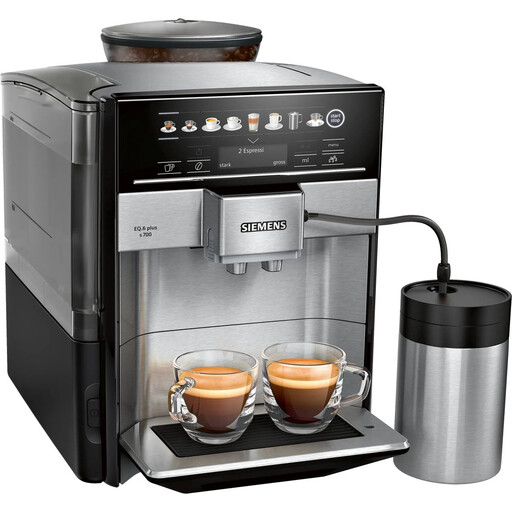
Siemens TE657M03DE EQ.6 Plus s700
Could suit a break when you want to make two cappuccinos at once.
The product description lists OneTouch DoubleCup, including for two cappuccinos, and AutoMilk Clean for automatic cleaning of the milk system.
Joybuy
 No image available
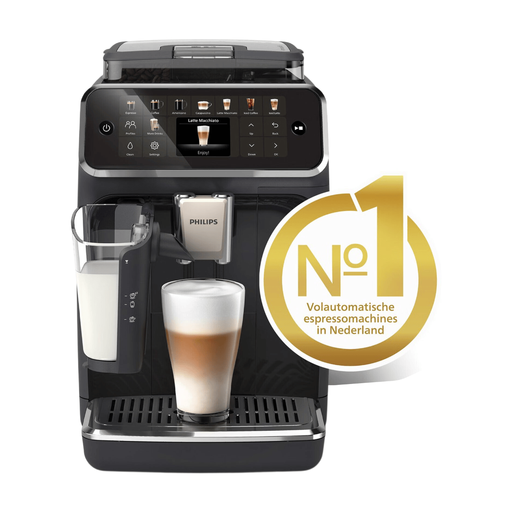
Philips EP5541/50 LatteGo Series 5500
Could suit you if you are looking for automatic milk-based drinks and a range of drink options.
The product information lists 20 drinks, 12 grind settings and a 1.8 l water tank. LatteGo is designed for automatic milk preparation; the description says it can be cleaned under the tap or in the dishwasher.
Joybuy
 No image available
De'Longhi ECAM290.61.SB Magnifica Evo
Could suit a break with automatic milk-based drinks and the option to make two cups at once.
The product information lists LatteCrema Hot, a double spout and 13 grind settings. The milk container is removable and, according to the description, can be kept in the fridge.
Joybuy
 No image available
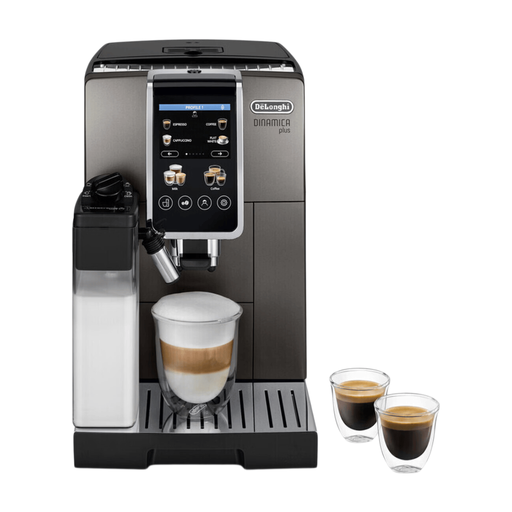
De'Longhi ECAM380.95.TB Dinamica Plus
Could suit you if automatic milk preparation and removable components are important.
The title lists 13 drinks. The product information mentions a LatteCrema system, automatic cleaning after use and removable, dishwasher-safe components.
Joybuy
 No image available
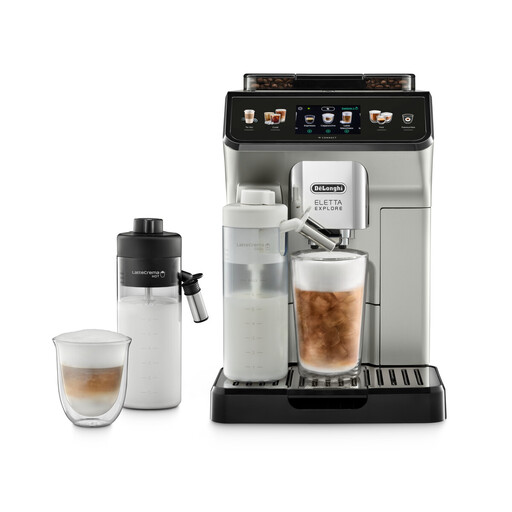
De'Longhi Eletta Explore ECAM450.65
Could suit a break when you want to make two cups at once and offer a range of milk-based drinks.
The product information lists 13 drinks in the title and more than 50 recipes in the description. It also mentions making two cups at once, hot and cold milk-based drinks, and an automatic cleaning system.
Joybuy
Frequently asked questions
How can you tell whether one machine is enough for the theatre interval?
Count the orders you expect during the break and separate black coffee from milk-based drinks. Then compare the machine’s simultaneous preparation options and, for a large or regular group, ask about achievable peak throughput. A stated daily maximum is not the same thing.
Can you leave milk next to the machine during the workshop?
For fresh milk, the Netherlands Nutrition Centre recommends keeping it in the fridge at 4 °C: take it out shortly before use and put it straight back afterwards. Clean the milk system you have used according to the instructions for the exact model.
Which ongoing costs and warranty rights should you check?
Include coffee and any recommended filters or cleaning products in a comparison covering the same period of use. For a consumer purchase in the Netherlands, you are entitled to a product that works properly under the statutory guarantee, with no fixed statutory guarantee period. The Dutch government says the retailer is your point of contact if something goes wrong; check the relevant terms separately for business purchases.
Do you need to register with the NVWA to serve coffee at a cookery workshop?
According to the Netherlands Food and Consumer Product Safety Authority’s step-by-step guide, you must register if you sell food or drink to consumers several times a year; the guide says there is no registration requirement for sales once a year. If you sell several times a year, you must also work with a food safety plan or hygiene code. Whether these sales requirements apply to your workshop depends on the circumstances.


