Start by considering the space available and how many cups you’ll need during a lesson break: a narrow machine isn’t necessarily the most practical choice for a group. Also compare how easy it is to reach the water tank and grounds container, whether it can make two cups at once, and whether milk drinks are worth the extra preparation and cleaning. The features and capacities listed are manufacturer specifications, not measured waiting times during a lesson.
Who is this guide for?
Teacher with a narrow worktop
You want to serve freshly ground coffee without blocking your workspace. Compare more than just the width: consider the space needed to refill and clean the machine, too. Melitta and the Consumers’ Association offer useful points to consider when deciding where to position it.
Organiser of busy lesson breaks
You want to know whether you can make enough cups in quick succession, so you’re comparing simultaneous brewing, tank sizes and intended daily use. Melitta and JURA’s model specifications offer different points of comparison, but don’t provide measured break-time brewing speeds.
Class with varying coffee preferences
You want to offer a choice of black coffee and the occasional milk drink, while taking the extra preparation and cleaning into account. De’Longhi, Philips and the Consumers’ Association cover relevant differences between milk options and maintenance.
What should you look for when choosing?
The breakdown below reflects consumers choosing a bean-to-cup machine for a language classroom. For each row, consider which concern matters most to you.
| What to consider |
What to look for when buying |
Who is this most important for? |
| Fits on a small worktop |
Measure the width, depth and height. Also check that you can reach the water tank and grounds container. |
If I have limited worktop space, I want to be able to position the machine and fill and empty it easily. Around 36% of consumers say fitting it on the worktop is their main concern. |
| Enough cups during a lesson break |
Count how many cups you’ll need per break and check whether the machine can make two at once. A daily capacity figure tells you nothing about waiting times. |
When several people want coffee in a short time, what matters most is how many cups can be ready at once. Around 29% of consumers prioritise capacity during breaks. |
| Black coffee or milk drinks, too |
Check whether milk is frothed manually or prepared automatically on the exact model, and who will clean the machine. |
If I want to offer milk drinks as well as black coffee, the preparation method will influence my choice. Around 21% of consumers say drink variety is their main concern. |
| Maintenance and aftercare |
Check the maintenance instructions, required consumables and warranty terms for the exact model and the way you’re buying it. |
If I want to keep maintenance and service arrangements manageable, I want to know in advance what’s needed after use. Around 14% of consumers prioritise maintenance and aftercare. |
Common mistakes
-
Comparing width alone
A narrow machine can still be awkward to position if you can’t reach the water tank or grounds container. The stated width also doesn’t tell you how much room you’ll need to use the machine.
Measure the entire space and check how to fill and empty the exact model. For example, JURA lists the ENA 4 as 27,1 × 32,3 × 44,5 cm, in the order width × height × depth.
-
Confusing daily capacity with speed during a break
A recommended daily maximum doesn’t tell you how long one cup takes to make or how long people will have to wait during a break. JURA recommends a maximum of 50 preparations per day for the W4; this isn’t a measure of its speed during breaks.
Estimate how many cups you’ll need during a break and compare features such as simultaneous brewing separately, along with the steps required between preparations.
-
Assuming a steam wand prepares milk automatically
For the De’Longhi Magnifica Start ECAM220.20.W, De’Longhi specifies a traditional steam wand, which means milk is frothed manually. This takes time to prepare and clean.
Check the full model code and first work out how often you’ll need milk drinks. Then compare the preparation method for each model.
-
Assuming consumer rights automatically apply to a business purchase
ACM ConsuWijzer explains that consumer protection doesn’t apply to a contract used mainly or exclusively for business purposes. So it matters who buys the machine and what it will be used for.
Before buying, establish who the contracting party is and check which service and warranty arrangements apply.
Brands to compare
Melitta
The Solo is worth comparing if you have a narrow space and mainly serve black coffee.
- Melitta says the Solo is 20 cm wide and can make two espressos or café crèmes at once.
- Its width doesn’t tell you how much room you’ll need to fill, use and clean the machine. The listed drinks also don’t include a built-in milk drink programme.
De’Longhi
The Magnifica Start ECAM220.20.W is worth considering if you’re comparing a domestic automatic machine with a manual milk option.
- De’Longhi lists a traditional steam wand and a 1,8 l water tank for this model.
- Milk is prepared manually on this version. Features of other Magnifica Start models don’t necessarily apply to the ECAM220.20.W.
JURA
The ENA 4 is worth comparing if you’ll be making black coffee a few cups at a time; the commercial W4 may suit a setting where heavier daily group use is expected.
- JURA describes the ENA 4 as a single-cup model with a 1,1 l water tank. For the W4, the brand recommends a maximum of 50 preparations per day.
- These manufacturer specifications don’t prove how quickly the machine brews or whether it’s suitable for every class. Tank size and usage patterns are important when choosing.
Philips
The 2200 Series EP2220/10 is worth comparing if you want adjustable black coffee and a classic milk frother.
- Philips lists three strength and volume settings, as well as a classic milk frother, for the EP2220/10.
- These product features don’t specify a capacity for group use.
KRUPS
The Essential EA81M8 is worth comparing if tank and bean capacity matter as well as the machine’s width.
- KRUPS lists a 260 g bean hopper and a 1,7 l water tank for the EA81M8.
- The brand’s claim of up to nine drinks without refilling isn’t an independently measured figure for the cup sizes used in this language classroom.
Joybuy products for this situation
This selection of Joybuy products includes bean-to-cup machines for different classroom needs, from milk options and simultaneous brewing to maintenance and limited space. Check the dimensions and instructions for the version you’re considering.
 No image available
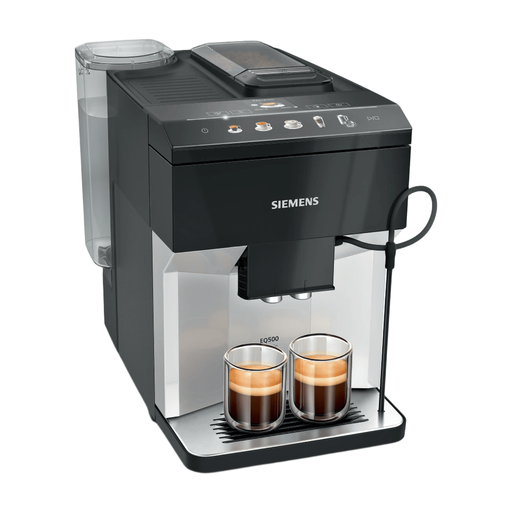
Siemens EQ500 TP511R01, Light Silver
An option to compare if you want to offer automatically prepared milk drinks as well as coffee, and are happy to factor in maintenance of the milk system.
Dimensions: 37,3 × 44,8 × 26,5 cm. The description mentions oneTouch preparation for drinks including lattes and cappuccinos, a cappuccinatore and a removable brewing unit.
The instructions say to rinse the milk system daily and clean the brewing unit weekly.
View at Joybuy
 No image available
De’Longhi Rivelia EXAM440.55.G, Pebble Grey
Compare this version if people in the class have different coffee preferences and you want to be able to prepare two milk drinks at once.
The description lists automatic milk preparation, two interchangeable bean hoppers, hot water and the option to prepare two milk drinks at the same time.
As the product instructions specify, use only De’Longhi-approved products for cleaning and descaling.
View at Joybuy
 No image available
Philips 5500 Series EP5547/90 LatteGo
Worth comparing for a class with varied preferences for black coffee and milk drinks, if you want to take cleaning the milk system into account.
The product description lists 20 coffee varieties, two user profiles and the LatteGo milk system. It says LatteGo can be cleaned in the dishwasher or under the tap.
View at Joybuy
 No image available
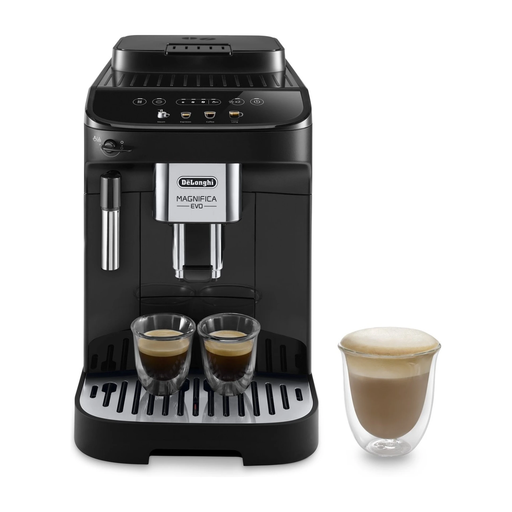
De’Longhi Magnifica Evo ECAM290.21, Black
Compare this machine if you want bean-to-cup coffee and the occasional manually prepared milk drink, and are also considering tank sizes and space.
Listed dimensions: 44 × 24 × 36 cm. The description lists a 1,8 l water tank, a 250 g bean hopper and a manual steam wand.
Milk is frothed manually.
View at Joybuy
 No image available
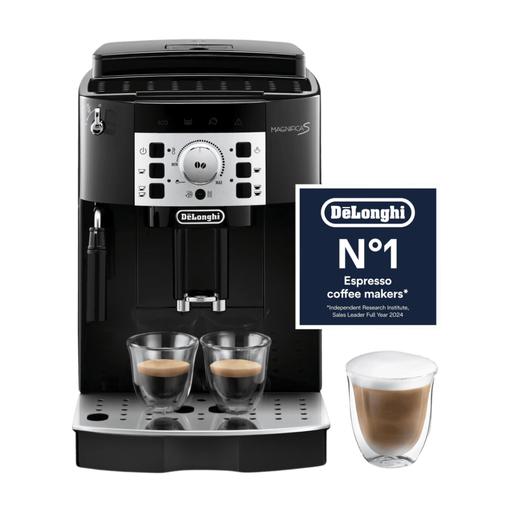
De’Longhi Magnifica S ECAM20.110, Black
An option to compare if you want to make black coffee for several people and are happy to prepare milk drinks manually.
The listed width is 23,8 cm. The description says the model can make two espressos or coffees at once and has a manual steam wand.
According to the description, descaler is sold separately.
View at Joybuy
Frequently asked questions
How can I tell if the machine will fit on the worktop?
Measure the available width, depth and height, and allow room to access the machine for filling and emptying. Check the dimensions of the exact version. For example, JURA lists the ENA 4 as 27,1 × 32,3 × 44,5 cm, in the order width × height × depth.
Who will clean and descale the machine after the lesson?
Assign someone to look after it and follow the instructions for the model you’ve bought. Melitta says the Solo indicates when cleaning or descaling is needed; the reminder doesn’t replace maintenance.
Does the statutory consumer guarantee apply if a language school buys the machine?
Not automatically. ACM ConsuWijzer explains that consumer protection doesn’t apply to a contract used mainly or exclusively for business purposes. Check who the contracting party is and which business service and warranty arrangements apply. For a consumer purchase, the seller is responsible for the statutory guarantee.


