Choose a bean-to-cup machine based on how many cups you need, how long the break is and who will be using it. Then consider refilling, waste capacity, drink options and cleaning. A model with larger reservoirs may need refilling less often, but reservoir capacity doesn’t tell you how many cups can be made in time. For example, JURA’s indication of around 30 coffee specialities a day for the WE8 says nothing about its output during a single choir break.
Who will use the machine?
The organiser of a busy break
You want to serve a queue of coffee drinkers quickly during a short break. So check how long the machine takes to make the drinks you want, as well as how often it needs refilling and the waste container emptying. JURA lists a 3-litre water tank and a waste container for 25 portions for the WE8, but these figures don’t tell you how many cups it can make during a single break.
The person serving a range of drinks
You’re serving both black coffee and milk-based drinks, and want to know how much hands-on attention the milk system needs. De’Longhi describes the Magnifica Evo ECAM290.21.B as having a manual milk frother, while Philips lists a LatteGo system for the EP5541/50.
The person responsible for a shared machine
You make sure that different users can operate, clean and maintain the machine. Check the cleaning instructions and agree who will look after the components. The Consumentenbond lists cleaning as a relevant point of comparison for fully automatic espresso machines.
What should you look for?
A larger machine for shared use
A good fit when: you need to make a lot of cups in a short time and refilling or emptying the machine would be difficult. JURA positions the WE8 for around 30 coffee specialities a day.
The trade-off: the daily figure and larger reservoirs don’t tell you how long each drink takes to make or guarantee a certain output during the break.
A domestic model for mostly black coffee
A good fit when: orders can be spread out and milk-based drinks are rarely requested. De’Longhi lists a 1.8-litre water tank and a waste container for 14 portions for the Magnifica Evo ECAM290.21.B.
The trade-off: the manual milk frother requires the person serving to operate it; the specifications don’t say how long it will take to serve a group.
A domestic model for a range of drinks
A good fit when: guests want a variety of coffee and milk-based drinks. Check the automatic milk functions for the exact model, and whether it can make the drinks you want for two cups at once.
The trade-off: more drink options can mean extra milk handling and cleaning. A two-cup function doesn’t guarantee that a whole group can be served quickly.
| What to consider |
What should you check? |
Who should pay particular attention? |
| Output during the break |
Estimate the number of orders and the time available. Check how long the drinks you want take to make and whether two cups of that particular drink can be made at once. |
If I have a lot of orders to get through during a short break, I want to know whether they’ll be ready in time. Around 33% of consumers say output is their top buying priority. |
| Drink options |
Ask how many guests want milk-based drinks and check which drinks the exact model makes automatically. |
If guests ask for a variety of coffee and milk-based drinks, I want to be able to take that into account while serving. Around 27% of consumers put drink variety first. |
| Cleaning and maintenance |
Read the cleaning instructions and agree who will look after the milk system, drip tray and waste container after the break. |
If several people use the machine, I want to know who’ll take care of the cleaning. Around 20% of consumers give ease of maintenance top priority. |
| Purchase and ongoing costs |
Compare the purchase price, recommended maintenance products and service conditions. Also decide who will buy the machine. |
If a choir or association is buying the machine, I want us to be able to weigh up the purchase and maintenance costs together. Around 20% of consumers put total costs first. |
Common buying mistakes
-
Assuming reservoir capacity guarantees fast service
A large water tank or waste container may mean less frequent refilling or emptying, but it won’t tell you how long each order of your chosen drinks will take.
Compare the preparation time for the mix of drinks you expect, and check whether two cups of each drink can be made at once.
-
Assuming a milk programme means no maintenance
Automatic cleaning of a milk system doesn’t necessarily replace all the recommended cleaning. Milk also needs attention after use.
Follow the instructions for the exact model and agree who will clean the milk components and put the milk back in the fridge. The Voedingscentrum advises returning semi-skimmed milk to the fridge promptly after use, at 4 °C.
Remember to allow time for cleaning and to budget for recommended maintenance products.
-
Assuming similar model names mean the same specification
Don’t treat the black Melitta Barista TS Smart we looked at and the silver F850-101 version as the same variant without checking.
Before buying, check the full model number and version, and base your decision on the specifications of the model you’re actually choosing.
Brands to consider
JURA
The WE8 is a useful comparison for a shared space where several coffee specialities are made.
- JURA lists a 3-litre water tank, a 500-gram bean container and a waste container for 25 portions for the WE8.
- The figure of around 30 coffee specialities a day doesn’t tell you how many cups can be made during a single choir break. JURA says it sells through specialist dealers.
De’Longhi
The Magnifica Evo ECAM290.21.B is a useful comparison if black coffee is the priority and you’re happy to froth milk manually.
- De’Longhi lists a 1.8-litre water tank, a waste container for 14 portions and a traditional milk frother for this model.
- These features apply to the ECAM290.21.B and don’t necessarily apply to other Magnifica Evo versions.
Philips
The 5500 series EP5541/50 is a useful comparison for automatic milk-based drinks and a range of recipes.
- Philips lists a LatteGo milk system and 20 recipes for this model.
- The number of recipes doesn’t tell you how quickly it can serve a group during a short break.
Melitta
The Barista TS Smart is worth considering when people want different drinks and you’d like to use two types of beans.
- Melitta lists two bean hoppers and 21 recipes; the product information also mentions a Double Cup function for various specialities.
- Check the version: the black model and the silver F850-101 aren’t necessarily the same product variant.
Siemens
The EQ6 plus TE655203RW is a useful comparison for milk-based drinks and automatic cleaning functions.
- Siemens lists autoMilk Clean, a 1.7-litre water tank and a 300-gram bean container for this model.
- Check the other cleaning instructions for the exact model too; an automatic function won’t necessarily replace all maintenance.
Bean-to-cup machines at Joybuy
These Joybuy products are suited to home use and a range of coffee and milk-based drinks. Check whether each model’s features match the demands of your break and the time you have available for cleaning.
 No image available
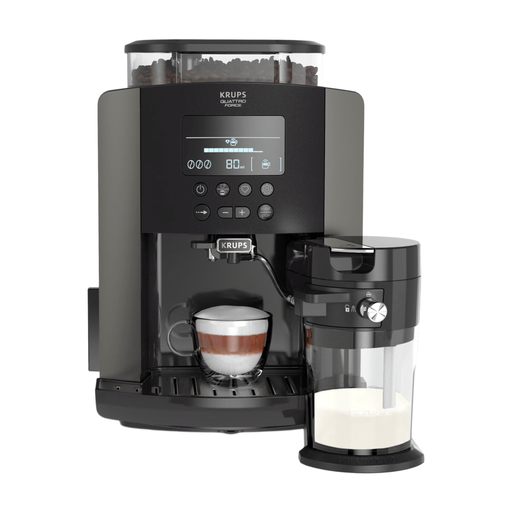
Krups Essential EA819E Cappuccino Quattro Force
Suited to different coffee and milk-based drink preferences, with saved recipes for shared use.
The product description lists espresso, lungo and cappuccino, three milk programmes and up to four saved recipes. The brew group is not removable.
Joybuy
 No image available
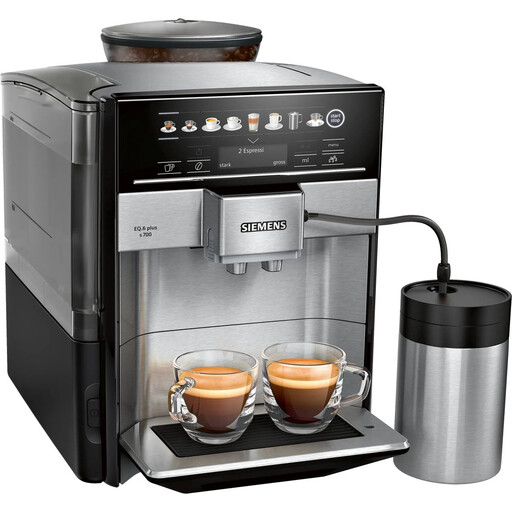
Siemens TE657M03DE EQ.6 Plus s700
Suited to a range of coffee and milk-based drinks, with the option to make two cappuccinos at once for matching orders.
The product description lists OneTouch DoubleCup for two cups, including cappuccino, automatic steam cleaning of the milk system and four saved favourites. According to the safety instructions provided, children under 8 must not use the appliance; older children need supervision and instruction.
Joybuy
 No image available
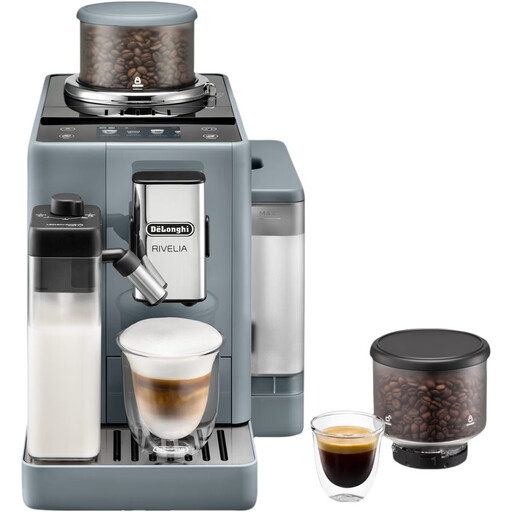
De’Longhi Rivelia EXAM440.55.G Pebble Grey
Suited to different bean preferences and milk-based drinks, if handling the milk container fits into your break.
The product description lists two interchangeable bean containers and two milk specialities prepared at the same time. The milk container must be filled and connected for milk-based drinks; only switch the bean containers when prompted by the machine.
Joybuy
 No image available
Philips 5500 Series EP5547/90 LatteGo
Suited to anyone who wants to serve a range of coffees and look after the milk components after use.
The product description lists 20 coffee varieties, the option to make two coffees at once, two user profiles and a dishwasher-safe LatteGo system.
Joybuy
 No image available
De’Longhi ECAM290.61.SB Magnifica Evo
Suited to occasions when making two black coffees at once is important and milk-based drinks are also on the menu.
The product description lists simultaneous preparation of two espressos or lungos and LatteCrema Hot for drinks including cappuccino and latte macchiato. The two-cup function applies to espresso or lungo, not cappuccino. The milk container is removable and, according to the description, can be stored in the fridge.
Joybuy
Frequently asked questions
How can you tell if one machine is enough for a choir break?
Compare the number of orders you expect and the time available with the preparation time for the exact model. Also check separately whether the water tank and waste container can handle the run of drinks. A stated daily capacity doesn’t tell you the number of cups per minute.
What should you do with the milk and milk system after the break?
Follow the cleaning instructions for the exact model and put the milk back in the fridge after use. The Voedingscentrum advises returning semi-skimmed milk to the fridge promptly, at 4 °C; an automatic milk programme doesn’t necessarily replace all other cleaning.
What warranty applies if a choir buys the machine?
The ACM explains the legal guarantee that applies to sales to consumers and the seller’s responsibility for faulty products. Whether a purchase by an association falls under consumer rules depends on the buyer and the agreement. Establish this before buying, and also check the manufacturer’s warranty and service conditions.
Is an HACCP plan required when serving coffee at a communal meal?
That depends on the specific activity and the circumstances in which the meal is organised. The NVWA sets out HACCP requirements for certain food-related activities. For a commercial or regularly organised event, assess which rules apply to your particular circumstances.


