What should you look for when choosing?
First, work out how many drinks you expect to make during the break and how many of them will be milk-based. Then compare the steps involved and cleaning requirements with how you plan to use the machine.
| What to consider |
What to look for when buying |
Who is this important for? |
| Coffee for the group |
Compare the water and grounds capacities, and check which drinks the machine can make in one cycle. |
During a short break, I want to handle several orders without having to refill often. Around 36% of consumers in this workshop context prioritise serving drinks quickly. |
| Milk-based drinks |
Check whether the exact model makes the cappuccinos or lattes you want, and how to clean the milk container or tube. |
If participants want cappuccino, I want to offer it without having to froth milk by hand every time. Around 29% of consumers prioritise automatic milk drinks. |
| Cleaning |
Check the manual for instructions on cleaning milk-contact parts, the drip tray, the grounds container and descaling. |
After the workshop, I want to know which parts need cleaning and how much time to allow for it. Around 21% of consumers consider easy maintenance most important. |
| Running costs |
Allow for beans, any filters and cleaning products, as well as the cost of the machine. |
If I use the machine regularly, I want to factor in ongoing costs rather than just considering the purchase price. Around 14% of consumers prioritise the total cost of use. |
The Consumentenbond recommends cleaning milk-contact parts every day. A rinse programme doesn’t replace cleaning them by hand. Descaling can also take time, so check the manual for the chosen model in advance.
Bean-to-cup machines at Joybuy
This selection of Joybuy products focuses on automatic coffee machines with automatic milk preparation, for anyone who wants to serve both black coffee and milk-based drinks during a workshop.
 No image available
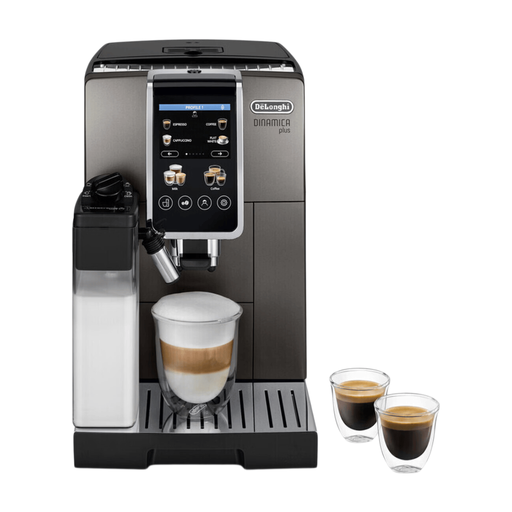
De'Longhi Dinamica Plus ECAM380.95.TB
An option if you want to offer automatic milk drinks as well as coffee.
The product title lists LatteCrema and 13 drinks; the product description mentions a removable 1,8 l water tank.
Milk-contact parts need to be cleaned every day.
View at Joybuy
 No image available
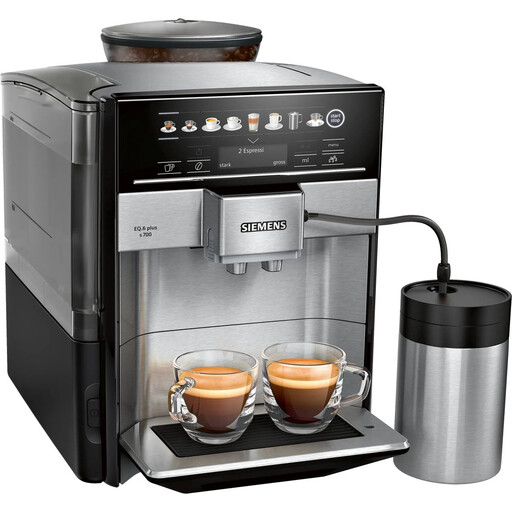
Siemens TE657M03DE EQ.6 Plus s700
The product description lists OneTouch DoubleCup for making two cappuccinos at the same time.
According to the description, the machine can save four favourite drinks and has automatic steam cleaning.
Daily cleaning of milk-contact parts is still necessary.
View at Joybuy
 No image available
Philips 5500 Series EP5547/90 LatteGo
An option if you want to offer a variety of coffees and milk-based drinks.
The product description lists 20 coffee varieties, the option to make two cups at once, a display and two user profiles.
Milk-contact parts need to be cleaned every day, including on the LatteGo.
View at Joybuy
 No image available
De'Longhi Magnifica Evo ECAM290.61.SB
The product description lists automatic milk preparation with LatteCrema Hot and a removable milk container.
It also mentions a 1,8 l water tank and the option to make two cups at once.
Milk-contact parts need to be cleaned every day.
View at Joybuy
 No image available
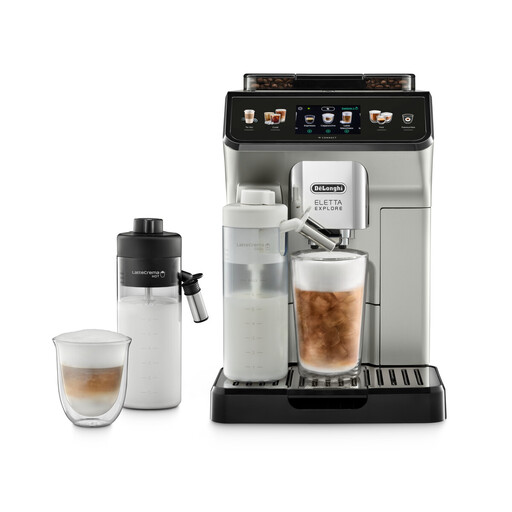
De'Longhi Eletta Explore ECAM450.65, silver
An option if you want a choice of different coffees and milk-based drinks.
The product title lists 13 drinks; the description mentions a removable 1,8 l water tank and operation via touchscreen or app.
Automatic cleaning doesn’t replace daily cleaning of milk-contact parts.
View at Joybuy
Frequently asked questions
Is a coffee pot programme enough for a whole workshop group?
Not necessarily. De’Longhi lists a coffee pot recipe for the ECAM380.95.TB, but this doesn’t guarantee how quickly you can serve your group. Work out how many orders you expect during the break and check how the model makes the drinks you want.
Do you still need to clean an automatic milk system after the workshop?
Yes. The Consumentenbond recommends cleaning parts that come into contact with milk every day, and thoroughly cleaning a milk container at the end of the day. You should also follow the manual for your chosen model.
Which ongoing costs and warranty rules should you consider?
Allow for beans and, depending on the model, filters and cleaning products. For a consumer purchase in the Netherlands, statutory consumer protection applies without a fixed statutory warranty period; if a product is faulty, the seller is your point of contact. Check separately which terms apply if you buy or use the machine for business purposes.
Do food safety and allergen rules apply to a baking workshop?
If you sell or serve food or drink to customers, the Netherlands Food and Consumer Product Safety Authority (NVWA) sets out requirements for safe working practices and information about allergens present, including milk and soya. For a business that prepares or sells food, the NVWA specifies a HACCP food safety plan or hygiene code. This doesn’t automatically mean that the same business requirements apply to a private, non-commercial baking group.


