
Vandaag of morgen in huis

Kwaliteit gegarandeerd

Welkomstaanbiedingen ontgrendelen: GRATIS bezorging | Tot 80% korting | Gratis 30 dagen JoyPlus-proefperiode
Download de app
Lighting a garden, balcony or patio without cables is easy with battery-powered outdoor lighting. However, some purchases can be disappointing. A lamp may give off less light than expected, a string light may not withstand rain, or a solar outdoor light may barely charge on cloudy days.
The right choice therefore starts not with colour or shape, but with how you plan to use it. Do you mainly want ambient lighting during dinner, temporary lighting for a path, or automatic lighting by the shed? Below, you’ll find the key points to consider, along with some popular choices for different situations.
Water-resistant outdoor lighting is not automatically suitable for prolonged rain or immersion. In practice, IP44 means protection against solid objects and splashing water. This type of lamp can therefore be used outdoors, but it should not be left in a puddle or sprayed directly with a powerful jet of water.
A product with IP54 also offers a higher level of protection against dust. Always check where the lamp can be installed and protect connections from standing water.
A string light with lots of LEDs may look attractively bright, but that does not automatically mean it will adequately light a patio or pathway. Also consider:
A battery-powered string light is generally intended for ambient lighting. For practical lighting by a door or steps, an LED outdoor light with a sufficient lumen output is more suitable.
Not every wireless outdoor light works in the same way. One product may use standard AA batteries, while another may have an integrated lithium-ion battery that charges via USB.
So, check:
For regular use, a rechargeable outdoor light is often more practical. For a party, wedding or Christmas decorations, AA batteries can be particularly convenient, as you can quickly insert a spare set.
For a balcony or small table, a compact outdoor table lamp producing around 100 to 200 lumens is often sufficient. For a wall by the front door, a lamp with a motion sensor and around 300 lumens is more practical. For decorative lighting, the number of LEDs, the length and the colour temperature are more important than maximum light output.
An outdoor wall light with a motion sensor is practical by an entrance, shed or veranda. However, check that the detection range and mounting method suit the location. Magnetic mounting is flexible, but the surface must be flat, clean and sufficiently magnetic.
Measure the intended location beforehand. For example, a 108 cm freestanding outdoor lamp will not fit on every narrow ledge. A 25 cm table lamp needs a stable surface and should not be placed too close to the edge.
For a string light, check the total length, the cable before the first LED and the distance between the lights. The M.TK string light below is 8.3 metres long, including a 0.3-metre extension cable, with 8 cm between the LEDs.
An integrated LED light source does not need replacing, but if the light module develops a fault, you generally cannot replace it yourself. When using USB lamps, use the supplied cable and a suitable low-voltage USB power source. Clean outdoor lighting with a soft, dry cloth, and take care around naked flames, loose cables and areas where water can collect.
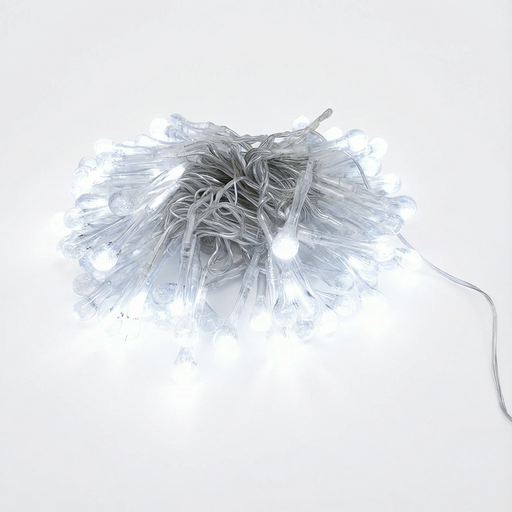
Why it suits this profile: This battery-powered string light is ideal for anyone who wants to decorate a balcony, garden fence, veranda or party venue without installation.
The specifications state 100 LEDs, a length of 8.3 metres, eight lighting functions and IP44. This makes it clear from the outset that it is decorative, splash-resistant lighting rather than area lighting.
100 cool white LEDs at 6500 K, eight modes with a memory function and power from three AA batteries. Batteries are not included.
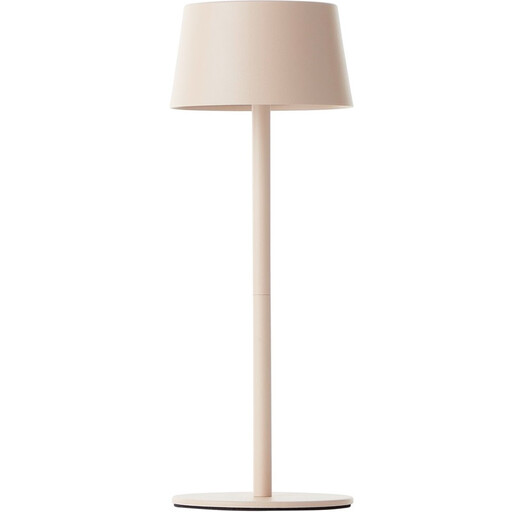
Why it suits this profile: A good choice for anyone who wants to avoid a fixed mains connection while still valuing the flexibility of both solar and USB charging.
Alongside a solar panel, this lamp has a USB-A charging option. So when there is little sunshine, you are not reliant solely on solar charging.
170 lumens, warm white light at 3000 K, three dimming levels, an integrated 18650 Li-ion battery and IP44 splash protection.
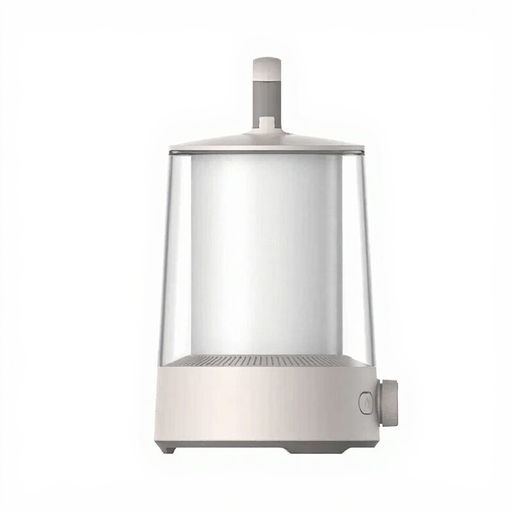
Why it suits this profile: This camping lantern is ideal for campers and anyone who wants one light that can be used as a lantern, torch and side light.
This lamp is not merely decorative: the main unit provides adjustable light from 6 to 230 lumens, while the detachable unit can be used as a torch or side light.
4800 mAh battery for the main unit, 800 mAh for the second unit, Type-C charging, Bluetooth control and IP54 protection against dust and splashing water.
We have put together a complete, up-to-date list of products that fully meet these strict selection criteria and the applicable European safety regulations.
The operating time depends on the battery type, capacity, number of LEDs, light output and selected mode. A string light with standard batteries may run out more quickly with continuous use than a lamp with a dimming function. Check the stated operating time and, for intensive use, keep spare batteries or a USB charging option to hand.
Only if the product information permits this and the battery compartment is properly sealed. Remove standard batteries when the lamp will not be used for an extended period. Also place the lighting in a sheltered position and prevent contact with standing water. An IP44 rating protects against splashing water, but does not make a product completely waterproof.
Solar lighting does not use a permanent mains connection while charging. However, its performance depends on the amount of sunlight, positioning and battery capacity. In the Netherlands, short or cloudy days can affect charging times. A model with USB charging provides extra flexibility in these conditions. When buying, therefore, look not only at the solar panel, but also at the charging options and the stated battery specifications.
