
Vandaag of morgen in huis

Kwaliteit gegarandeerd
Download de app
Categorieën

A new bathroom vanity can transform your space, but the wrong choice can quickly lead to frustration. A cabinet that doesn't fit, doors that hit the shower screen, or a p-trap cutout that's off by millimetres. Selecting the right unit requires careful attention to detail. This guide will help you make an informed decision based on dimensions, materials, and functionality, ensuring your purchase perfectly suits your bathroom and needs.
Before choosing a model, it's wise to check a few key specifications. This prevents installation issues and ensures long-term durability.
The most common mistake is overlooking the precise measurements. Don't just measure the available width, depth, and height in your bathroom; also check the dimensions of your current sink and the position of the drain.
The choice between a wall-mounted or freestanding model affects both aesthetics and maintenance.
The bathroom is a humid environment, making your bathroom cabinet's material crucial for its longevity.
Consider what you need to store. Do you have many small bottles or large towels?
Below are two recommended products with different features, suitable for various bathroom scenarios. The selection is based on product parameters and functionality.
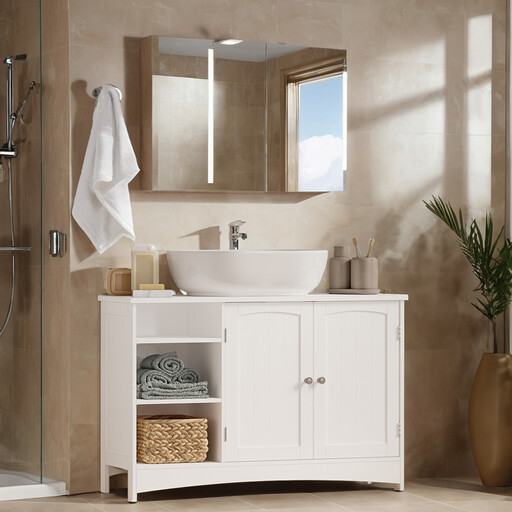
Why We Chose It This freestanding 90 cm vanity unit is a practical solution for those who have an existing sink and need ample storage. It is a white bathroom cabinet featuring a combination of open and closed compartments. The unit is constructed from MDF, a standard material for bathroom furniture. The p-trap cutout measures 20 x 15 cm (D x W), a critical detail to verify beforehand.
Pros
Who Is It For? This model is ideal for users who have a wide sink and are looking for a standalone vanity cabinet with significant and flexible storage capacity. It's a great match for family bathrooms where both functionality and storage volume are priorities.
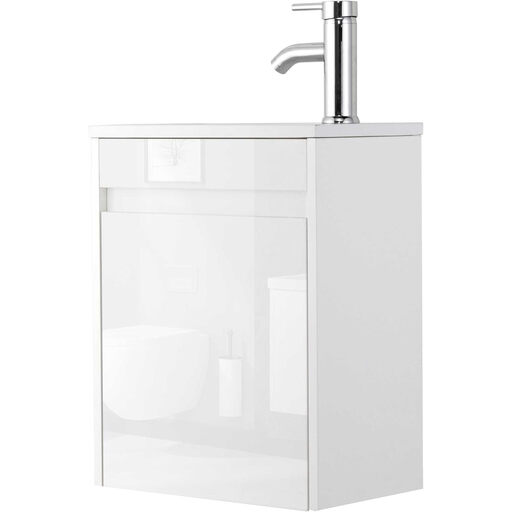
Why We Chose It This is a complete set: a vanity with a sink. At 41 cm wide, it's an ideal small vanity unit for a compact space, such as a guest toilet. It is a wall-mounted vanity, which keeps the floor clear and enhances the sense of space. The sink is made of resin with a smooth surface and features an overflow hole and an integrated pop-up drain.
Pros
Who Is It For? This set is designed for those seeking a complete and compact solution for a small bathroom or guest toilet. Its wall-mounted installation and clean design fit well in a modern interior.
The products above are examples for specific needs: a wide under-sink cabinet and a compact, all-in-one set. However, the range of bathroom vanities is much larger. Countless other sizes, colours, and styles are available, from freestanding models with double sinks to minimalist cabinets.
If you're looking for other options, you can explore a wider assortment.
️ Discover more models in the Bathroom Vanity Cabinets category
1. How high should a wall-mounted vanity be installed? The standard height for the top of the sink is between 85 and 90 cm from the floor. However, the exact height depends on the height of the users. It is advisable to choose the height that is most comfortable for your household.
2. Can I place any vanity cabinet under my existing sink? No, this is not always possible. It is essential to compare the cabinet's dimensions with your sink's dimensions. Pay close attention to the p-trap cutout of the cabinet. Measure the position and diameter of your drainpipe to ensure it will fit through the cutout without requiring modifications to the cabinet.
3. What is the difference between MDF and particle board for bathroom furniture? MDF (Medium-Density Fibreboard) is made from fine wood fibres compressed under high pressure and temperature. This makes the material denser, smoother, and generally more moisture-resistant than standard particle board. Particle board is made from coarser wood chips and is lighter and less expensive, but it can swell more quickly upon exposure to moisture if the top layer is damaged. For a bathroom, MDF with a quality coating is often a more durable choice.
Written by: Joybuy Product Recommendation Officer