
Vandaag of morgen in huis

Kwaliteit gegarandeerd

Welkomstaanbiedingen ontgrendelen: GRATIS bezorging | Tot 80% korting | Gratis 30 dagen JoyPlus-proefperiode
Download de app
A tidy bathroom often starts with the right bathroom storage cabinet. However, not every cabinet is suitable for a room exposed to condensation, water splashes and limited floor space. A model that works well in the living room may become damaged or unstable more quickly in the bathroom.
So don’t focus only on colour and price. The material, dimensions, ventilation, load capacity and assembly all play a key role in whether a bathroom cabinet remains convenient in everyday use.
A moisture-resistant bathroom cabinet is not automatically designed to withstand prolonged contact with water. MDF, chipboard and bamboo can swell if their edges are damaged or they remain wet for extended periods. So check the following:
According to the product description of the HaluPeit cabinet, its MDF and metal components are intended for use in a damp bathroom environment. That is a product specification, but it is not a reason to expose the cabinet to directly running water.
A bathroom storage cabinet that is 35 cm deep can already take up a considerable amount of space beside a washbasin or toilet. So measure not only the available width, but also:
In a small bathroom, a slim bathroom cabinet or tall bathroom shelving unit may be more practical than a wide bathroom unit. Open shelving often takes up less visual space, but offers less protection against dust and splashes.
More shelves do not automatically mean more usable bathroom storage space. For example, a compartment that is 20 cm high may be inconvenient for large bottles of shampoo or cleaning products. Adjustable shelves are therefore useful when you want to store items in different sizes.
A combination of closed doors and open compartments often works well: towels and spare supplies stay out of sight, while everyday toiletries remain within easy reach.
For a damp room, plastic, treated metal and specially finished board materials are sensible options. With MDF or chipboard, the finish is particularly important. Check the product description and instructions for use rather than relying solely on terms such as “waterproof” or “moisture-proof”.
It is best to position a moisture-resistant bathroom cabinet:
A freestanding bathroom cabinet can be positioned flexibly, but it must stand securely. A model with doors keeps towels, toiletries and cleaning products out of sight. A bathroom cabinet with open compartments is suitable for baskets, rolled-up towels or decorative items.
Also check the internal dimensions. The external measurements do not tell you how much space is actually available once doors, back panels and shelves are taken into account.
The load capacity varies by shelf and by product. Distribute heavy bottles across several levels and do not place a tall cabinet on an uneven floor. An anti-tip device or wall anchoring is important in households with children or pets.
A metal or plastic bathroom shelving unit may be assembled without tools, but that does not mean anchoring is always unnecessary. Follow the manufacturer’s safety instructions.
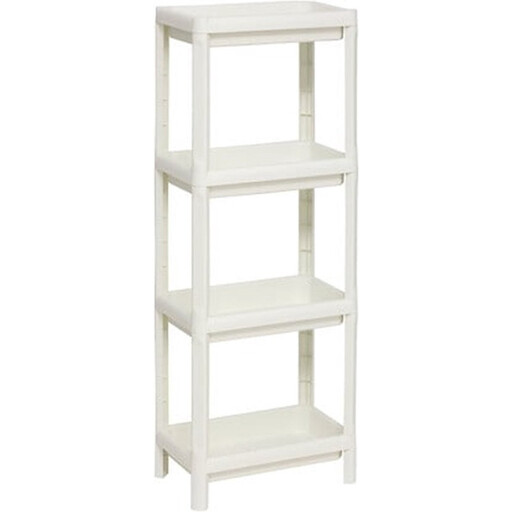
Why it suits this profile: This open bathroom shelving unit offers four levels for toiletries and towels. At 100 cm high, it is suitable for making the most of vertical storage space.
The product details specify plastic shelves, tool-free click assembly and placement on a level surface. However, check its stability after assembly.
37 × 22 × 100 cm; four open levels; maximum 20 kg per shelf according to the product information.
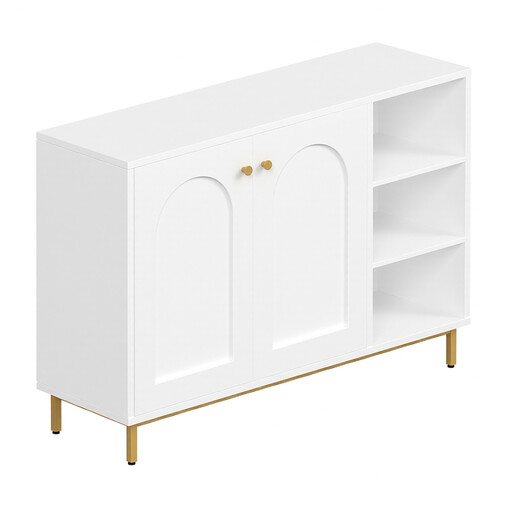
Why it suits this profile: The combination of a closed cabinet, three open compartments and adjustable shelves suits households that want to store different types of items in an organised way.
The cabinet combines closed doors with open compartments, so not everything has to remain on show. Its stated height of 12.5 cm keeps the bottom clear of the floor.
Approx. 35.5 × 100.5 × 75.5 cm; three adjustable shelf heights; anti-tip device; MDF and metal according to the product description.
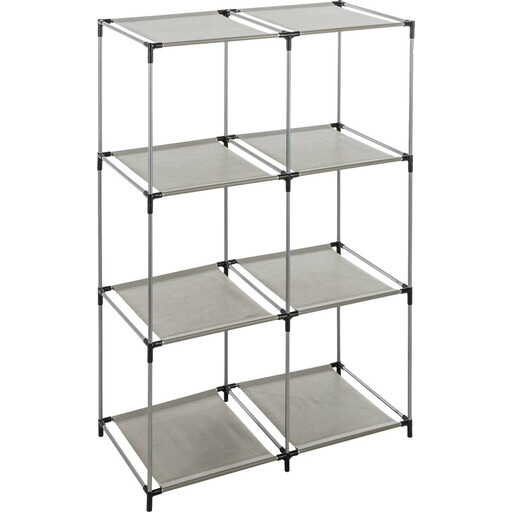
Why it suits this profile: This cube storage unit is useful for baskets containing towels, spare supplies and cleaning products, provided it is placed in a well-ventilated area away from splashes.
The six compartments make sorting simple. The safety information requires wall anchoring and specifies a maximum of 3 kg per box and 15 kg for the unit as a whole.
68 × 34 × 98 cm; six compartments; metal and plastic construction; suitable for storage boxes up to 31 × 31 cm.
Use closed storage for items you do not need every day, such as extra toilet paper, cleaning products and spare towels. Open compartments are useful for products you reach for frequently, but bear dust and moisture in mind.
A bathroom organiser or separate basket can help group small toiletries together. If you choose woven paper, MDF or bamboo, check whether the product description states that it is suitable for a damp room. For example, the decorative baskets mentioned recommend using a dry or slightly damp cloth and warn against excessive moisture.
For a small bathroom, you could also consider a wall shelf. The 5five Fixy wall shelf measures 58 × 10 × 4 cm and, according to the product details, has a maximum load of 3 kg. Use it mainly for lightweight items and check that the wall and fixings are suitable.
We have put together a complete, up-to-date list of products that fully meet these strict selection criteria and the applicable European safety regulations.
First, measure the available width, depth and height. Leave enough room for doors, drawers and the walkway. A tall, slim bathroom shelving unit approximately 20 to 25 cm deep may be more practical than a wide cabinet, provided it stands securely or is attached to the wall.
Ventilate during and after showering, wipe away splashes immediately and do not place the cabinet in the direct spray. Regularly check the edges, feet and back for moisture. A moisture-resistant bathroom cabinet helps with normal bathroom use, but it does not replace ventilation or careful maintenance.
It depends on what you want to store. A bathroom cabinet with doors protects its contents better from dust and keeps the room looking uncluttered. A bathroom cabinet with open compartments gives quicker access and is suitable for everyday products. For many households, a combination of both layouts is the most practical solution.
