
Vandaag of morgen in huis

Kwaliteit gegarandeerd

Welkomstaanbiedingen ontgrendelen: GRATIS bezorging | Tot 80% korting | Gratis 30 dagen JoyPlus-proefperiode
Download de app
A weighing scale may seem simple, but there are big differences between models. A bathroom scale for everyday use has different requirements from a kitchen scale, coffee scale or baby scale. If you focus only on price or a long list of features, you could end up with a product that’s less practical than you expected.
Look out for these common pitfalls:
A standard bathroom scale is suitable if you only want to check your body weight. Look at the maximum capacity, platform dimensions and how easy the display is to read. A model that switches on automatically is handy for everyday use.
An analogue scale works without batteries, but its graduations are often less precise. The Medisana PSD, for example, is mechanical, has a metal casing and measures up to 150 kg in 500-gram increments.
A digital scale shows your weight on an LCD or LED display. Check the stated graduation: 0.05 kg means the display shows increments of 50 grams, but it doesn’t guarantee that every reading will be exactly the same in all conditions.
The Medisana PS 402 has four sensors, a maximum capacity of 180 kg, automatic activation and an automatic shut-off after 10 seconds. You can set it to kilograms, pounds or stone.
A smart scale, Bluetooth scale or scale with an app can send measurements to a smartphone. A body fat scale often uses bioelectrical impedance analysis, also known as BIA.
Treat the results as a way to track trends, not as a medical diagnosis. According to the product information, the models can display measurements including weight, BMI, body fat percentage, muscle mass and water percentage. Results can vary depending on hydration, posture, time of day and contact with the electrodes. Users with a pacemaker or other electronic implant should avoid the BIA function or seek medical advice first, as indicated in the product information.
A kitchen scale usually has a capacity of a few kilos and graduations of 1 gram. A coffee scale puts more emphasis on a timer, a quick tare function and precise measurements while you brew.
A capacity of 2,000 grams is generally enough for coffee. If you also want to weigh large bowls or ingredients, look for a model with a capacity of 5 or 10 kg. Also check whether the scale can withstand heat and moisture. This doesn’t mean you can submerge it in water.
Choose a capacity to suit the heaviest item you’ll weigh:
Place every scale on a hard, level and dry surface. Carpets and uneven tiles can affect the measurement.
Battery-powered models are ready to use straight away, but check whether the batteries are included. For a rechargeable digital coffee scale, USB Type-C is handy. The TIMEMORE Black Mirror Basic 2 has a built-in lithium-polymer battery and, according to the product information, runs for up to 24 hours, depending on use and automatic shut-off.
Clean your scale with a soft, slightly damp cloth. Don’t submerge it. If it has a glass platform, keep the surface dry to prevent slipping.
An app can be useful for multiple users and tracking changes over time. Check in advance:
For comparable results, weigh yourself at a set time, in the same place and under similar conditions. One-off readings are less useful than a consistent weighing routine.
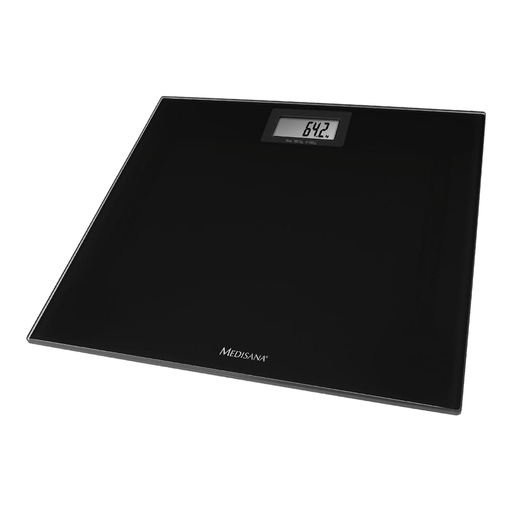
Why it suits this profile: A straightforward bathroom scale for households who want to check their weight without an app or complicated settings.
Its features are limited to everyday weighing, so you don’t pay for app features you may not use.
Capacity up to 180 kg, LCD display, step-on operation and a choice of kg, lb and st.
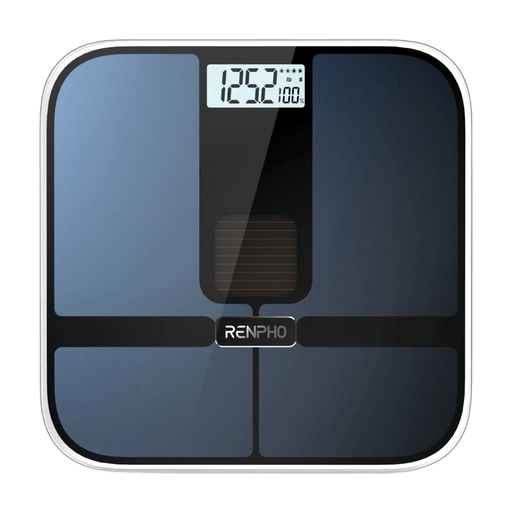
Why it suits this profile: A good fit for households looking to combine Bluetooth, user recognition and body analysis in one system.
The product information clearly states that you need to connect to the RENPHO Health app to access app data. You can decide in advance whether that suits you.
According to the product description, it runs on solar power, supports 13 measurements and recognises users automatically.

Why it suits this profile: For coffee lovers who want to use a timer, tare and flow-rate function when making pour-over coffee or espresso.
The specifications state both a capacity of 2,000 grams and graduations of 0.1 gram. This makes its intended use clearer than that of a general-purpose kitchen scale.
0.1-gram graduations, timer, flow-rate function, LED display, USB Type-C and a heat-resistant silicone mat.

Why it suits this profile: A practical choice for cooking and baking, and for anyone who uses different units of measurement.
With a 10 kg capacity, there’s more room for larger bowls than with a compact 5 kg model. Bluetooth is available, but the basic controls remain straightforward.
10 kg capacity, 1-gram graduations, Bluetooth, multiple units and an easy-to-clean glass surface.
We’ve put together a complete, up-to-date list of products that meet these strict selection criteria and the current European safety requirements.
Place the scale on a hard, level and dry floor. Always use the same spot and weigh yourself at a similar time. When using a bathroom scale, make sure your feet are dry and stand still. With a kitchen or coffee scale, place the empty bowl or filter holder on the scale first, then use the tare function.
Its lifespan depends on how you use, store and care for it. Keep a digital scale dry, avoid dropping it and don’t exceed its maximum capacity. Replace the batteries in good time, or charge a rechargeable model according to the instructions. An analogue scale doesn’t need batteries, but wear and tear or a shifted zero point can make its readings less consistent.
As well as the purchase price, you may need to factor in batteries, a charging cable or a smartphone app. Check whether the app is free and whether you can still weigh yourself using the basic functions without a connection. For models with Bluetooth or Wi-Fi, it’s also worth checking in advance which phone permissions and account details are required.
