
Vandaag of morgen in huis

Kwaliteit gegarandeerd

Welkomstaanbiedingen ontgrendelen: GRATIS bezorging | Tot 80% korting | Gratis 30 dagen JoyPlus-proefperiode
Download de app
A bathroom scale might seem simple: step on, read your weight and you’re done. Yet models vary greatly in ease of use, measurement features and maintenance. If you only focus on a low price or a long list of health metrics, you could end up with a scale that’s hard to read, needs frequent calibration or barely gets used.
This buying guide will help you choose a digital bathroom scale, smart scale or simple bathroom scale based on verifiable product specifications.
A body fat scale can display not only weight but also BMI, muscle mass, water percentage and other values. On models with Bluetooth, this data is often sent to an app. That’s handy for tracking trends, but these readings are not a medical diagnosis.
Measurements taken via bioelectrical impedance analysis (BIA) can also be affected by factors such as hydration, skin contact, time of day and body position. So use them mainly to monitor changes over a longer period. According to manufacturers’ own information, these features are intended for general health tracking and not for medical treatment. If you have a pacemaker, defibrillator or any other implanted electronic device, only use the standard weight measurement if the manufacturer advises it.
A scale that displays increments of 0.05 kg or 0.1 kg won’t automatically give the same reading under all conditions. A soft bath mat, carpet or uneven tiled floor can affect the measurement. Moving the scale between different spots can also cause variations.
Place a bathroom scale on a hard, flat and dry surface. Weigh yourself at a consistent time, for example in the morning, and compare readings under similar conditions.
Many bathroom scales have a platform made of toughened glass. It’s smooth and easy to clean, but a wet surface or wet feet increase the risk of slipping. Toughened glass platforms are not designed for jumping on or dropping heavily.
Also check whether the scale is resistant to moisture. A bathroom isn’t automatically the ideal storage place: condensation and water inside the casing can damage electronic components.
For families, a scale with 180 kg capacity is often practical, because multiple users can weigh themselves within the same range. Pay attention not only to the maximum weight capacity but also to the minimum weight. Some models start at 5 kg, for example, while others don’t clearly state where the measurement begins.
A higher weight capacity doesn’t mean the scale is suitable for professional or medical use. Always check the product description and don’t exceed the stated limit.
A bright LED or LCD display is important if you want to weigh yourself without a phone. Look for:
A Bluetooth scale adds app functionality, but check beforehand whether the app is compatible with your phone and whether syncing is necessary for the features you want to use.
If you mainly want to measure body weight, a basic model with a clear display is usually sufficient. For families, multiple or unlimited user profiles can be handy. On smart models, a user is sometimes automatically recognised based on weight. Check whether your data is stored locally or via an account in an app.
With a body analysis scale, it’s wise to read the product information critically. A manufacturer might talk about 13, 14, 25 or even 56 body measurements. That doesn’t mean every value is equally relevant or stable for daily use.
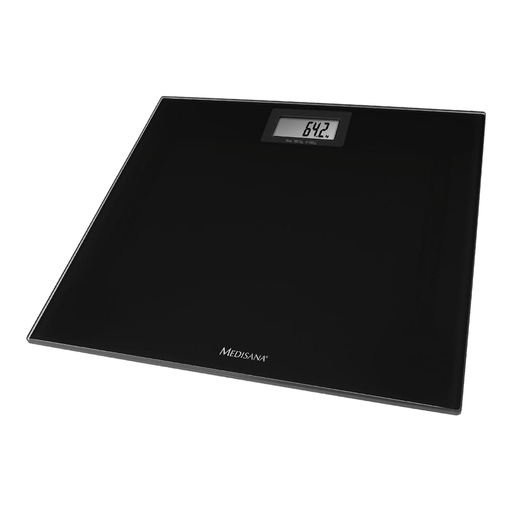
Why this fits the profile: This model focuses on daily body weight measurement without an app or extensive body analysis. The operation is simple and the LCD screen shows the weight straight away.
There are no unnecessary app features or non-medical body claims to worry about. The product specifications mention four sensors, Step-on and Tap-on activation and a weight capacity of up to 180 kg.
LCD display, automatic switch-off after 10 seconds, choice of kg, lb and st, and a maximum load of 180 kg.
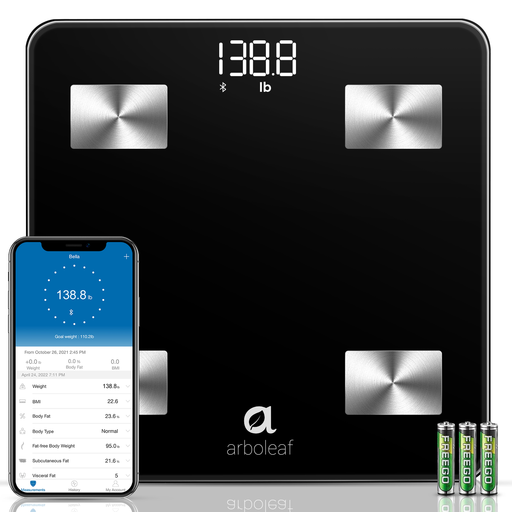
Why this fits the profile: Suitable for users who want to track their progress via an app and have multiple family members use one digital bathroom scale.
The display remains available for a quick measurement without a phone. For body analysis, Bluetooth with the Arboleaf app is required; the stated values should be read as trend information, not as a diagnosis.
According to the product specifications, there are 14 measurement values, Bluetooth syncing, an LED display, a 6 mm toughened glass platform and profiles for unlimited users.
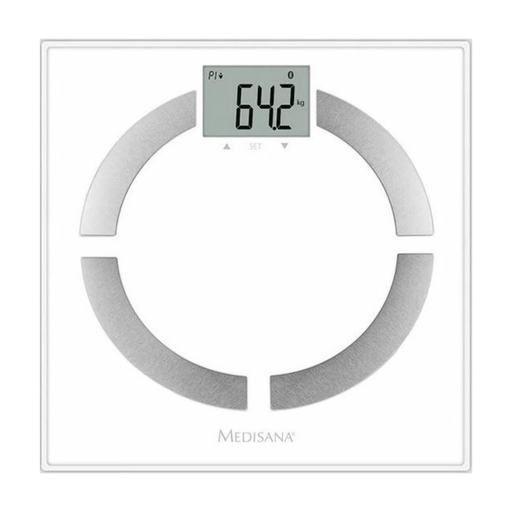
Why this fits the profile: This model suits athletes and households who want to record weight and additional body values via Bluetooth.
The standard weight measurement remains visible directly on the display. For body analysis, bare, dry feet and contact with the electrodes are required; the manufacturer positions this data as supplementary monitoring.
Bluetooth pairing with a compatible app, body analysis, a maximum weight capacity of 180 kg and measurement increments of 100 grams according to the product information.
We’ve put together a full, up-to-date list of products that fully meet these strict selection criteria and comply with current European safety regulations.
A bathroom scale is intended for household tracking. If you notice significant or persistent changes in body weight, the measurement is no substitute for speaking to a healthcare professional.
The stated measurement increment might be 0.05 kg or 0.1 kg, for example, but the practical result also depends on the surface, posture, battery status and conditions. A fixed location and a consistent weighing time help you compare results more effectively.
A smart scale usually calculates BMI based on your weight and a height entered in the app. The result is a mathematical indication. Check that your profile details are correct and don’t treat BMI as a complete assessment of your health.
The main running costs are usually batteries and possibly an app, if it isn’t available for free. A model with automatic switch-off typically uses less power. Check before you buy which batteries are needed and whether they are included.
