
Vandaag of morgen in huis

Kwaliteit gegarandeerd

Welkomstaanbiedingen ontgrendelen: GRATIS bezorging | Tot 80% korting | Gratis 30 dagen JoyPlus-proefperiode
Download de app
A bathroom grab bar with suction cups can be useful if you want extra balance when showering, standing up or getting in and out of the bath. Older people, people with limited mobility, pregnant women, people recovering from an injury and carers often look for a solution that doesn’t require drilling.
However, not every no-drill shower grab rail is suitable for every bathroom. So don’t just look at the price or phrases such as “heavy duty”. The surface, attachment and correct use all play an important part in whether a removable bathroom grab bar is practical.
Suction cups need a smooth, non-porous and airtight surface. According to the product information, suitable surfaces include glass, smooth tiles, metal, stainless steel, marble and acrylic.
An uneven tile, porous natural stone, wallpaper, plasterboard or painted wall can let air through. This may weaken the attachment. Also check that the tiles are large enough and that the suction cups won’t sit across a grout line.
Several TAILI models have a capacity of 240 lb per grab bar, which is approximately 109 kg. This is a specification from the manufacturer’s product description. The warning also states that the grab bar is intended for balance support only, not for supporting your full body weight.
If you need a fixed support to pull yourself up or bear your full body weight, it’s better to consider a professionally installed wall-mounted grab rail. A suction-cup model is most practical as a temporary or movable shower grab bar.
A suction cup can loosen over time because of moisture, dirt, changes in temperature or a damaged seal. Before each use, check that the locking levers are still secure. Inspect the grab bar regularly for signs of wear, too.
According to the care instructions, you can wash a suction cup with warm water and dry it thoroughly before reattaching it. Use a mild cleaning product and let the surface dry.
Choose a shower safety grab bar with locking suction cups. The TAILI models use two suction cups with levers. According to the product description, they take around five seconds to secure and require no screws, adhesive or tools.
Clean and dry the surface first. Don’t place the grab bar across a grout line, on a rough tile or on a porous wall. After installation, carefully check that both locking levers are closed.
A shorter model of around 12 inches, approximately 31 cm, often fits beside a shower entrance or on a limited wall space. A 16.8-inch version, approximately 43 cm, gives you more room to grip and may be more practical on a wider bath wall.
Measure the available space first. Position a grab bar for the bath and shower where the user can reach it naturally, without twisting or stretching too far.
Look for an anti-slip strip, a shape that feels comfortable in your hand and a surface that’s easy to clean. The models mentioned use plastic and TPE for the suction cups. Some versions also have glow-in-the-dark material. According to the product description, this can improve visibility in the dark, but it isn’t a substitute for good bathroom lighting.
An anti-slip shower grab rail is only helpful if your hand is dry enough to hold it securely. Soap residue and moisture can affect your grip.
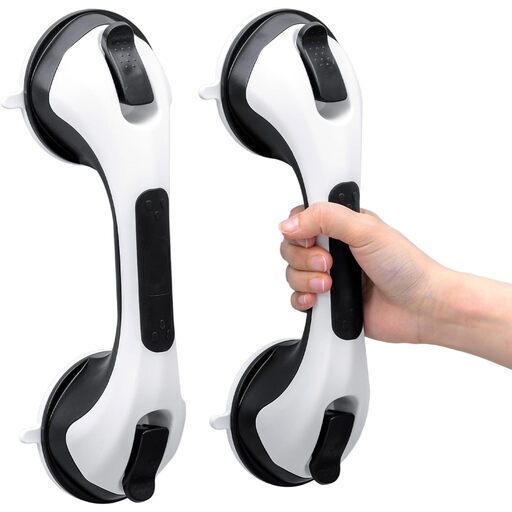
Why it suits this profile: This set includes two short grab bars and is suitable if you’d like to try a simple no-drill shower grab rail first.
The product information specifically mentions smooth, non-porous surfaces and warns against supporting your full body weight. This helps you assess what the grab bar can realistically be used for.
Set of two, plastic housing, anti-slip strip and locking suction cups, according to the product description.
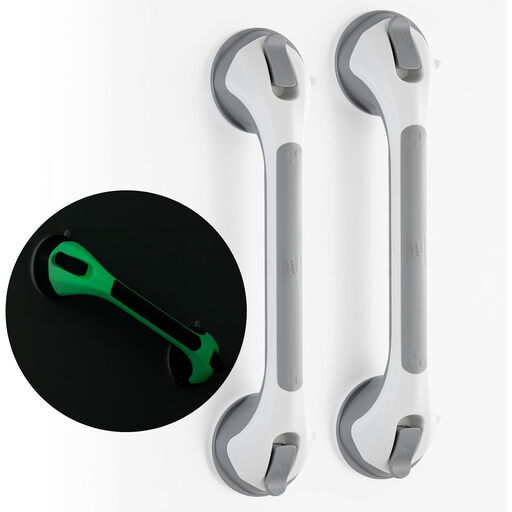
Why it suits this profile: The longer grab bar offers more space to grip. Its glow-in-the-dark material may be useful at night, when the bathroom is less brightly lit.
The product information clearly states the length, suitable surface type and intended use as a balance aid. This makes it easier to check in advance whether the grab bar is right for your bathroom.
16.8-inch length, anti-slip strip, curved finger grip and glow-in-the-dark sections, according to the manufacturer.
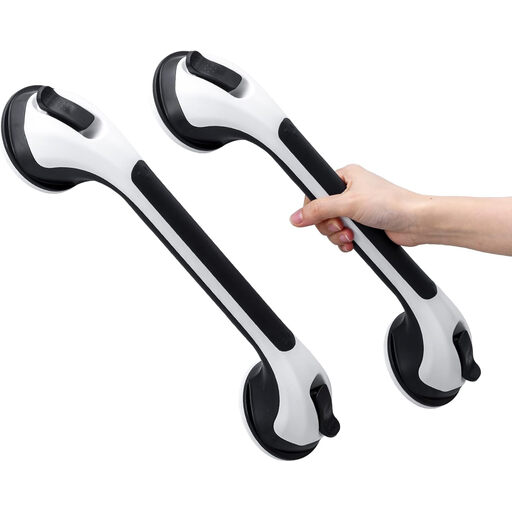
Why it suits this profile: Two grab bars can be useful if you want support in both the shower and bath, or if you need to set up several areas in your home.
The manufacturer recommends checking the grab bar before use, using it on suitable smooth surfaces and observing its limit as a balance aid. This helps prevent a 2-pack from being used as a fixed wall-mounted grab rail.
Two grab bars, water-resistant product description, anti-slip strip and reusable installation without drilling.
We’ve put together a complete, up-to-date list of products that meet these strict selection criteria and the applicable European safety regulations.
No. The tile or wall must be smooth, non-porous and airtight. Don’t place a suction cup across a grout line, on a textured surface or on a damaged area. Always follow the installation instructions for the specific product.
This depends on the surface, use and maintenance. Check the locking mechanism before each use and regularly check whether the suction cups are coming loose or becoming damaged. There’s no set lifespan that applies to every bathroom.
A bath grab rail for older people can help with balance and moving around, but it isn’t automatically suitable for preventing a fall or supporting your full body weight. If you have serious mobility problems, it’s best to ask an installer or healthcare professional whether you need a permanently fitted wall-mounted grab rail.
