
Vandaag of morgen in huis

Kwaliteit gegarandeerd

Welkomstaanbiedingen ontgrendelen: GRATIS bezorging | Tot 80% korting | Gratis 30 dagen JoyPlus-proefperiode
Download de app
A bathroom cabinet needs to do more than just hide things away. In a bathroom it has to cope with condensation, splashes, limited room to move and daily use by more than one person. Yet many buyers focus mainly on colour and price. The result? A cabinet sometimes turns out too deep, the cut-out doesn’t fit around the trap, or the edges swell over time.
With this practical checklist, you can compare a bathroom cabinet, bathroom base cabinet or under-sink cabinet on the things that really matter at home.
For an under-sink cabinet, the basin’s width, depth and height are crucial. Also check the position of the waste and the trap. On paper a unit can seem wide enough, yet still not fit because of a protruding pipe or skirting.
Take note:
A moisture-resistant bathroom cabinet isn’t automatically designed to withstand prolonged contact with water. MDF, chipboard and metal components behave differently. A damp towel left hanging, a leaky bottle or standing water on the floor can cause damage over time.
Therefore check:
When a brand mentions protection against moisture, mould or warping, treat this as a claim from the product information. The real lifespan also depends on ventilation, installation and day‑to‑day care.
A bathroom storage cabinet with lots of open compartments looks tidy, but toilet rolls, cleaning products and spare supplies remain visible. A cabinet with doors keeps those items out of sight. Open shelves are best for products you use every day.
Think in advance about the split between:
In a small bathroom, a slim cabinet is often more practical than a wide unit with deep shelves. Measure not just the footprint, but also the clearance in front of the cabinet. A 30 to 35 cm deep model can work in a tight space, while a wider unit offers more capacity.
A cabinet with adjustable shelves makes it easier to store tall shampoo and cleaning bottles. Check how many height settings are available and whether the shelves are sturdy enough for how you plan to use them.
A bathroom unit with drawers gives you quick access to small items, such as combs, cosmetics and spare soap. Doors are handier for larger items and textiles. Check whether the unit has left‑ or right‑hinged doors and that there’s enough room to grasp and use the handles.
For families, a mix of doors, drawers and open shelves is often easier to keep organised than one large storage compartment.
A cabinet made from MDF or chipboard needs good protection against moisture. Extra clearance at the bottom reduces contact with splashes when mopping. According to the product information, the HaluPeit model sits 12.5 cm above the floor. That’s practical for cleaning, but positioning it in a well‑ventilated bathroom remains important.
Also check whether an anti‑tip device is included. A tall bathroom storage cabinet, or any unit loaded with heavy bottles, should be secured to the wall as per the assembly instructions. Keep heavy items on the lower shelves where possible.
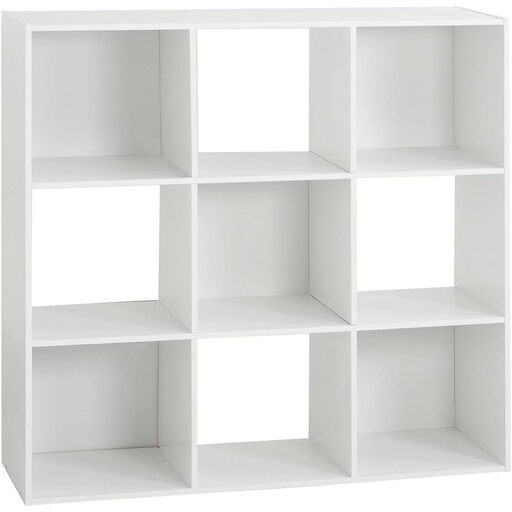
Why it suits this profile: The white cabinet provides nine open compartments for towels, baskets and everyday items. With a depth of 32 cm, it may fit a narrower bathroom, provided you still have adequate clearance.
The layout makes the available space visible and easy to manage. Because it’s open, moisture is less likely to get trapped, but items aren’t protected from splashes.
Nine compartments, white finish, suitable for wall mounting or freestanding use, and a stated maximum load of 65 kg.
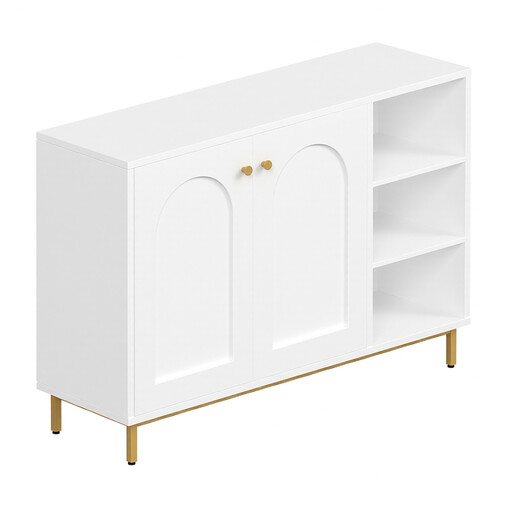
Why it suits this profile: This cabinet combines closed storage with three open shelves. Ideal if you want towels and toiletries out of sight, but everyday essentials within easy reach.
According to the product information, three shelves are height‑adjustable and the cabinet is raised off the floor. The stated moisture‑resistant properties are claims from the product description; still avoid prolonged exposure to water.
Approx. dimensions 35.5 x 100.5 x 75.5 cm, two doors, three open shelves, adjustable shelf heights and a supplied anti‑tip device.
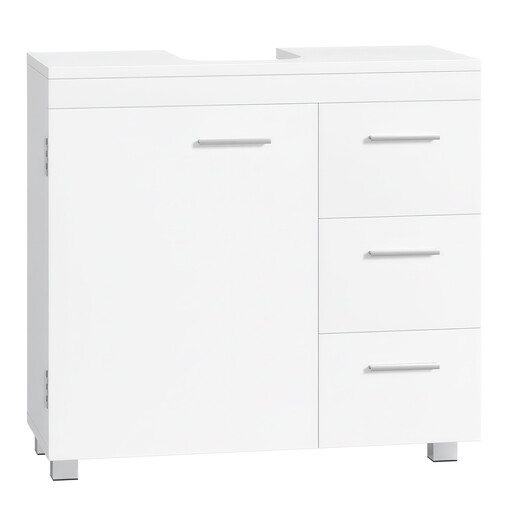
Why it suits this profile: This unit is designed to sit beneath a basin and combines three drawers with two compartments behind a door. That makes it practical for families or households with lots of small and larger bathroom items.
The product information mentions an adjustable shelf and an anti‑tip kit. Before buying, check the basin shape, the trap position and the stated maximum static load of 36.2 kg.
Compact size of 30 x 70 x 64 cm, three drawers, two storage compartments, adjustable shelf and an included anti‑tip fixing.
Before assembly, check the floor is level and that screws won’t hit any pipes. For an under‑sink cabinet, carefully re‑measure the cut‑out around the trap. Secure tall or heavy furniture as per the manual and store heavy items at the bottom.
Wipe up spills straight away with a slightly damp cloth. Don’t use harsh cleaners unless the product information allows it. Also ventilate after showering. This reduces condensation on furniture, mirrors and walls.
A white bathroom cabinet often makes a small space feel brighter. A matt white finish usually hides light fingerprints better than a high‑gloss surface, while a white gloss bathroom cabinet pairs easily with modern tiles. Choose primarily based on maintenance, dimensions and the rest of your décor.
We’ve compiled a complete, up‑to‑date list of products that fully meet these strict selection criteria and the current European safety regulations.
Measure the width, depth and height of the available space. Also check the basin shape, the position of the waste and the size of the trap cut‑out. If in doubt, a freestanding cabinet with open or adjustable shelves is easier to place than a specific under‑sink unit.
Lifespan depends on material, edge sealing, ventilation, installation and exposure to water. A cabinet made from MDF or chipboard can be used in a humid room when the product information says so, but you should avoid surfaces staying wet for long periods. Regularly check hinges, fixings and edges.
Yes. Drawers give quick access to small everyday items and reduce rummaging in deep compartments. For towels, toilet rolls and bulk supplies, doors or larger compartments are more practical. A combination of drawers, doors and adjustable shelves usually offers the most flexibility.
