
Vandaag of morgen in huis

Kwaliteit gegarandeerd

Welkomstaanbiedingen ontgrendelen: GRATIS bezorging | Tot 80% korting | Gratis 30 dagen JoyPlus-proefperiode
Download de app
A bathroom cabinet may seem like a straightforward purchase, until available space, humidity and everyday organisation all come into play. A cabinet can look spacious in the product photo, yet still be too deep for a small bathroom. Not all materials are suitable for splashes, condensation and regular cleaning either.
So look beyond colour and style. A bathroom cabinet should fit the available floor space, provide enough storage and remain safely stable. Below, you’ll find out which features deserve attention and which models suit different situations.
Words such as “waterproof” or “suitable for the bathroom” mean little if the cabinet’s material is not specified. Check whether the product information mentions MDF, chipboard, steel or PP plastic, for example, and whether it includes guidance on maintenance and placement.
A cabinet described as moisture-resistant is not automatically resistant to standing water or prolonged exposure to condensation. Therefore, do not place a freestanding bathroom cabinet directly in a puddle or against a wall that is constantly wet.
A tall cabinet does not always offer more practical capacity. Fixed shelves can be inconvenient for tall bottles, bulk packs or folded towels. A combination of doors and open compartments often works better: toiletries stay out of sight, while everyday essentials remain easy to reach.
Pay particular attention to the internal dimensions, not just the external measurements. A bathroom cabinet with doors may look spacious, but hinges or a thick back panel can reduce its usable capacity.
A narrow, tall cabinet can tip over if heavy items are stored at the top. Check whether an anti-tip device is included and attach it to the wall according to the instructions. A low cabinet also benefits from a level surface, especially on tiled floors.
Measure the space at three points: width, depth and height. Leave enough clearance around doors, the washbasin, radiator and walking area. For small flats, a shallow cabinet or a model on wheels may be more practical than a large bathroom unit.
Then choose between:
According to the manufacturer’s product information, a metal cabinet is generally described as easy to clean and moisture-resistant. Plastic surfaces are often easy to wipe clean, but pay attention to the maximum load and stability. With MDF or chipboard, keep joins, edges and the underside dry.
For everyday maintenance, use a soft, slightly damp cloth. Avoid abrasive products and harsh chemicals if the product information advises against them.
Open compartments can be useful in a well-ventilated bathroom, while closed doors can help limit dust and splashes reaching the contents. Also check the maximum load per shelf. Heavy supplies should preferably be stored at the bottom.
An anti-tip kit is not just a decorative extra. With a tall cabinet, make sure the wall type and fixings are compatible. If in doubt, it is a good idea to check the assembly instructions beforehand.
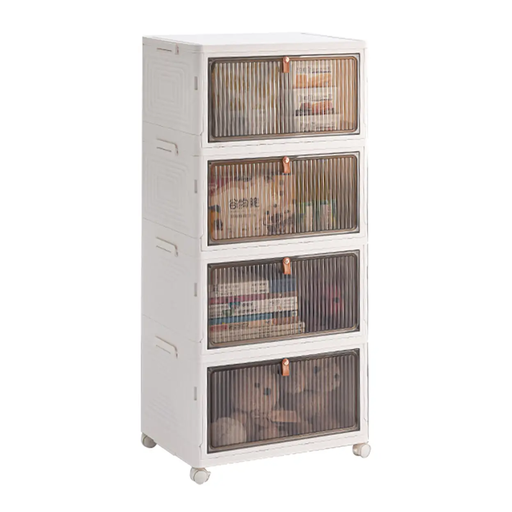
Why it suits this profile: The compact layout is suitable for a smaller bathroom, student accommodation or flat where you need extra compartments for toiletries in a hurry.
According to the product information, the smooth PP plastic panels are easy to wipe clean. However, check the maximum shelf load and place the cabinet on a level surface.
Four tiers, a compact design and tool-free assembly according to the product description.
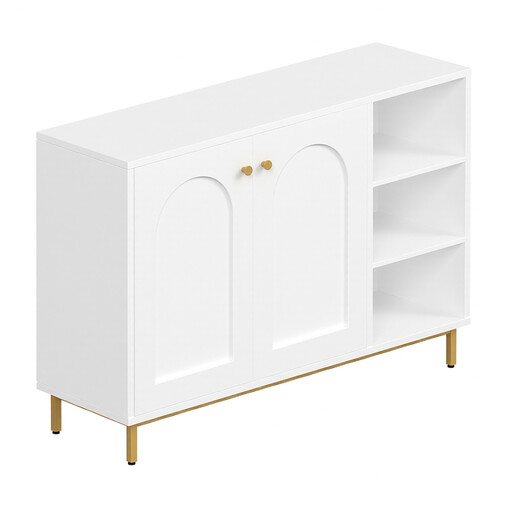
Why it suits this profile: This model combines closed storage with three open compartments and complements a modern interior featuring a white bathroom cabinet with gold-coloured details.
According to the product information, this model has three adjustable shelf heights and stands 12.5 cm off the floor. This helps accommodate bottles of different heights and makes it easier to clean the floor.
Dimensions according to the specification: 35,5 × 100,5 × 75,5 cm; closed doors, open compartments and an anti-tip device.
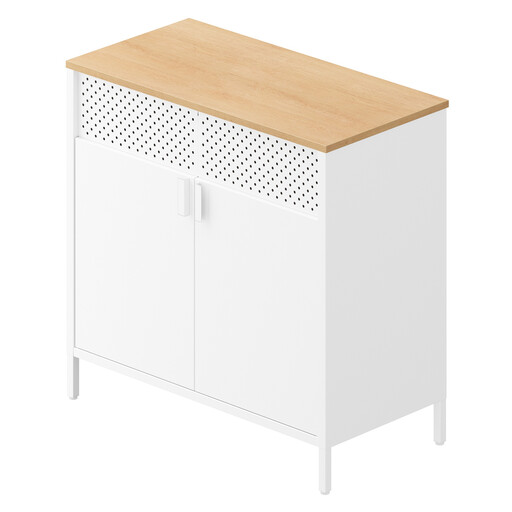
Why it suits this profile: The metal cabinet provides a lockable compartment for supplies, cleaning products or towels and can also be used outside the bathroom.
According to the product information, the steel housing is described as moisture-resistant and easy to clean. Use the included anti-tip kit as instructed.
Dimensions 40 × 80 × 76 cm, adjustable shelf and magnetic door closure according to the product description.
We’ve put together a complete, up-to-date list of products that fully meet these strict selection criteria and the applicable European safety regulations.
That depends on the finish, edges and product information. MDF or chipboard can be used in a bathroom if the manufacturer states that the material is intended for damp conditions and it is not exposed to water for prolonged periods. Ventilate the room and dry up any spilled liquid immediately.
For toiletries, around 30 to 40 cm is often practical, but the right size depends on the available passageway and the space beside the washbasin. Also check that the doors can open fully. In a small bathroom, a narrow model with open compartments may leave more room to move around.
Remove dust with a dry cloth, then wipe the surface with a soft, slightly damp cloth. Follow the manufacturer’s care instructions. Avoid abrasive sponges, bleach and large amounts of water, particularly with board materials. Also clean the area underneath the cabinet regularly to help prevent moisture and dirt from building up.
