
Vandaag of morgen in huis

Kwaliteit gegarandeerd

Welkomstaanbiedingen ontgrendelen: GRATIS bezorging | Tot 80% korting | Gratis 30 dagen JoyPlus-proefperiode
Download de app
A basketball may seem simple to choose, but the wrong size, a slippery surface or unsuitable material can quickly take the fun out of playing. Product photos and marketing claims aren’t always enough to help you make the right choice, particularly when shopping online. If you’re looking for a basketball for training, the park, the playground or a sports hall, it’s worth considering how you’ll use it, along with its size and construction.
A size 7 basketball isn’t automatically suitable for every player. This size is generally intended for older children and adults. A smaller ball can be easier for children to control. A ball that’s too large or heavy makes dribbling, passing and shooting more difficult.
Don’t just consider age. Hand size, ability and the requirements of a team or competition also matter.
A soft PU or microfibre cover feels comfortable on an indoor court, but a rough surface such as asphalt can cause it to wear out more quickly. A rubber basketball is usually more practical outdoors, as its surface is designed to withstand regular contact with concrete, paving or asphalt.
Will you use the ball indoors and outdoors? Check that the product description explicitly says so. A basketball for indoor and outdoor use is a practical choice for families and recreational players, but official matches may have additional requirements.
Terms such as ‘extra rebound’, ‘waterproof’ or ‘leak-resistant for 48 hours’ may sound clear, but always check exactly what’s being promised. For example, the product information mentioned refers to a 5 to 8 per cent improvement in rebound and a seal that limits air loss for up to 48 hours when the ball is inflated to the correct pressure. These are claims from the brand’s product description, not a universal testing standard for every basketball.
A pump, needles and a carry bag are useful, but also check whether the ball comes inflated. According to the product information, the selected models are shipped deflated and need to be pumped up before first use.
The most commonly used sizes are:
Age recommendations vary by brand and club. If you’re buying a ball for competition use, always check the rules of the relevant governing body or organisation. The official basketball size depends not only on age, but also on the competition category.
A rubber basketball has a firm, often textured surface. This can help with grip and makes the ball suitable for outdoor basketball. However, a rubber outdoor ball may feel harder on your hands than a PU ball.
PU, composite leather or microfibre leather usually feels softer and is often chosen for indoor training. According to some product descriptions, certain models are suitable for both types of surface. Check:
A durable basketball isn’t just about its outer material. A butyl bladder, reinforced winding and shape retention also play a part. Don’t leave a ball in direct sunlight or extreme heat for long periods.
Deep grooves and a lightly textured surface can help you stay in control when dribbling and passing. In wet weather, however, grip still depends on the conditions and the material. No ball can make a slippery or wet surface safe to play on.
The product information for several Longsail models recommends a pressure of 7 to 9 PSI. Use a suitable pump with a needle and check the product packaging for the precise instructions. A basketball supplied with a pump is handy if you want to play straight away, but check whether replacement needles are included too.
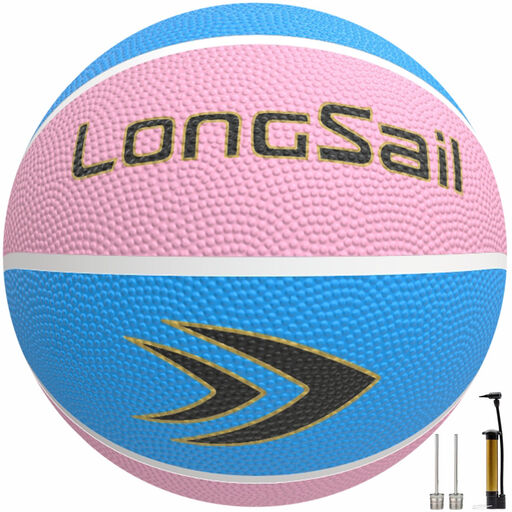
Why it suits this type of player: Size 3 is manageable for young children, while the rubber construction is practical for playgrounds, driveways and recreational use. According to the product description, a pump, two needles and a carry bag are included.
The size and circumference of around 57 cm make it easier to avoid choosing a ball that’s too large for young players. According to the description, the ball is designed for use on several types of surface.
Size 3, rubber outer layer, water-resistant product description and a complete set with pump and carry bag.
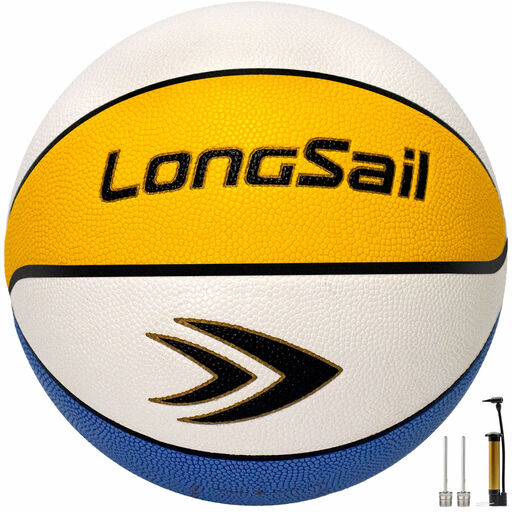
Why it suits this type of player: This model is a good fit for players looking for a softer feel and a size 5 ball for youth training. According to the product description, the PU or microfibre cover is designed to provide grip and control on indoor and outdoor surfaces.
The product information lists the material, size and intended playing surface separately. This makes it easier to choose a ball for youth training, rather than basing your decision on colour or the marketing name alone.
Size 5, PU or microfibre cover according to the product description, and deep grooves for ball control.
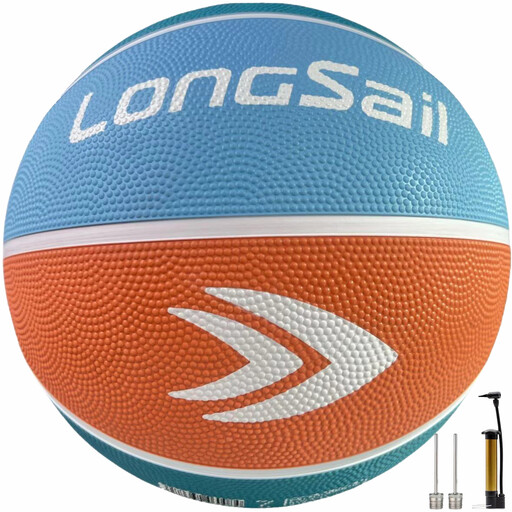
Why it suits this type of player: This size 7 ball is a good fit for adults and older children who play outdoors a lot or want a ball for training. According to the product description, its rubber construction is designed for asphalt, concrete and other surfaces.
The circumference of around 75 cm is clearly stated, and the tough rubber outer layer is better suited to rough outdoor courts than a cover designed exclusively for indoor use.
Size 7, textured rubber, butyl inner bladder according to the product description, supplied with a pump, needles and carry bag.
We’ve put together a complete, up-to-date list of products that meet these strict selection criteria and the applicable European safety regulations.
Size 3 or size 4 is often chosen for young children. Size 5 is usually suitable for young players. Check the brand’s age recommendation and ask your club which size is used for training or matches.
The product information provided recommends 7 to 9 PSI for several models. It’s best to use a pump with a pressure gauge, and always check the instructions on the product page. An underinflated ball won’t bounce as it should, while an overinflated ball may feel less comfortable.
It depends on the playing surface, how often you use it, the air pressure and how you store it. Asphalt and concrete wear out an outdoor ball more quickly than a smooth indoor court. Clean the ball with a damp cloth, store it somewhere dry, and avoid leaving it in the sun or heat for long periods. This will help prevent unnecessary wear and tear.
