
Vandaag of morgen in huis

Kwaliteit gegarandeerd

Welkomstaanbiedingen ontgrendelen: GRATIS bezorging | Tot 80% korting | Gratis 30 dagen JoyPlus-proefperiode
Download de app
Buying a basketball seems straightforward until you have to choose between sizes 3, 4, 5 and 7, rubber or PU, and indoor or outdoor use. A ball that looks good won’t necessarily suit the player or the playing surface. Parents, casual players and clubs often face the same problems: the wrong size, quick wear or a ball that needs pumping up again after only a short time.
Use these practical checks to compare your options and avoid buying a ball that ends up in the cupboard after just a few training sessions.
A striking colour or low price tells you little about grip, size consistency or materials. Always check the circumference, outer material, inner ball and what’s included. A basketball with a pump can be useful, for example, but check whether it also comes with a needle and carry bag.
An official basketball size isn’t suitable for every player. Size 7 is generally intended for adult men and players aged around 13 and over. It can feel too large and heavy for children, making dribbling and passing more difficult.
A ball with a soft PU or composite leather outer layer feels comfortable on court, but can show signs of wear more quickly on concrete or tarmac. If you mainly play in a park, driveway or playground, it’s usually worth looking at a rubber basketball. It’s designed for regular contact with harder surfaces.
Use size as your first way to narrow down the options. Age and competition requirements are useful guides, but hand size and skill level matter too.
| Size | Circumference | Typical use | |---|---:|---| | Size 3 | approx. 57 cm | Young children, often aged 4–8 | | Size 4 | approx. 65 cm | Younger players, often aged 5–8 | | Size 5 | approx. 70 cm | Youth and junior players, often aged 9–12 | | Size 7 | approx. 75 cm | Adult players and official men’s competitions |
Age guidelines vary between governing bodies, schools and clubs. For organised play, always check the competition rules. At home, a child may be able to use a smaller ball for longer if it gives them more control.
A basketball for outdoor use benefits from a hard-wearing rubber outer layer. Its textured surface and deep grooves help with ball control, especially when the playing surface isn’t completely clean or dry. Rubber is generally a practical choice for parks, gardens and driveways.
A PU or composite leather ball often feels softer and is a popular choice for a basketball for indoor and outdoor use. Check the recommended playing surface and how often the ball is intended to be used. Claims such as “water-resistant” or “suitable for all surfaces” are product claims, so also look for specific information about materials and care.
A ball that slowly loses air is unpredictable to play with. Check the inner ball, such as a butyl rubber bladder, and look for information about air pressure. Some product descriptions specify a period of leak resistance. This is information from the retailer or manufacturer, not a guarantee for every playing situation.
According to their descriptions, the products in this selection are supplied uninflated. A basketball with a pump can be handy, but before buying, check whether the pump, needles and carry bag are actually included with the version you’ve chosen.
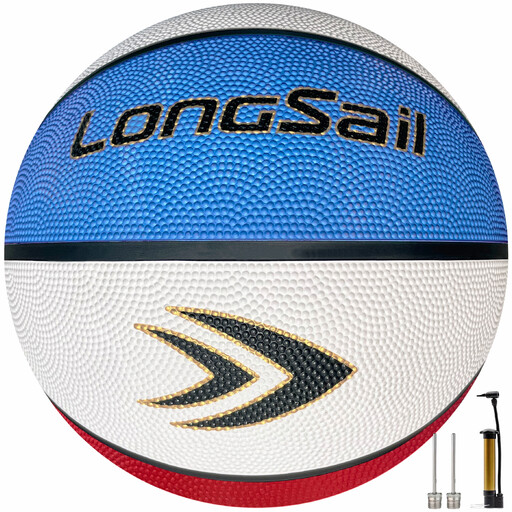
Why it suits this player: Size 5 is suitable for many young players, and the rubber outer layer is practical for training in the park, on the driveway or in the garden.
The size and circumference are clearly stated. According to the product information, the ball is supplied uninflated with a hand pump, two needles and a carry bag.
Textured rubber outer layer; approx. 70 cm circumference; accessories for getting started, according to the listing.
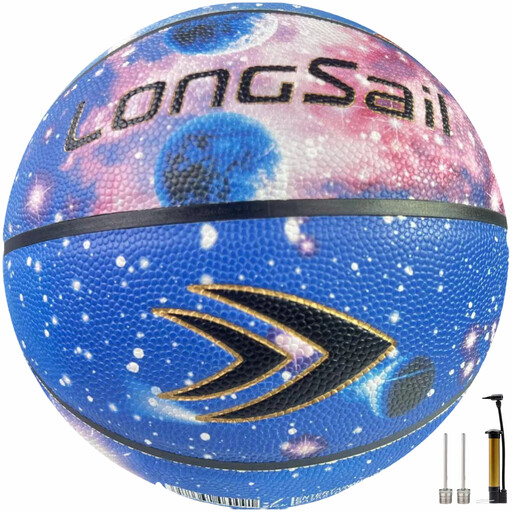
Why it suits this player: This size 7 is aimed at adult players looking for a ball with a softer surface for training indoors and outdoors.
The product information lists the size, PU or microfibre construction and deep grooves. Before buying, check which material version applies to the style you’ve chosen.
Size 7 with approx. 75 cm circumference; PU or microfibre leather outer layer, depending on the product version; designed for indoor and outdoor training.
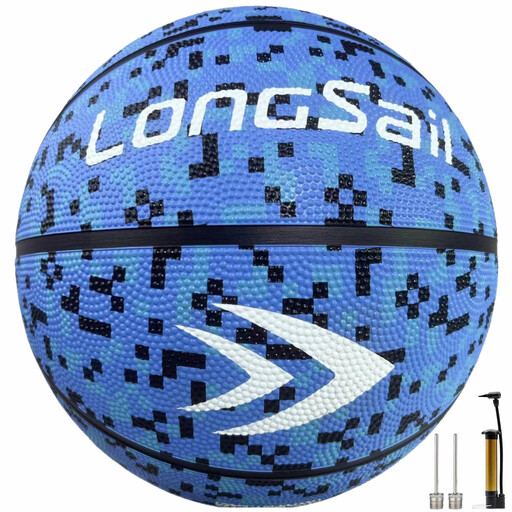
Why it suits this player: Adult players who play outdoors regularly can benefit from size 7 and a rubber surface that’s practical for use on hard surfaces.
Rubber is better suited to repeated use on tarmac or concrete than a soft ball designed solely for indoor play. The retailer also says the ball has a butyl inner bladder.
Size 7 with approx. 75 cm circumference; textured surface with deep grooves; pump, two needles and carry bag, according to the product description.
We’ve put together a complete, up-to-date list of products that meet these strict selection criteria and the applicable European safety regulations.
A durable basketball isn’t just about the material you choose. Correct air pressure, a suitable playing surface and proper storage also affect how long it lasts.
Size 3 is often used for young children. Size 4 is an option for younger players, while size 5 is commonly used by youth players. Also check the rules set by the school, club or competition.
Yes, rubber basketballs can be sold for use on both types of surface. Check the product description, though. For regular indoor play, a PU or composite leather version may feel more comfortable, while rubber is practical on tarmac and concrete.
It depends on how often you use it, the temperature, the valve and the inner ball. Check the pressure before every playing session. If the ball loses air quickly, inspect the valve and outer layer rather than simply pumping it up again and again.
