For one small, thick portion of basil pesto, a mini chopper is a sensible place to start. Choose a hand blender with a suitable chopper attachment if you also want to purée soups or sauces. A blender is worth considering mainly if you regularly make liquid blends too: the Consumers’ Association says blenders are less suitable for small portions and thick ingredients. For any appliance, check that the bowl, blade and included accessories suit the quantity you want to make and the texture you’re after.
Which appliance is right for you?
If you’re making pesto for one
You mainly make a small portion with herbs, nuts and oil. Look for a design that brings the ingredients into contact with the blade and lets you adjust the texture in stages. The Consumers’ Association says ordinary blenders are less suitable for small portions and thick ingredients.
If you’re a versatile home cook
You want to purée soups or sauces as well as make pesto. A hand blender could be a good fit, but check that the chopper and beaker are included with the version you choose. Braun and Bosch offer different accessory combinations across their models.
If you’re short on cupboard space
Weigh up the space needed for the appliance and its parts against preparing ingredients by hand. A pestle and mortar means you don’t need an electrical appliance, while a standalone mini chopper offers fewer functions than a larger food processor. Tefal describes its manual choppers as cordless.
What should you look for when choosing?
Electric mini chopper
Best for: finely chopping one small portion of herbs, nuts and oil, and adjusting the texture gradually.
Bear in mind: the stated bowl capacity doesn’t tell you how much the blade can actually process effectively.
Hand blender with chopper
Best for: anyone who wants to purée soups or sauces as well as chop ingredients.
Bear in mind: a blending foot and a chopper are separate accessories, so check exactly what’s included.
Personal blender or jug blender
Best for: anyone who also wants to use the appliance for smoothies or other liquid blends.
Bear in mind: according to the Consumers’ Association, blenders are less suitable for thick ingredients and small portions.
Pestle and mortar or manual chopper
Best for: anyone who’d rather not use an electrical appliance and doesn’t mind doing the work by hand.
Bear in mind: pounding or pulling takes effort, and chopping ingredients doesn’t automatically produce a smooth, well-mixed pesto.
Compact food processor
Best for: anyone who regularly wants to slice or grate ingredients as well as make pesto, and has room for it.
Bear in mind: a machine with extra functions and accessories takes up more storage space than a simple chopper.
Start with the quantity you make and the texture you want. Then consider whether the appliance also suits your other cooking, cleaning routine and available cupboard space.
| What to consider |
What to check before buying |
Who should consider this? |
| Processing a small portion |
Check the instructions for small quantities, the blade position and the shape of the bowl. |
If you want to avoid a small, thick portion not reaching the blade, focus on how the appliance performs with small quantities; around 36% of consumers consider this their top priority. |
| Texture and nuts |
Check whether the model can chop herbs and nuts, and whether it has a pulse function or lets you add oil gradually. |
If you prefer coarser pesto or want to control the texture as you mix, focus on these features; around 29% of consumers put their preferred texture first. |
| Making other dishes too |
Check exactly what’s included, such as a blending foot, chopper, whisk or beaker. |
If you want one appliance for pesto as well as, for example, soup or sauce, the included accessories matter; around 21% of consumers give versatility top priority. |
| Cleaning and storage |
Check the cleaning instructions for each part and think about where you’ll store the appliance and its accessories. |
If you’re short on cupboard space or want fewer separate parts to wash, focus on cleaning and size; around 14% of consumers consider this their top priority. |
How to avoid common buying mistakes
-
Choosing a large blender jug for one thick portion
The Consumers’ Association says blenders are less suitable for small portions and thick ingredients. As a result, a small quantity may not suit what the jug is designed to process.
Compare your portion with the jug or chopper bowl’s instructions before choosing.
Otherwise, you may have more washing up or need to adapt the recipe to process the ingredients.
-
Assuming every hand blender comes with a chopper
Manufacturers also sell choppers as separate accessories. So, having a blending foot doesn’t automatically mean a chopper is included in the set.
Check the full model code, what’s included and whether the accessories fit the connection.
You may need to buy a chopper separately.
-
Assuming all parts are dishwasher-safe
Cleaning instructions can vary from one part to another. Tefal says the bowl and blades of its manual K1320404 are dishwasher-safe, but the lid isn’t.
Check the manual for the exact version and follow the instructions for each part.
Parts that aren’t dishwasher-safe will need to be cleaned by hand.
-
Confusing an extended warranty with your statutory rights
According to the Dutch government, there’s no fixed statutory warranty period in the Netherlands. If a product is faulty, the seller must provide a solution.
When comparing additional cover, check which services or damage are actually included.
Brands to compare
Magimix
Magimix describes the Le Micro as a mini chopper with a steel chopping blade and a separate emulsifying blade. The manufacturer lists pesto as one of its uses.
- The two blades are designed for different tasks: chopping and mixing.
- The Mini Plus has more functions and accessories, so it takes up more storage space.
KitchenAid
KitchenAid describes the 5KFC3516EOB mini chopper as having two speeds, a pulse setting, a liquid-addition opening and an 830 ml bowl.
- The pulse setting and filling opening are useful features if you want to chop in stages and add oil.
- The stated bowl capacity doesn’t confirm the minimum quantity the appliance can process effectively.
Braun
Braun offers MultiQuick hand blenders that can be paired with choppers in different sizes. The MQ 3020 Pesto is part of the MultiQuick 3 range.
- The right set can combine chopping and puréeing.
- Check the full model code to see which chopper is included and whether it fits the connection.
Bosch
Bosch describes the ErgoMixx MSM67160 as a hand blender set with a blending foot, universal chopper, whisk and measuring beaker.
- The manufacturer lists both chopping and puréeing among its uses.
- Check what’s included with the specific version, as accessories can vary by model.
Philips
According to Philips’ Dutch product comparison, the Philips Daily HR1393/00 is a standalone chopper with a 0.7-litre bowl.
- A standalone chopper could be a good option if you don’t need a more extensive set.
- For the HR1393/00, check the exact version and power rating: product information lists both 400 W and 450 W.
Tefal
Tefal describes its manual choppers as cordless. The manufacturer specifically recommends the 450 ml Chop & Shaker K1644344 for pesto.
- A manual chopper works without an electrical appliance.
- Bear in mind that you’ll need to operate it by hand, and check the cleaning instructions for each part.
Products at Joybuy
This selection includes electric options for puréeing or chopping, and manual pestle and mortars for anyone who wants to make pesto without an electrical appliance.
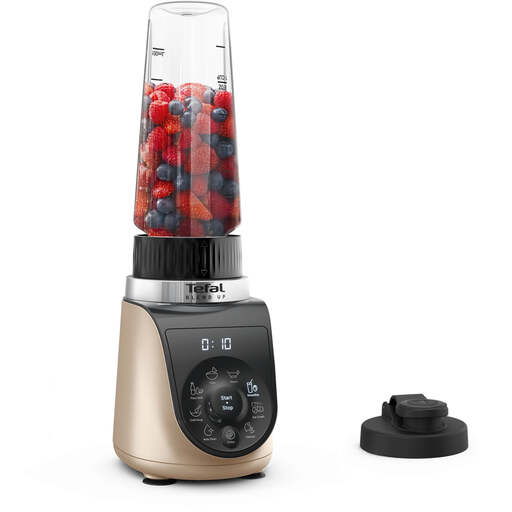 No image available
Tefal BL190A Blend Up personal blender
The product description lists pesto and basil sauce among its uses, along with other preparation modes.
The description lists six modes. Check the instructions for your quantity and for thick blends.
View at Joybuy
 No image available
ROUNY 4-in-1 hand blender with chopper
The set described combines a blending foot with accessories for chopping and whisking.
The description lists a 500 ml chopper, a whisk and a measuring beaker. Check which parts you need for your recipe.
View at Joybuy
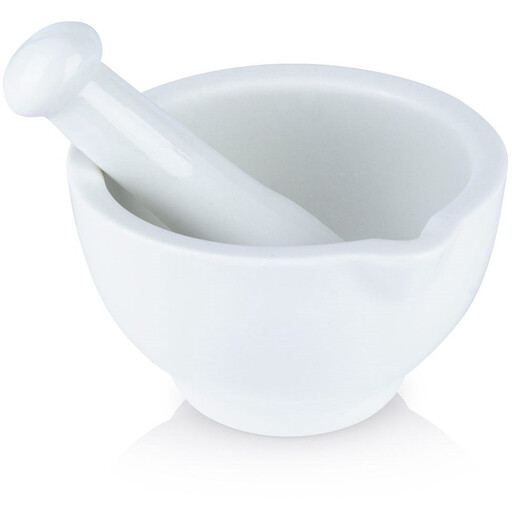 No image available
Alpina ceramic pestle and mortar with pestle, white, 10 cm
A manual option if you want to make pesto without an electrical appliance; the product description lists pesto as one of its uses.
The description mentions a pouring spout. Bear in mind that you’ll need to pound and grind the ingredients yourself.
View at Joybuy
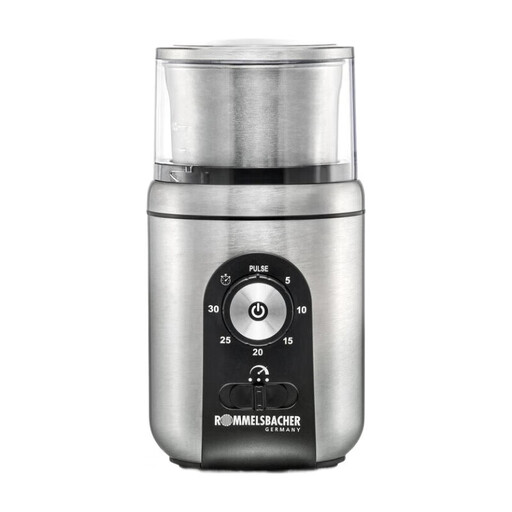 No image available
Rommelsbacher EGK 250 herb and coffee grinder
The product description mentions pesto and a universal bowl for fresh herbs and nuts.
The description lists adjustable time and speed settings, plus a manual pulse function. Check the instructions for using it with your pesto ingredients.
View at Joybuy
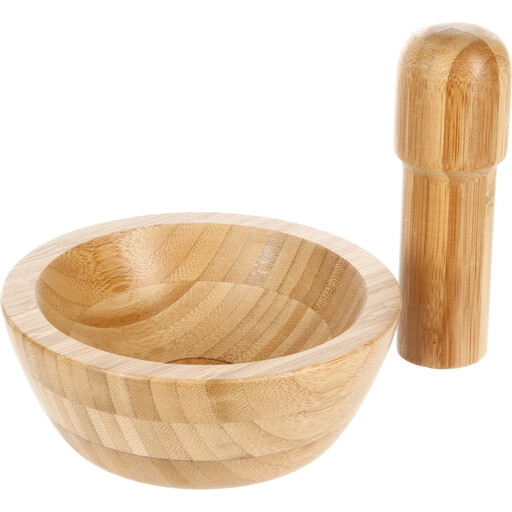 No image available
5five bamboo pestle and mortar with pestle, beige, 13 cm
A manual option for making pesto; the product description also mentions grinding fresh and dried herbs.
The description says to wash by hand and not to put it in the dishwasher.
View at Joybuy
Frequently asked questions
Can I use a standard blender to make one portion of basil pesto?
It depends on the quantity and the jug. The Consumers’ Association says blenders are best suited to moist mixtures and larger quantities, and less suitable for thick ingredients or small portions. Check the instructions for your chosen model, and don’t automatically add extra liquid if that would change the pesto you want to make.
How can I add oil without making the pesto smooth straight away?
Add the oil a little at a time, checking the texture as you go. A pulse setting or an opening for adding liquid can be useful; KitchenAid lists both features for the 5KFC3516EOB mini chopper. These features alone won’t determine the final texture of your pesto.
Does a hand blender always come with a chopper?
No, it depends on the version. Check the full model code and list of included parts: a chopper may also be sold as a separate accessory.
Can all parts of a chopper go in the dishwasher?
No, it can vary by model and part. Tefal says the bowl and blades of its manual K1320404 are dishwasher-safe, but the lid isn’t. Follow the manual’s instructions for each part of your appliance.
How should I store leftover homemade pesto?
Cool leftovers quickly, cover them and store them in the fridge. The Netherlands Nutrition Centre recommends keeping your fridge at 4 °C and says leftovers can generally be kept in the fridge for up to two days. Storage times for opened, packaged pesto or a specific recipe don’t automatically apply to every homemade pesto.


