
If you can run a cable to the basement
You can run an Ethernet cable and want to connect a screen, encoder or Wi-Fi access point in the basement. TP-Link describes Ethernet backhaul as a way to connect Deco units by cable.


For a live concert in the basement, a new router is only the logical next step after you’ve tested your internet connection using a cable and compared the results with the connection where you’ll be watching or streaming. If you can run an Ethernet cable to the basement, consider a wired access point or mesh node. If not, test a wireless node or powerline connection in the intended location. If you’re streaming the concert yourself, pay particular attention to your upload speed: YouTube Help states that your total stream bitrate cannot exceed the available upload speed.
You can run an Ethernet cable and want to connect a screen, encoder or Wi-Fi access point in the basement. TP-Link describes Ethernet backhaul as a way to connect Deco units by cable.
You want coverage in the basement without running cables, so you need to choose between a wireless node placed where the signal is usable and a powerline connection that you test on site. Consumentenbond recommends placing boosters where you need the signal.
You want to test not only your Wi-Fi, but also the available upload speed and your encoder settings. YouTube Help states that your total stream bitrate must fit within your available upload speed.
Choose this if: you can run an Ethernet cable to the basement and need Wi-Fi or a wired connection there.
The trade-off: you’ll need to run a cable and check that the point you choose has the right connections and power supply.
Choose this if: there’s no cable, but there’s still a usable Wi-Fi signal in an intermediate location.
The trade-off: a node placed where reception is poor won’t get a reliable connection either, so test the route all the way to the basement.
Choose this if: running a cable is difficult and the wireless connection through the floor isn’t good enough.
The trade-off: the connection depends on the conditions at the sockets you use, so test it in your own home.
Choose this if: a wired test shows that you need to address your internet connection or router placement first.
The trade-off: extra Wi-Fi equipment won’t automatically fix a problem with the internet connection itself.
Consumentenbond recommends a wired test to assess your home connection; compare the result with a measurement where you’ll be watching or streaming. TP-Link describes Ethernet backhaul as a wired connection between Deco units.
| Concern | What to look for | What consumers want |
|---|---|---|
| Connection between the router and basement | Check whether you can run a cable to the basement, and find out which ports and connection modes the additional point supports. | If I can run a cable, I want to connect the basement point by wire rather than rely on Wi-Fi through the floor. Around 36% of consumers prioritise a wired connection to the basement. |
| Coverage without an Ethernet cable | Test an intermediate location for a wireless node, or test the sockets for powerline; also check which components are included in the kit. | If running a cable isn’t practical, I want to know whether a wireless route or powerline connection will work where I need it. Around 29% of consumers prioritise coverage without running cables. |
| Capacity during the live event | Compare a wired connection test with a test in the basement. If you’re streaming, measure your upload speed and test with your intended encoder settings. | If I’m streaming, I want to know in advance whether my upload speed can support my stream settings. YouTube Help emphasises that the total bitrate must stay within the available upload speed. Around 21% of consumers prioritise checking stream capacity. |
| Compatibility with existing equipment | Check the connections and mode of the exact model, what’s included in the box and what power supply the point needs. | If my current router is still suitable, I want to know whether a compatible extension will be enough before I buy more equipment. Around 14% of consumers prioritise keeping their existing equipment and managing purchase costs. |
An advertised speed doesn’t tell you how the connection will perform through a floor or in the place where you’ll actually use it. Consumentenbond recommends placing a booster where you need the signal.
Test the connection where you’ll be watching or streaming, and first work out how the basement point will connect to your main router.
The node needs a usable connection to the network itself before it can extend the signal.
Test an intermediate location. If the wireless connection doesn’t work there, look into running a cable or testing a powerline connection on site.
For a livestream, the available upload speed matters because it determines the total bitrate you can stream. YouTube Help states that this bitrate cannot exceed your available upload speed.
Measure your upload speed and run a test stream in advance, using similar audio, movement and encoder settings.
The Deco X50-PoE is an option for a wired connection in the basement; according to TP-Link, the Deco PX50 combines Wi-Fi with powerline.
The ZenWiFi XD5 is a mesh option for multiple rooms; ASUS describes Ethernet backhaul as an option when a cable is available.
The FRITZ!Repeater 1200 AX is an option for extending your network if you want to keep your existing router.
The Magic 2 WiFi 6 next Starter Kit uses a powerline connection to provide Wi-Fi in another room.
This selection of Joybuy products includes access points, routers and mesh systems you can compare for a network connection in or to the basement.
 Image unavailable
Worth considering if you want to connect an access point to a wired connection in the basement; check which power supply and connection your setup requires.
 Image unavailable
The product name describes a dual-band Wi-Fi 6 mesh router; check that the model and its connections suit the network setup you want to use.
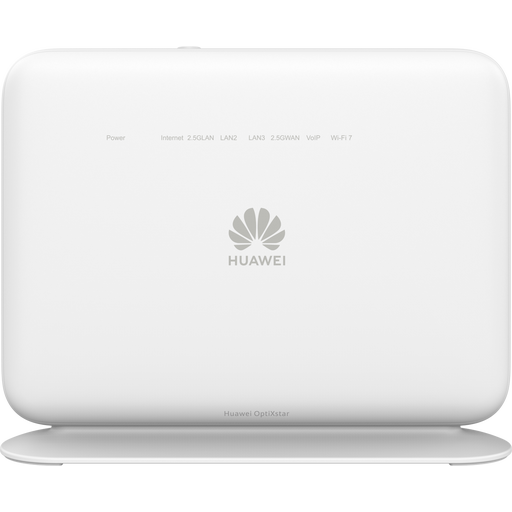 Image unavailable
The product name describes a dual-band Wi-Fi 7 router with 4G dongle functionality; check that its connections are suitable for your existing connection.
 Image unavailable
Worth considering if you want to connect a mesh point by cable. The product name lists two units, dual-band 2.4/5 GHz and Wi-Fi 6; check the power supply and connection mode required for your setup.
 Image unavailable
The product name describes a three-unit mesh system with tri-band Wi-Fi 6E on 2.4, 5 and 6 GHz. Check which connections and setup are right for the connection to your basement.
No. First, test your internet connection using an Ethernet cable and compare it with the connection in the basement. This will help you work out whether the issue is with your internet connection or your home Wi-Fi coverage.
Don’t place the node somewhere the existing Wi-Fi signal has already dropped out without testing it first. The node needs to stay connected to the network itself; then test the connection where you’ll be watching or streaming.
Measure your upload speed, choose encoder settings that suit it and test in advance using similar audio and movement. YouTube Help recommends leaving some headroom between the total stream bitrate and your available upload speed when streaming on YouTube; this is platform guidance.
Yes. ACM ConsuWijzer states that you can choose your own router. Just check which connection settings you need for your internet service.
Radio equipment sold in the Netherlands must meet the applicable European requirements. According to the Dutch Authority for Digital Infrastructure, manufacturers apply a CE mark when a product complies; check this for the exact product version.